

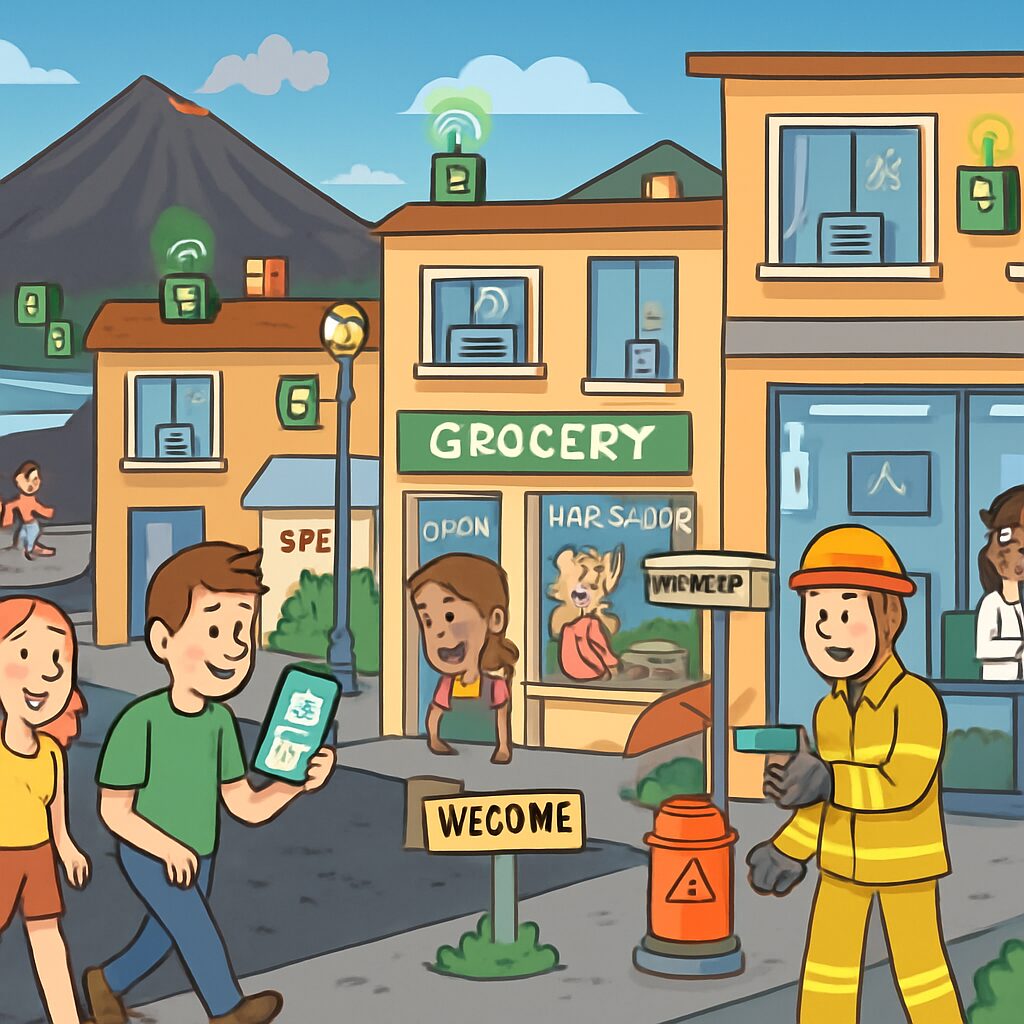
Puerto Naos, a town on La Palma in Spain’s Canary Islands, has become Europe’s most closely monitored location due to an extensive network of over 1,300 carbon dioxide sensors installed after a volcanic eruption released hazardous gas levels. This high-tech surveillance system allows residents and tourists to gradually return while ensuring safety from invisible CO2 threats.
The monitoring initiative stems from the 2021 eruption of the Cumbre Vieja volcano, which not only spewed lava but also triggered the release of deadly carbon dioxide from the ground. Scientists discovered that CO2 concentrations in some areas reached over 400 times acceptable limits, leading to the evacuation of over 1,000 people from Puerto Naos and the nearby village of La Bombilla. The gas, odorless and colorless, posed a silent threat, with initial signs including dead animals in affected zones.
In response, Spanish authorities and geological experts launched the Alerta CO2 project in 2022, a €4 million effort funded by the national government. This project deployed a dense network of sensors that continuously measure air quality, making Puerto Naos the world’s most closely watched area for CO2. The detectors are placed in homes, businesses, and public spaces, with data monitored 24/7 from a control center. If levels exceed 1,000 parts per million for 30 minutes, alerts are triggered, and firefighters intervene to advise residents.
The system has enabled about 80% of homeowners to return, with the first group coming back in December 2023. Tourists are also slowly returning, attracted by the black sand beaches and reassured by the safety measures. The Meliá La Palma hotel, for instance, has 55 detectors throughout its premises and operates at full capacity, with management actively addressing guest concerns. Local businesses, from grocery stores to hair salons, are reopening, though some areas remain cordoned off due to persistent high gas levels.
Technologically, the project involves both indoor and outdoor sensors, with some buildings equipped with air purifiers designed to flush out CO2. The La Palma regional government has developed the Smart Island app, allowing real-time public access to outdoor CO2 data. This transparency helps build trust, although some residents find the purifiers noisy or intrusive—a trade-off between comfort and safety.
The situation in Puerto Naos offers lessons for other communities facing environmental disasters, particularly those near volcanoes or industrial sites. The proactive monitoring approach could be adapted globally to manage invisible hazards. Scientists, however, caution that the end of the CO2 release is unpredictable, as no tools exist to forecast when the ground will stop emitting gas.
Looking ahead, continued vigilance is essential. The green flashing lights on outdoor sensors serve as constant reminders of the ongoing risk. Efforts are focused on maintaining the sensor network, supporting returnees, and promoting tourism without compromising safety. The story of Puerto Naos highlights how innovation and community resilience can turn a crisis into a model for future disaster response.

