

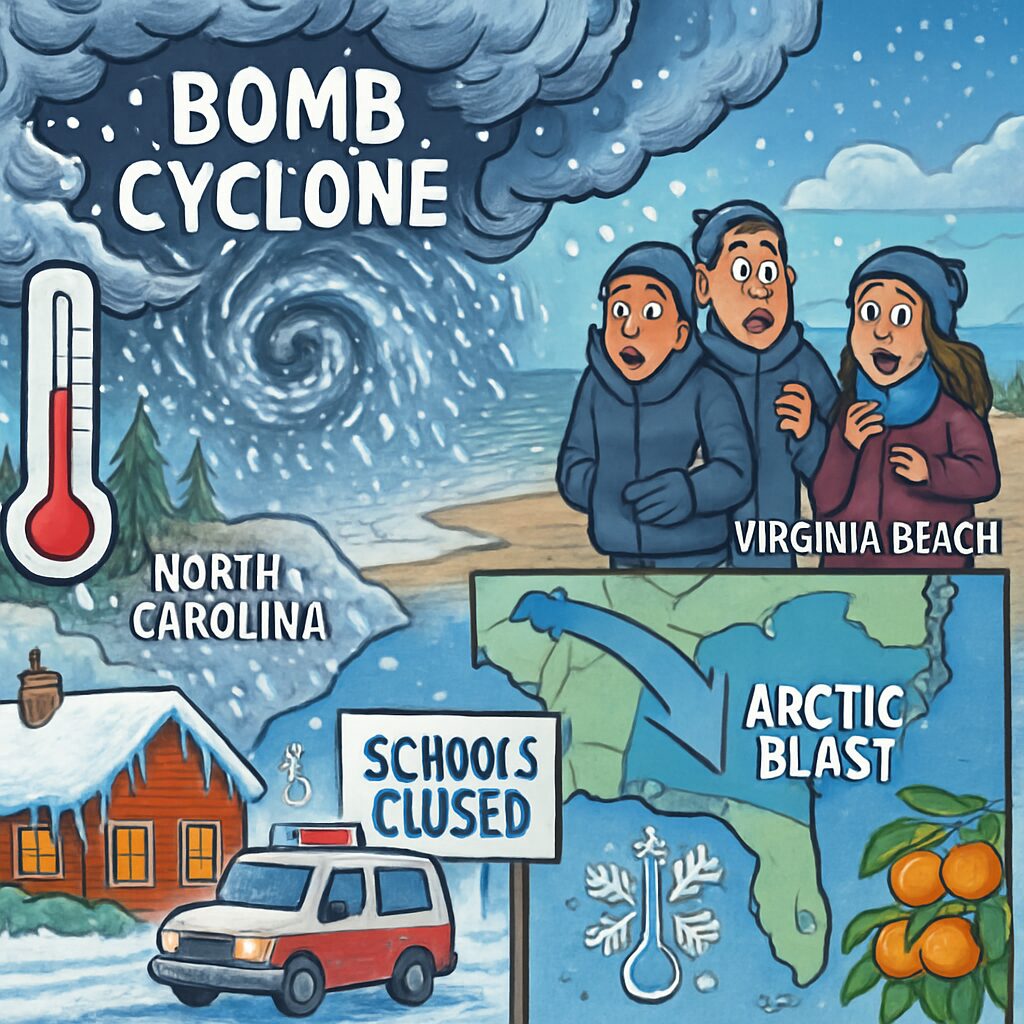
A powerful bomb cyclone has dissipated after bringing significant winter weather to parts of the United States, but a lingering arctic blast continues to plunge temperatures across several regions, with unusual cold reaching as far south as Florida.
The winter storm system, which rapidly intensified into a bomb cyclone, swept through the East Coast over the past few days, dropping more than a foot of snow in areas like North Carolina before moving offshore. By Sunday, February 1, 2026, the core of the cyclone had moved on, but its effects are still being felt due to the persistent arctic air mass that followed in its wake. This combination has led to extended periods of freezing temperatures and hazardous conditions in many states.
Meteorologists reported that the bomb cyclone met the criteria for rapid intensification, with pressure dropping significantly within 24 hours, making it a notable weather event. The system originated from a clash between cold Arctic air and warmer oceanic air, typical for such storms in the winter months. Its path took it from the Southeast up along the Atlantic coast, impacting millions of residents with snow, wind, and ice.
In Virginia Beach, a location more accustomed to summer tourism, residents witnessed the surreal scene of snow mixing with beach sand, as reported by CNN’s Derek Van Dam. The area experienced several inches of accumulation, disrupting normal activities and prompting local authorities to issue travel advisories. This unusual weather highlights how far-reaching the cold air has spread, affecting regions not typically prepared for winter storms.
Perhaps the most striking detail is that parts of Florida recorded temperatures lower than those in Greenland, a region infamous for its frigid climate. Cities in central and northern Florida saw overnight lows dipping into the 20s and 30s Fahrenheit, posing risks to agriculture, such as citrus crops, and increasing energy demand for heating. The National Weather Service had issued freeze warnings for much of the state, urging residents to protect plants and pipes.
The arctic blast, which is a surge of cold air from the polar regions, remains entrenched over the eastern United States, keeping temperatures well below average for this time of year. This persistent cold is expected to linger for several more days, with forecasts indicating that another round of winter storms could develop later in the week. The disruption to the polar vortex earlier in the season has contributed to these extreme weather patterns.
Authorities and emergency services have been on high alert, responding to incidents such as power outages, road closures, and increased fire risks due to heating equipment. In some areas, schools and businesses remained closed, and flights were delayed or canceled. The economic impact includes losses in retail and tourism, alongside strain on utility infrastructure.
Looking ahead, weather models suggest that while the immediate threat of the bomb cyclone has passed, the arctic air mass will slowly moderate, but not before potentially triggering additional snow events in the Northeast and Midwest. Residents are advised to stay updated on forecasts and take precautions against the cold. This event underscores the increasing volatility in winter weather patterns, possibly linked to broader climate trends.
In conclusion, the departure of the bomb cyclone offers some relief, but the enduring arctic blast serves as a reminder of winter’s grip on the region. As communities recover and adapt, ongoing monitoring and preparedness will be crucial for mitigating future impacts from such extreme weather phenomena.

