

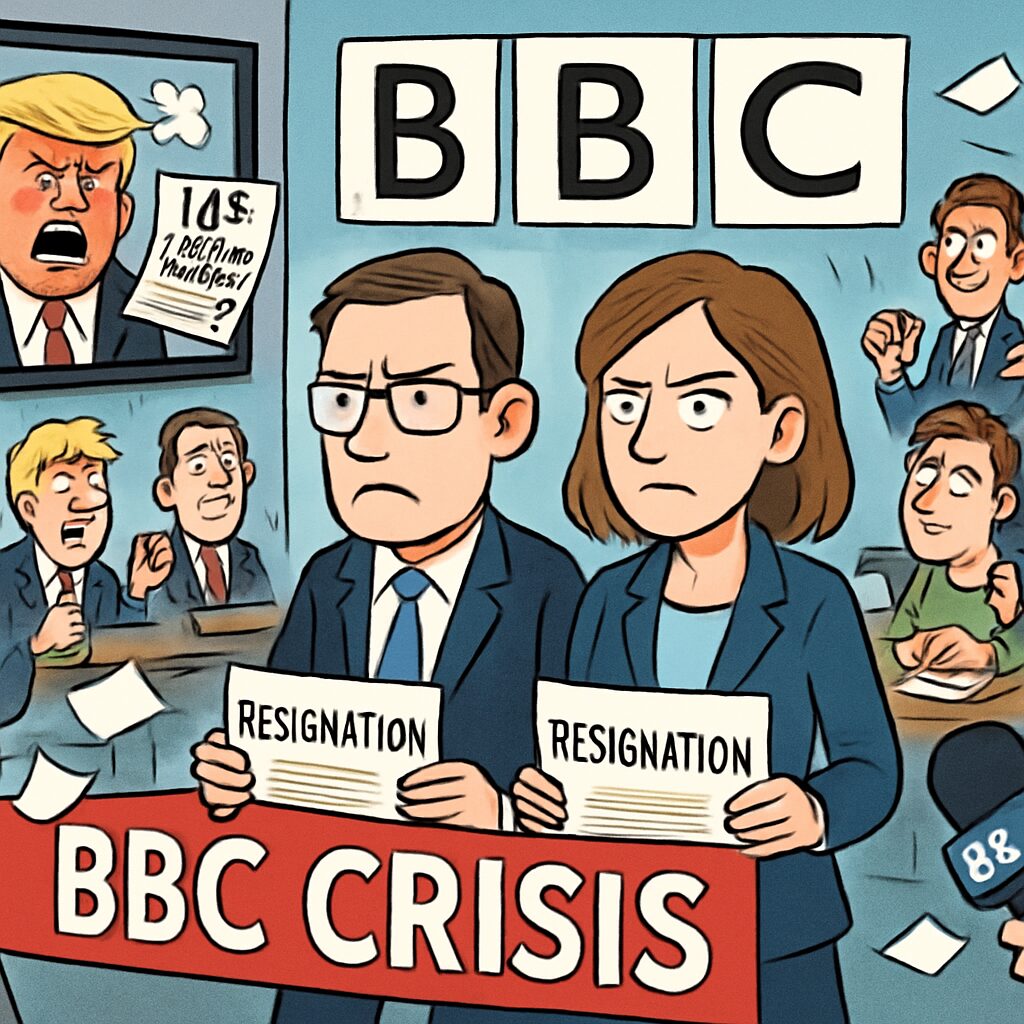
The BBC has been plunged into a severe crisis with the resignations of Director-General Tim Davie and News CEO Deborah Turness, stemming from a controversial edit in a Panorama documentary about Donald Trump’s January 6 speech, prompting threats of a billion-dollar lawsuit from the former president.
The resignations were announced on Sunday, November 9, 2025, with both executives taking responsibility for the fallout from the documentary. Davie stated that quitting was “entirely my decision,” citing the intense demands of the role and a desire to allow a successor to shape future plans. Turness emphasized that the controversy was damaging the BBC, an institution she loves, and that “the buck stops with me” as head of news. Their departures came after a week of mounting pressure, with the BBC facing accusations of institutional bias and mishandling the situation.
The core issue revolves around a Panorama documentary that aired before the 2024 US election, which edited clips of Trump’s January 6, 2021, speech to make it appear he said, “We’re going to walk down to the Capitol and I’ll be there with you, and we fight. We fight like hell,” while omitting a section where he urged peaceful protest. Critics accused the BBC of misleading viewers, with right-wing media in the UK amplifying the allegations. The edit was first highlighted in a memo by former BBC editorial standards member Michael Prescott, published by The Daily Telegraph, which also raised concerns about anti-Israel bias in the BBC’s Arabic service.
The scandal quickly crossed the Atlantic, with Trump’s press secretary, Karoline Leavitt, labeling the BBC “100 percent fake news” and a “propaganda machine.” Trump himself has threatened to sue the corporation for no less than $1 billion if it does not retract the documentary, issue an apology, and provide compensation by Friday. This legal threat marks unprecedented territory for the BBC, which has faced previous lawsuits but not from a sitting US president. The corporation has since apologized for the edit but remains under intense scrutiny.
In the UK, the resignations have sparked a political firestorm. Culture Minister Lisa Nandy described the allegations as “incredibly serious” and pointed to “systemic bias” in the BBC’s reporting. Right-wing figures like Nigel Farage celebrated the departures, warning that the BBC must reform or face widespread refusal to pay the license fee. Meanwhile, some insiders view the situation as a “coup” by the broadcaster’s enemies, highlighting deep divisions over its role and independence.
The controversy has broader implications for the BBC’s funding and governance, with Conservative MP Priti Patel demanding a review of Foreign Office funding for BBC Arabic over claims of “pro-Hamas and anti-Israel bias.” The broadcaster has also faced internal criticism over its coverage of the Gaza war, accused of both pro-Israel and anti-Israel slant depending on the perspective. This reflects the BBC’s perennial challenge of balancing objectivity in a polarized media environment.
Ros Atkins, the BBC’s Analysis Editor, provided context in a recent segment, noting that while the resignations felt unprecedented, similar crises have occurred, such as the 2004 departures following the Hutton report. He emphasized that the current situation, with a US president threatening legal action, is entirely new ground for the corporation. Atkins highlighted how pressure had been building for some time, with the BBC caught between accusations from both the left and right, and that the crisis did not emerge suddenly.
The BBC now faces a challenging path forward, requiring robust leadership to navigate the legal and reputational risks. Chair Samir Shah has acknowledged that the corporation should have acted earlier to address concerns, but with key leaders gone, stabilizing the organization will be difficult. The outcome could influence the BBC’s charter renewal and public trust, as it balances independence with accountability in a polarized media landscape. The resignations underscore the need for transparency and reform to restore confidence in one of the world’s most prominent broadcasters.

