

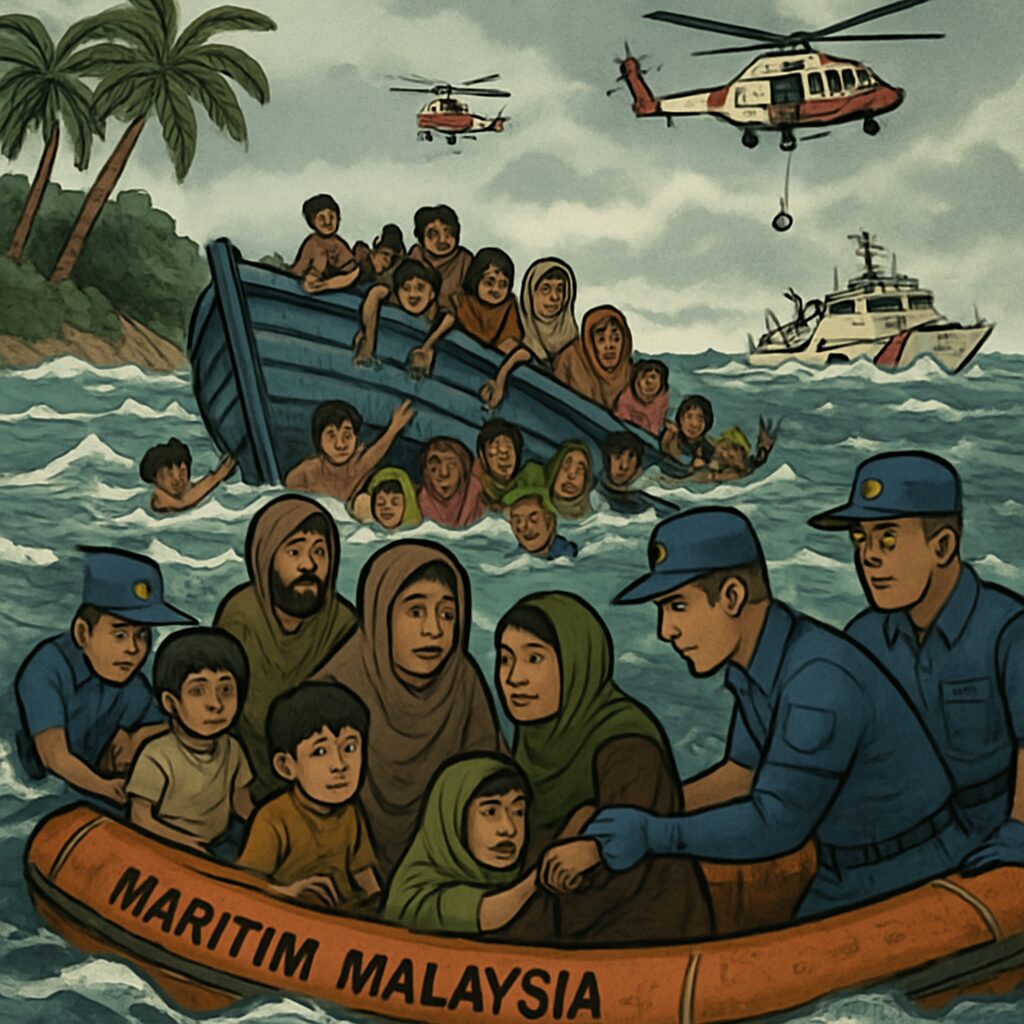
Malaysian authorities have recovered more bodies from a capsized migrant boat near the resort island of Langkawi, raising the death toll to at least 21 as search operations continue for dozens still missing. The incident underscores the perilous journeys undertaken by Rohingya refugees fleeing persecution and dire conditions in Myanmar and Bangladesh.
The boat, carrying an estimated 70 undocumented migrants, capsized near the Thailand-Malaysia border, specifically off Ko Tarutao island, just north of Langkawi. Search and rescue efforts, now in their third day, have led to the recovery of 21 bodies and the rescue of 13 survivors, but many remain unaccounted for. Malaysian maritime officials confirmed that the vessel sank shortly after departing from Myanmar’s Rakhine state, with passengers believed to be part of a larger group of around 300 people split between at least two boats.
Those on board were predominantly Rohingya Muslims, an ethnic minority denied citizenship in Myanmar and facing systemic persecution. Many had embarked on the dangerous sea voyage to seek refuge in Muslim-majority Malaysia, viewed as a potential safe haven in the region. The journey, often organized by smugglers, involves overcrowded and ill-equipped boats lacking basic amenities like fresh water and sanitation, making such trips highly hazardous.
Search operations, coordinated by the Malaysian Maritime Enforcement Agency (MMEA), involve sea surface and aerial patrols and are expected to last up to seven days. Romli Mustafa, MMEA director for Kedah and Perlis, emphasized the challenges of locating survivors in the vast maritime area. The recovery of at least one child’s body highlights the tragic human cost, while rescued individuals include 11 Rohingyas and two Bangladeshis, according to authorities.
The capsizing is part of a broader pattern of Rohingya migration crises, with over 5,100 people attempting the journey from Myanmar and Bangladesh this year alone, and nearly 600 reported dead or missing, per UN data. Conflict in Rakhine state and overcrowded refugee camps in Bangladesh have driven many to risk their lives at sea, despite the high likelihood of detention, deportation, or death. This incident echoes previous tragedies, including boats being turned away by Malaysian and Indonesian authorities after providing minimal aid.
Amnesty International and other rights groups have condemned the ongoing risks faced by Rohingya refugees, citing the capsizing as evidence of the deadly consequences of persecution and inadequate international protection. The event has drawn attention to the need for regional cooperation on refugee policies and humanitarian assistance, as conditions in Myanmar and Bangladesh show little sign of improvement, perpetuating the cycle of displacement and danger.
As search efforts persist, the focus remains on locating the missing and providing aid to survivors, while the international community grapples with the root causes of the crisis. The incident serves as a stark reminder of the urgent need for comprehensive solutions to address the plight of the Rohingya and prevent further loss of life in similar maritime disasters.

