

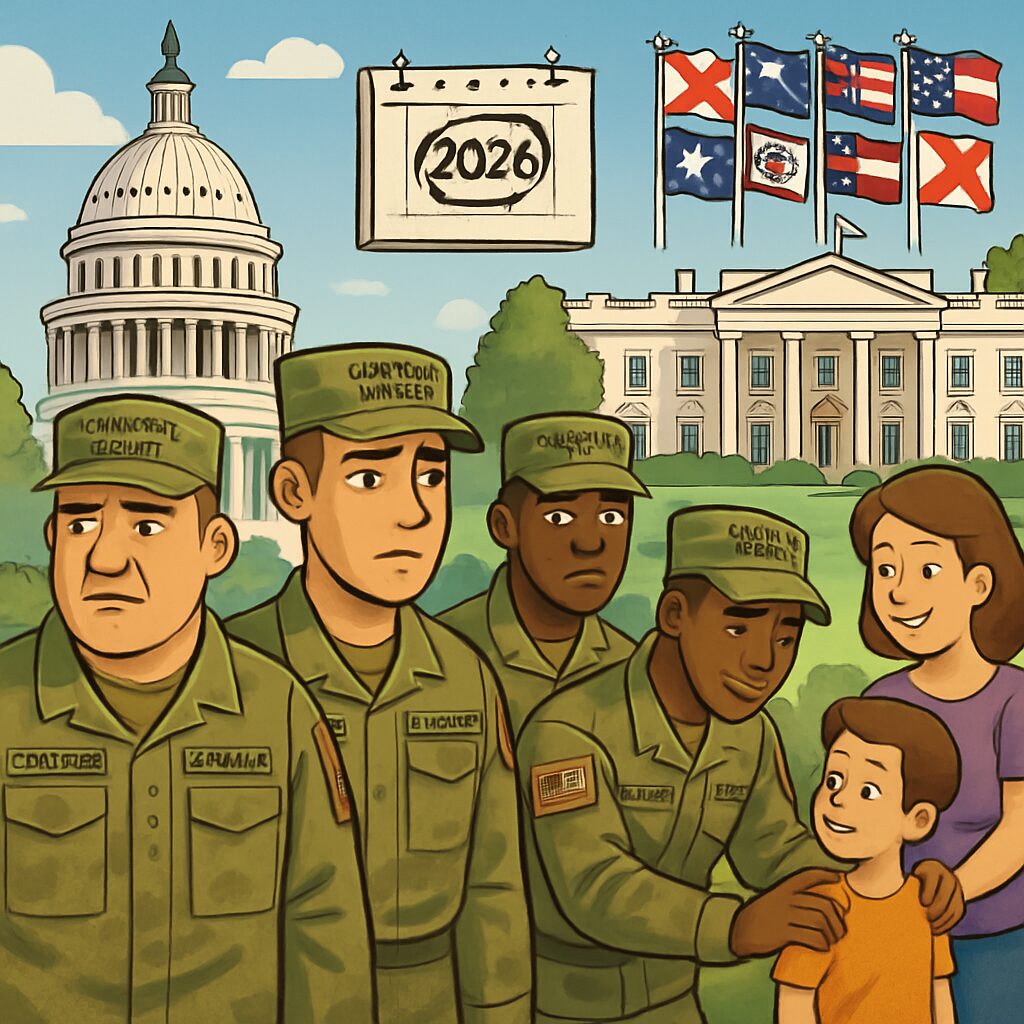
The National Guard mission in Washington, D.C., has been extended through the end of 2026, ensuring that thousands of troops will continue to patrol the capital’s streets and perform public service duties. This decision, reported by multiple reliable outlets, reflects ongoing security measures amid preparations for national events and follows recent incidents that have highlighted the mission’s challenges.
According to officials familiar with the matter, the extension orders specifically run until December 31, 2026, though they could be amended to be shorter. This move comes after previous extensions were set to expire in February, having been renewed in October last year. The longer timeline aims to provide more stability for troops who have faced uncertain assignments, with one official noting that it allows for better planning for both the military personnel and their families. The deployment is part of a broader federal effort to maintain security in the nation’s capital, particularly with the upcoming America 250th anniversary celebration, which the White House has prioritized.
As of early January, approximately 2,429 troops were committed to the mission in D.C., with about 700 from the D.C. National Guard and over 1,700 from other states. Eleven states have contributed forces, including Florida, South Carolina, Mississippi, West Virginia, Georgia, and Alabama. This multi-state involvement underscores the national scope of the deployment, which has evolved from a temporary measure into a more sustained presence. Military leaders have compared it to the New York National Guard’s anti-terrorism task force, which has maintained a continuous presence since the September 11 attacks, suggesting a potential long-term strategy for D.C.
The extension follows a tragic incident in November 2025, when two West Virginia National Guard troops were ambushed and shot just blocks from the White House. Specialist Sarah Beckstrom, 20, died from her injuries, while Staff Sergeant Andrew Wolfe, 24, survived a critical gunshot wound to the head and has since made significant progress in recovery. Additionally, Staff Sergeant Jacob Hill from Alabama died in an off-duty medical emergency before Thanksgiving, adding to the toll on the Guard community. These events have intensified discussions about the risks and sacrifices associated with the mission.
Troops on the ground have expressed mixed sentiments about the extended deployment. Some guardsmen have conveyed a strong sense of duty, especially in the wake of the shooting, viewing their role as essential for public safety. Others, however, have reported feelings of frustration or boredom, with family members noting the personal and financial sacrifices involved, as many earn less in National Guard pay than in their civilian jobs. This dichotomy highlights the human impact of the prolonged assignment, with morale varying among the ranks.
Military leadership is actively addressing concerns by working with troops who request to be removed from the mission for reasons such as educational commitments or returning to civilian employment. Several dozen guardsmen have already been taken off the deployment through this process, indicating efforts to balance operational needs with individual circumstances. This flexibility is seen as a way to mitigate burnout and retain personnel, though it also points to the ongoing challenges of managing a large-scale, long-term deployment.
The decision to extend the mission through 2026 raises broader questions about the militarization of public spaces in the capital and the future role of the National Guard in domestic security. While the deployment provides enhanced security for high-profile events, it also strains resources and tests the limits of Guard readiness. Looking ahead, officials may need to assess the sustainability of such operations and consider adjustments based on evolving threats and troop welfare. The coming months will likely see continued scrutiny as the Guard adapts to its extended mandate in D.C.

