

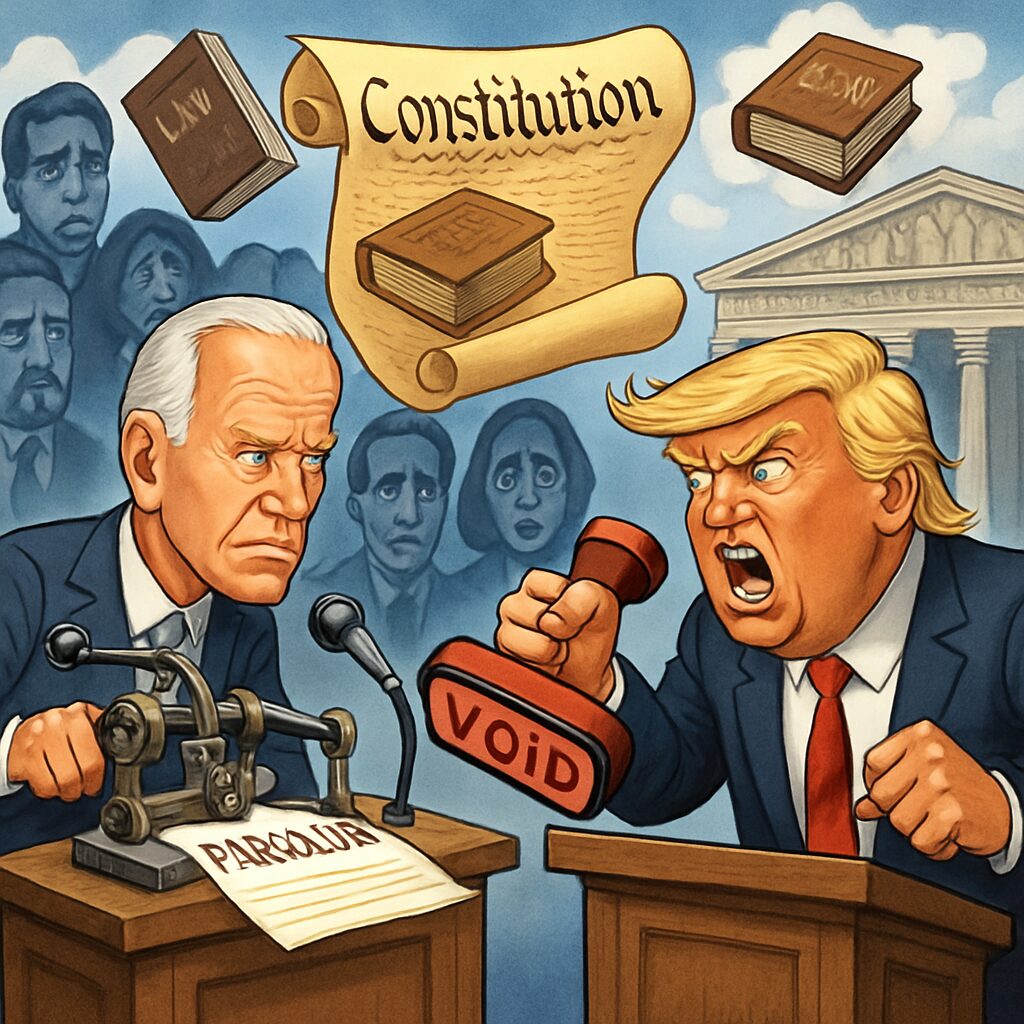
President Donald Trump is attempting to invalidate pardons issued by Joe Biden, arguing that Biden’s use of an autopen renders them void, but legal experts confirm there is no constitutional basis for such action, making it an unprecedented political maneuver. The presidential pardon power, enshrined in the Constitution with minimal constraints, does not require a physical signature or competence test, yet Trump and Republicans have targeted Biden’s autopen-signed pardons since March 2025. Trump declared these pardons “void,” claiming impropriety, though multiple presidents, including Trump himself, have used autopens for official documents. The House Oversight Committee escalated these efforts with a report released on October 28, 2025, titled “The Biden Autopen Presidency,” which alleges a cover-up of Biden’s cognitive decline and argues that executive actions should be voided without clear documentation. However, the report’s credibility is questioned as it relies on testimony from former Biden officials, some of whom invoked the Fifth Amendment, and no evidence of a conspiracy has been presented. Biden’s pardons include controversial figures such as his son Hunter, who faced prison for tax and gun charges, and preemptive pardons for political adversaries like Sen. Adam Schiff and former Speaker Nancy Pelosi. In a July 2025 interview with the New York Times, Biden affirmed that all pardons were his decisions, with autopen use due to the high volume of signatures, countering claims of unauthorized actions. In response, Attorney General Pam Bondi announced a Department of Justice investigation, and Trump’s pardon attorney, Ed Martin, stated he would not recognize certain Biden pardons. This aligns with Trump’s pattern of seeking retribution against political enemies, as seen in his second-term actions, including pardons for allies like a Chinese crypto billionaire. Legal scholar Bernadette Meyler of Stanford Law School emphasizes that there is no federal precedent for voiding a pardon, and state-level cases require proof of bribery or fraud, not competence issues. She notes that the president’s competence is not a legal test for pardons, and the 25th Amendment exists for cases of incapacity, but Biden’s Cabinet did not invoke it. Meyler explains that the only potential legal mechanism would be a lawsuit for a declaratory judgment, but given Biden’s assertions of authorization, it is unlikely to succeed. She also dismisses historical precedents from pre-constitutional times, as the pardon power was modeled after British monarchy and has been broadly interpreted by the Supreme Court to favor presidential authority. The Supreme Court is expected to uphold Biden’s pardon power if challenged, as it generally supports executive authority, and any restriction could set a precedent affecting future presidents. This situation underscores the need to reassess the pardon power in a democratic context, though it should not be eliminated due to its role in reviewing judicial and prosecutorial decisions. The ongoing political and legal battles over pardons highlight deepening partisan divisions and the weaponization of executive powers. As investigations proceed, the outcome could significantly impact presidential authority and the rule of law, with implications for how future administrations handle clemency and political retribution.
Can Trump really undo Biden’s pardons?

RELATED ARTICLES