

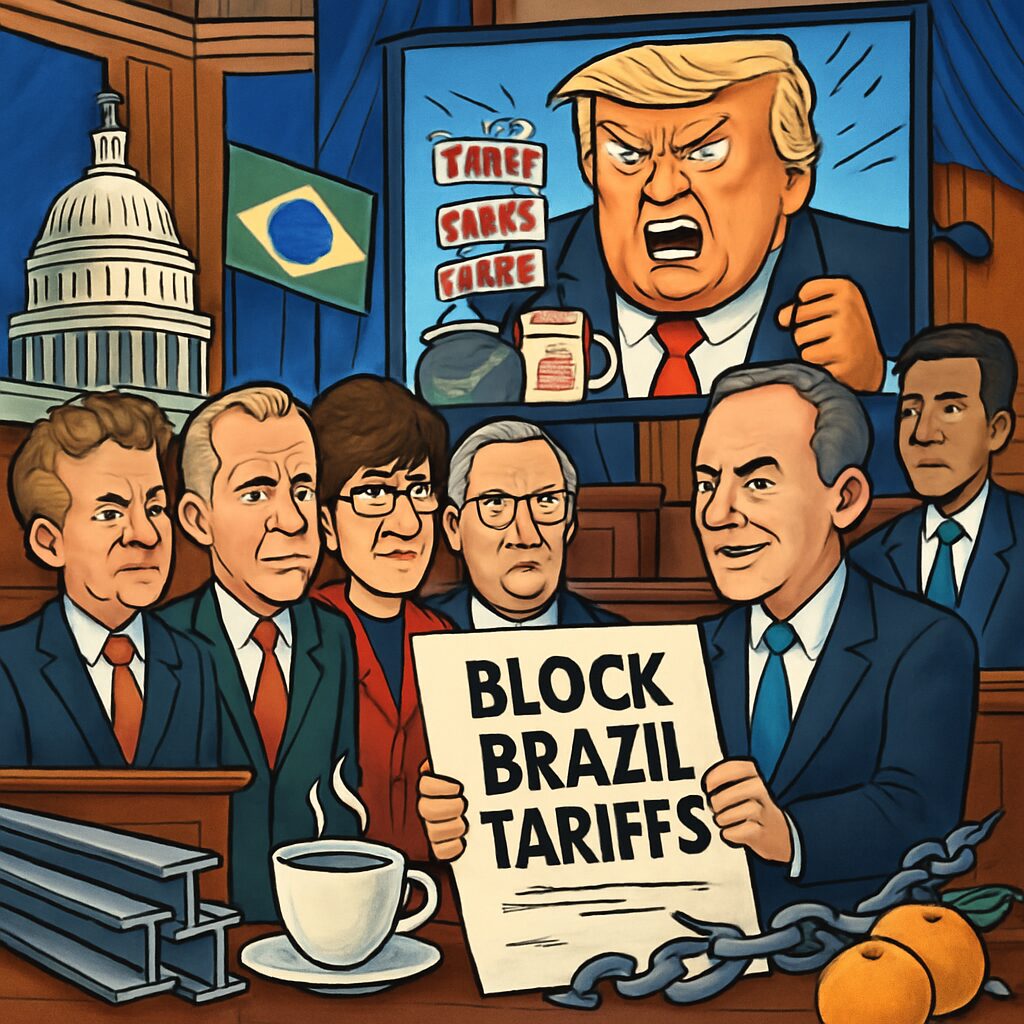

In a rare bipartisan rebuke, the Senate voted on Tuesday, October 28, 2025, to block President Donald Trump’s tariffs on Brazil, with five Republicans crossing party lines in a 52-48 vote. While largely symbolic due to House obstacles, the resolution signals growing discontent with the administration’s trade policies and use of emergency powers.
The Republican senators who joined Democrats were Rand Paul of Kentucky, Thom Tillis of North Carolina, Susan Collins of Maine, Lisa Murkowski of Alaska, and Mitch McConnell, also of Kentucky. McConnell, the former Senate GOP leader, has long criticized Trump’s tariff approach, stating ahead of the vote that ‘tariffs make both building and buying in America more expensive.’ Their support highlighted internal party divisions and underscored the economic concerns driving this unusual alignment in a typically polarized chamber.
Led by Sen. Tim Kaine, a Virginia Democrat, the resolution aims to terminate the emergency declaration Trump invoked under the International Emergency Economic Powers Act to impose the tariffs. Trump’s executive order cited Brazil’s indictment of former President Jair Bolsonaro as an ‘unusual and extreme emergency’ threatening the United States, but Kaine argued this was a misuse of presidential authority. He questioned the rationale, noting the U.S. has a trade surplus with Brazil and that the situation does not constitute a genuine emergency warranting such measures.
The tariffs target key Brazilian imports like steel, aluminum, coffee, and orange juice, which could raise costs for American consumers and businesses. Critics warn that trade barriers might harm bilateral relations and disrupt supply chains, while the administration defends them as addressing human rights abuses. However, the bipartisan vote suggests that economic impacts are prompting some lawmakers to prioritize policy over party loyalty, reflecting broader anxieties about trade wars.
This vote is part of a series of Senate efforts to challenge Trump’s trade policies, including previous resolutions on Canada tariffs that also passed but stalled in the House. Kaine acknowledged the symbolic nature of these actions but believes they can influence the president, citing instances during Trump’s first term where bipartisan pushback led to policy adjustments. The strategy tests Republican support for Trump’s agenda and may pressure the administration to reconsider its approach.
Despite Senate passage, the resolution is unlikely to advance in the House, where Republicans have added procedural rules blocking votes on the president’s tariffs. This limits immediate legislative impact but serves as a political statement on executive overreach and trade policy. The vote reflects mounting concerns among some Republicans about the economic consequences of tariffs and the expansion of presidential power, potentially shaping future debates on congressional oversight.
Looking ahead, senators plan additional votes on other tariffs, including those on Canada and global measures announced on ‘liberation day,’ indicating that trade will remain a contentious issue. While the Brazil tariff resolution may not become law, it signals potential for bipartisan cooperation and could prompt discussions on balancing economic interests with executive authority in international relations.