

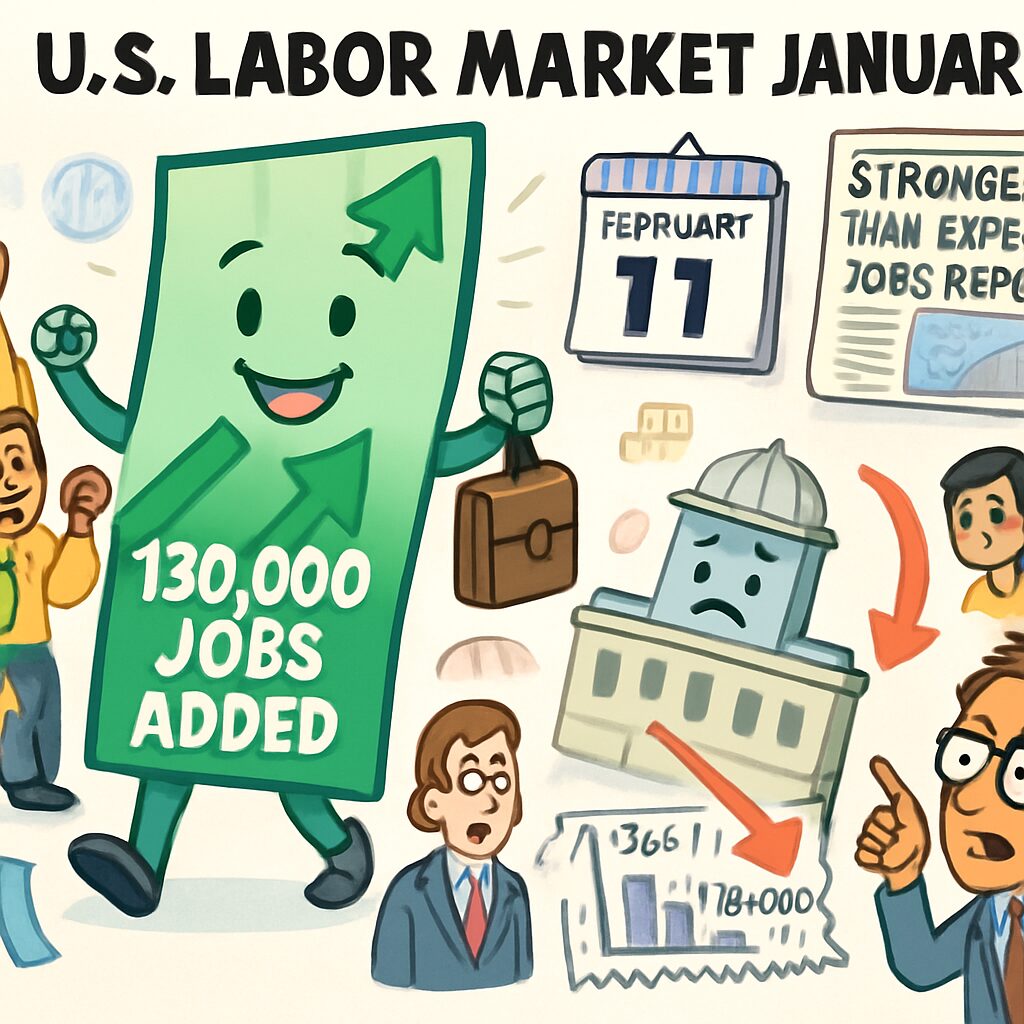
The U.S. labor market showed signs of stabilization in January 2026 as employers added 130,000 jobs, beating expectations, but annual revisions exposed that 2025 had one of the weakest job growth rates outside a recession.
Released on February 11, 2026, by the Bureau of Labor Statistics, the report indicated the unemployment rate dipped to 4.3% from 4.4% in December, surpassing economist forecasts of 75,000 new jobs. This suggests a potential turnaround after a period of labor market weakness, though the gains were unevenly distributed across sectors.
Job creation was heavily concentrated in health care and social assistance, which added 123,500 positions, followed by professional and business services with 34,000 jobs, and construction with 33,000, likely boosted by mild weather. Conversely, the government sector lost 42,000 jobs, and other industries saw minimal growth, highlighting the fragile nature of the recovery.
A key aspect of the report was the annual benchmark revision, which slashed 2025 job growth estimates from 584,000 to just 181,000, revealing nearly 900,000 fewer jobs than previously counted over a recent period. This downward adjustment, one of the largest on record, underscores significant economic shifts and data collection challenges that masked last year’s labor market struggles.
Economists caution that while the headline numbers are positive, underlying issues persist. Heather Long of Navy Federal Credit Union noted stabilization as a first step, but Josh Hirt of Vanguard warned against interpreting this as a reacceleration, citing overreliance on health care, softened wage gains of 3.7%, and fewer job openings relative to unemployed workers.
The labor market’s 2025 weakness stemmed from multiple factors, including restrictive immigration policies and deportations under the Trump administration, which reduced worker supply, coupled with Baby Boomer retirements. Employers’ hiring hesitancy amid uncertainty, geopolitical tensions, and AI-driven productivity gains has led some experts to label this a ‘jobless expansion.’
Looking forward, cautious optimism exists for the second half of 2026, with expected larger tax refunds potentially boosting consumer spending and new incentives possibly spurring hiring and investments in AI and infrastructure. The Federal Reserve, which held rates steady in January after 2025 cuts, is monitoring closely, with some policymakers urging further support to avert deterioration.
In conclusion, the stronger-than-expected January jobs report offers hope for a labor market turnaround, but it is tempered by stark past revisions and ongoing structural challenges, indicating a phase of stabilization rather than robust growth, with future outcomes hinging on policy and economic trends.

