

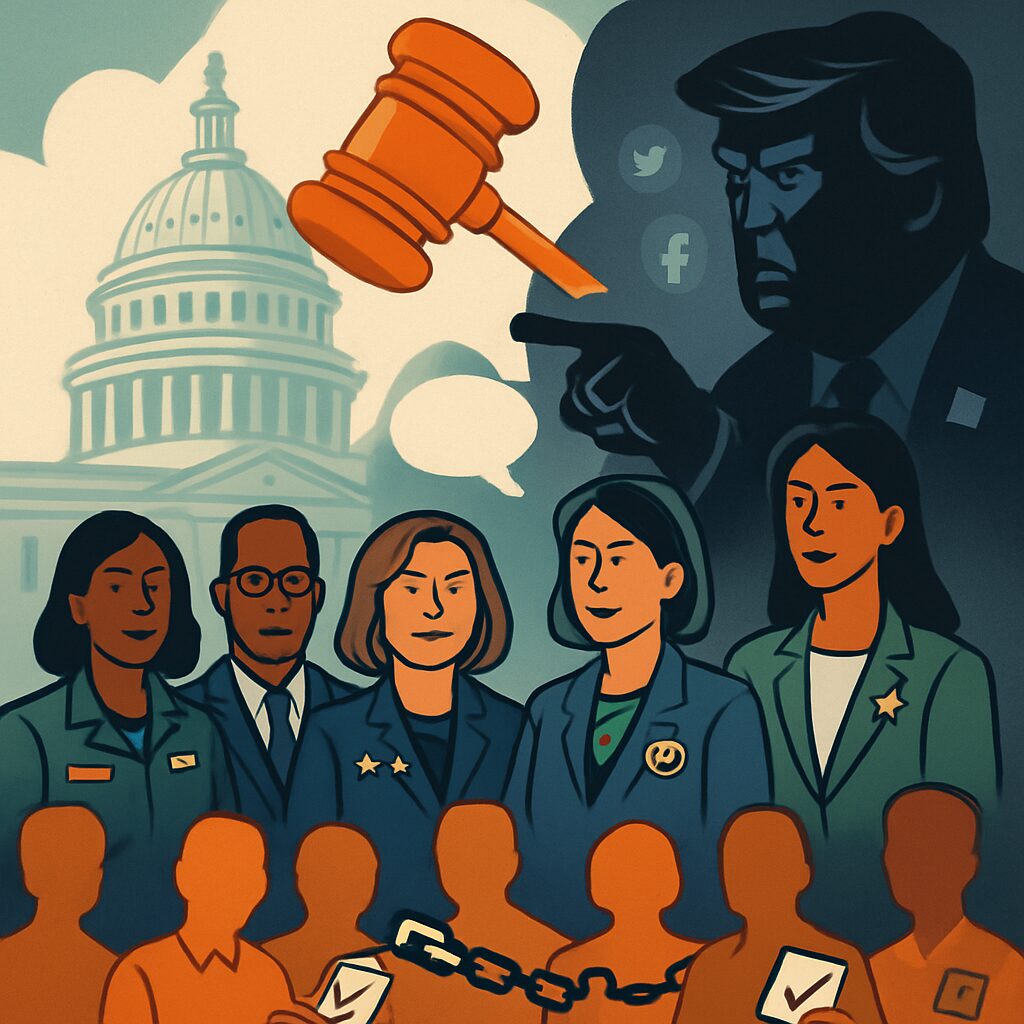
A federal grand jury has rejected the Trump administration’s attempt to indict six Democratic lawmakers over a video urging military members to disobey illegal orders, marking a significant setback for the president’s efforts to criminalize political dissent.
The decision, handed down on Tuesday, February 11, 2026, came after the Justice Department sought charges under an anti-insubordination law. The grand jury, composed of anonymous citizens, declined to proceed with the case, effectively halting the prosecution.
The controversy stems from a 90-second video released in November, featuring lawmakers with military and intelligence backgrounds: Senators Elissa Slotkin of Michigan and Mark Kelly of Arizona, and Representatives Jason Crow of Colorado, Maggie Goodlander of New Hampshire, and Chris Deluzio and Chrissy Houlahan of Pennsylvania. In the video, they reminded service members and intelligence officials of their duty under the Uniform Code of Military Justice to refuse unlawful commands.
President Donald Trump had accused the lawmakers of “seditious behavior, punishable by death” in social media posts, prompting the DOJ investigation. The administration argued that the video obstructed law enforcement, but legal experts noted that urging obedience to the law is protected speech.
Following the grand jury’s decision, Slotkin stated that it upheld the rule of law and hoped it would end the “politicized investigation.” She alleged that the attempt to indict her was directed by Trump, who she said has weaponized the justice system against political opponents.
In an interview with PBS NewsHour, Rep. Jason Crow signaled potential legal action against the administration. His attorney has requested preservation of evidence, and Crow vowed to hold accountable those who abuse their positions. He emphasized that the grand jury’s refusal to indict shows the system is working as intended by the Constitution’s framers.
The video’s message aligns with military law, which requires service members to disobey patently illegal orders. However, the administration’s push to prosecute the lawmakers has raised concerns about the erosion of democratic norms and the targeting of political adversaries.
Broader implications include heightened political tensions, with Republicans like House Speaker Mike Johnson supporting the indictment efforts, while Democrats condemn them as abuse of power. The incident underscores ongoing debates about presidential authority and the independence of the justice system.
Moving forward, the lawmakers may pursue lawsuits, such as Kelly’s case against the Defense Department, and continue to advocate for constitutional protections. The grand jury’s decision is seen as a victory for free speech and a check on executive overreach, but the administration could seek other legal avenues, keeping the conflict alive.

