

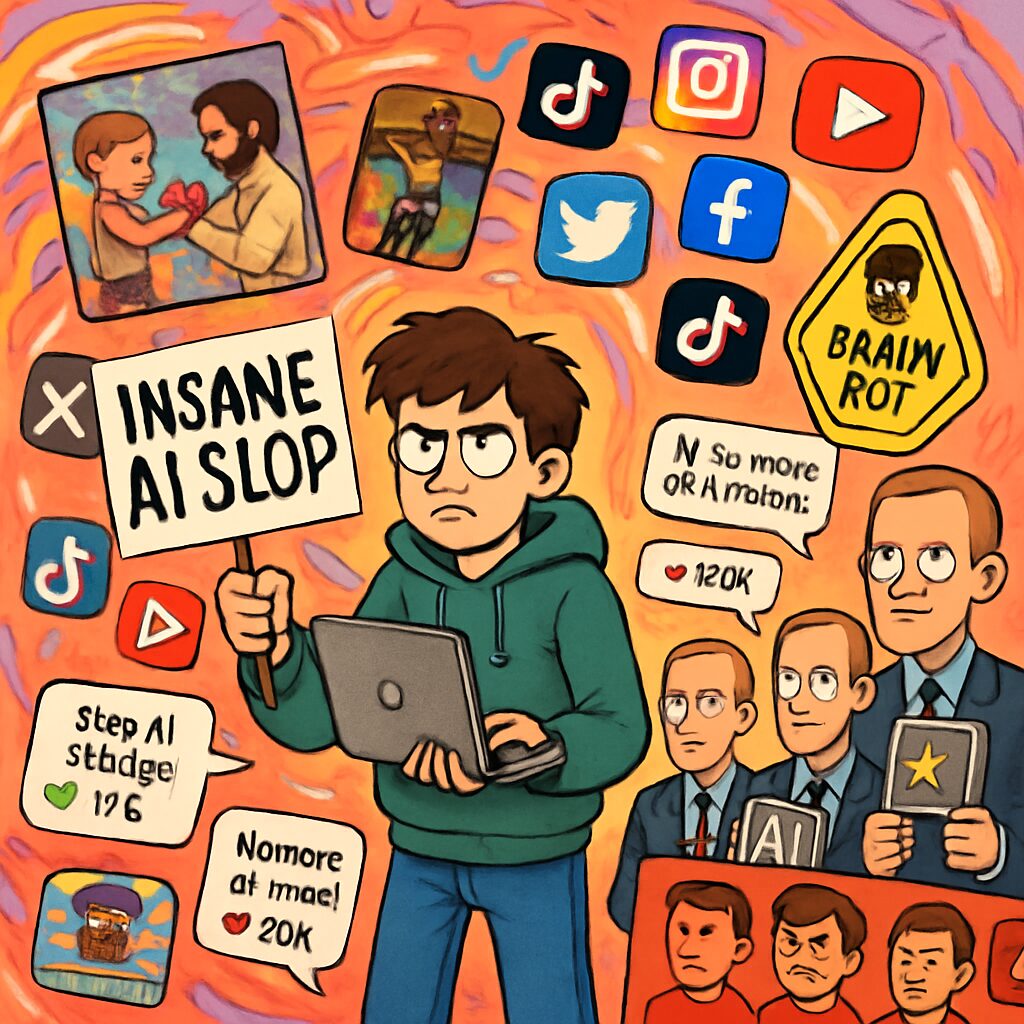
The rapid influx of AI-generated low-quality content, often called “slop,” is fundamentally altering social media experiences, with a mounting backlash from users who are increasingly vocal about the prevalence of fake and unconvincing videos and images. This trend, driven by the ease of AI tools, has led to a surge in bizarre and deceptive posts that often go viral, raising concerns about misinformation and digital pollution.
The issue gained prominence through figures like Théodore, a 20-year-old student from Paris, who started an X account called “Insane AI Slop” to expose and ridicule such content. His campaign highlights common themes, such as impoverished children performing heartwarming acts or religious and military scenarios, which attract massive engagement despite clear AI artifacts. Théodore’s account quickly amassed over 130,000 followers, reflecting growing public awareness and frustration.
Major tech companies, including Meta and YouTube, have openly embraced AI, with Meta CEO Mark Zuckerberg declaring a “third phase” of social media centered on AI-generated content. These platforms are actively promoting AI tools for content creation, from image generators to advanced filters. However, executives also acknowledge concerns about “low-quality content,” with YouTube’s Neal Mohan stating efforts to reduce its spread, though stopping short of outright bans.
Research indicates the scale of the problem; for instance, AI company Kapwing found that 20% of content on new YouTube accounts is low-quality AI video, with short-form videos being particularly affected. The creator economy fuels this trend, as channels like India’s Bandar Apna Dost earn millions from billions of views, demonstrating the financial incentives behind AI slop despite its questionable quality.
User backlash is manifesting in comment sections across platforms like TikTok, Instagram, and X, where anti-AI sentiments often garner more likes than the original posts. For example, a video of a snowboarder rescuing a wolf had 932 likes, but a comment criticizing AI content received 2,400 likes. This grassroots movement underscores a divide between content consumers and creators, with many users expressing exhaustion over deceptive or nonsensical AI material.
Experts warn of deeper implications, such as the “brain rot” effect, where constant exposure to low-quality content reduces attention spans and critical thinking. Emily Thorson of Syracuse University notes that while AI slop might be entertaining for some, it becomes problematic for those seeking genuine information or community. Alessandro Galeazzi from the University of Padova adds that the mental effort to verify content may lead to apathy, further eroding trust in online media.
Moderation challenges compound the issue, as companies like Meta and X have cut moderation teams, relying more on user reports to flag misleading content. This approach struggles with the subjective nature of “slop” and the increasing difficulty of AI detection. Incidents like the use of AI to create non-consensual imagery or spread political disinformation highlight the potential for harm, emphasizing the need for better infrastructure to authenticate real content.
Looking ahead, the possibility of slop-free social media platforms remains slim due to technical hurdles in detection, but examples like BeReal show that user demand for authenticity can influence mainstream platforms. Ultimately, as Théodore concedes, AI slop may be here to stay, representing a new normal in digital life where the line between reality and fabrication continues to blur.

