

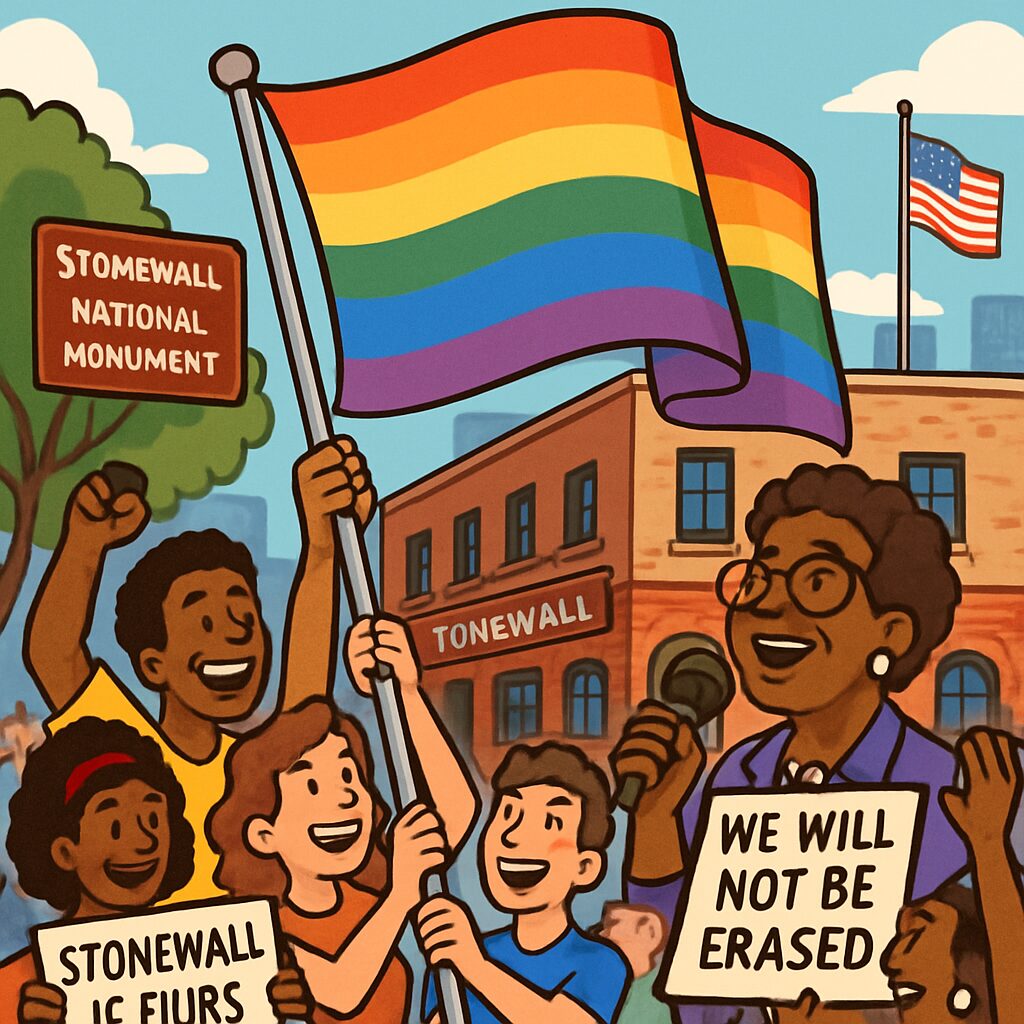
In a bold act of defiance, a Pride flag was raised at the Stonewall National Monument in New York City on February 13, 2026, just days after the Trump administration ordered its removal. This symbolic gesture reaffirms the LGBTQ+ community’s rights and protests a federal directive that restricts flag displays on National Park Service sites.
The flag was taken down earlier this week following a directive from the Trump administration that limited the types of flags permitted on federal properties, specifically targeting non-governmental flags like the LGBTQ+ Pride flag. The National Park Service complied, replacing the rainbow banner with an American flag, which sparked immediate outrage among local officials and activists.
In response, New York City leaders, including Manhattan Borough President Mark Levine, organized a rally and flag-raising ceremony at the monument on Thursday. Hundreds of supporters gathered as officials hoisted a large Pride flag, chanting slogans and holding signs that read ‘Stonewall is ours’ and ‘We will not be erased.’ The event was peaceful but charged with emotion, highlighting the deep connection between the site and the LGBTQ+ rights movement.
The Stonewall National Monument commemorates the 1969 Stonewall riots, a pivotal moment in the fight for LGBTQ+ equality in the United States. Established as a national monument in 2016, it has since been a focal point for pride celebrations and protests. The removal of the Pride flag was seen by many as an attempt to undermine this history, prompting swift backlash from civil rights groups and politicians.
Reactions poured in from various quarters. Levine stated, ‘They cannot erase our history. Our Pride flag will be raised again,’ emphasizing the community’s resilience. Similarly, national LGBTQ+ organizations condemned the administration’s move as discriminatory and out of step with public sentiment, citing polls that show majority support for LGBTQ+ rights.
The Trump administration’s directive is part of a broader pattern of policies perceived as hostile to LGBTQ+ individuals, including attempts to roll back protections in healthcare, education, and the military. This incident has reignited debates over federal overreach and states’ rights, with New York officials vowing to challenge the order legally if necessary. It also underscores the ongoing cultural wars in American politics.
Looking ahead, the flag’s reinstatement may not be the end of the story. Legal experts suggest that the directive could face challenges in court on grounds of free speech or equal protection. Moreover, activists plan to maintain vigilance, with upcoming pride events likely to feature this issue prominently. The event has galvanized the LGBTQ+ community and its allies, setting the stage for continued advocacy.
In conclusion, the raising of the Pride flag at Stonewall symbolizes more than a mere protest; it is a reaffirmation of identity and rights in the face of political adversity. As the nation watches, this small act in Greenwich Village echoes larger struggles for equality and representation in America.

