

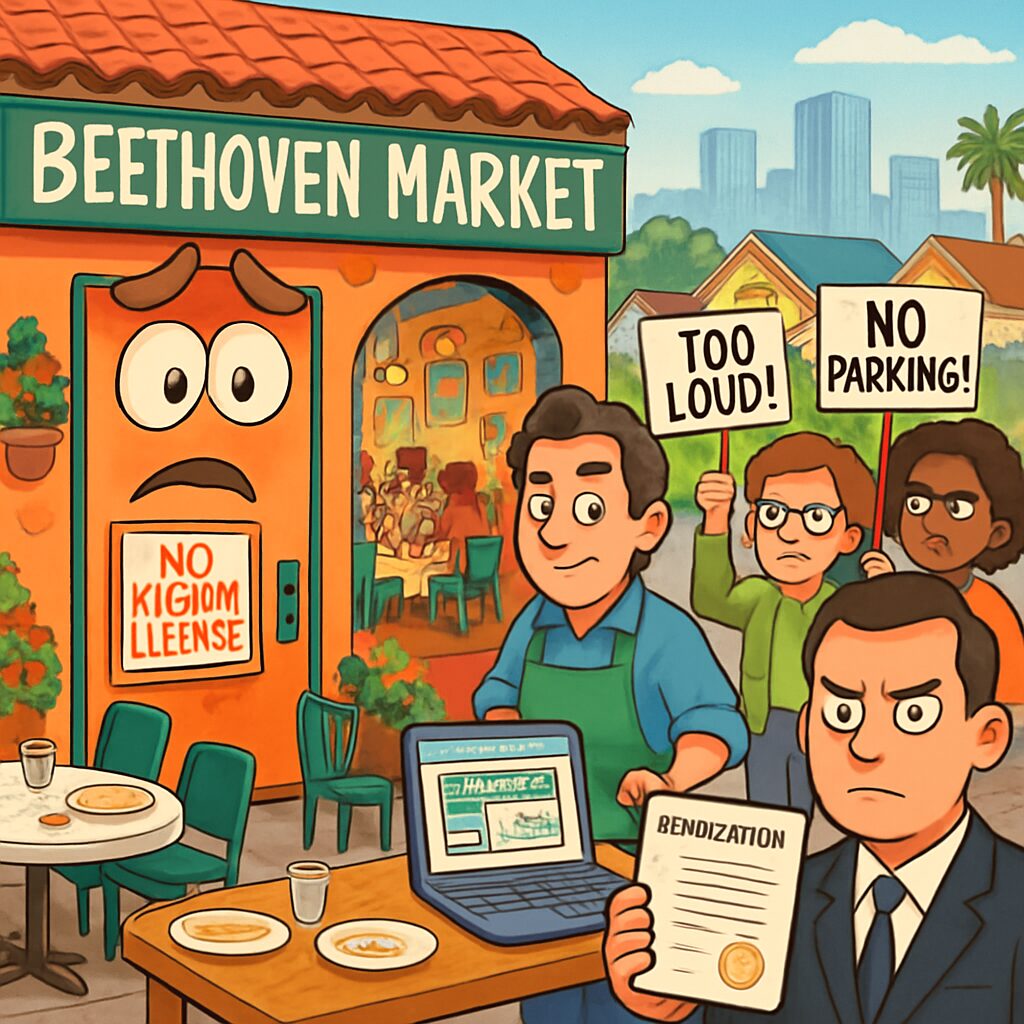
In a vivid example of urban growing pains, Beethoven Market, a popular Cal-Italian restaurant in Los Angeles’s Mar Vista neighborhood, is grappling with severe operational setbacks after the city revoked its liquor license in response to a flood of complaints from nearby residents. The loss of alcohol sales has reportedly slashed business by half, threatening the viability of a venue that quickly became a local sensation upon its opening less than a year ago.
Beethoven Market opened its doors in March 2025, transforming a former grocery store into a bustling dining spot celebrated for its California-Italian cuisine and vibrant atmosphere. Owned by Jeremy Adler, a partner from Santa Monica’s Cobi’s, the restaurant rapidly gained popularity, drawing crowds that often overflowed into the residential streets. However, this success soon sparked friction with neighbors, who began filing complaints with the City of Los Angeles as early as April 2025, citing issues such as excessive noise, congested parking, and violations related to outdoor dining and alcohol service.
The complaints accumulated swiftly, with 49 formal grievances logged over nine months, according to city records. In May 2025, the restaurant received its first Notice of Code Violation for breaching conditions of the city’s Restaurant Beverage Program (RBP), which expedites liquor licenses for sit-down establishments. Subsequent orders followed in July and September, culminating in the Department of City Planning terminating the RBP authorization on December 18, 2025, effectively revoking the interim operating permit for alcohol sales.
Since the revocation, Beethoven Market has continued operating but without serving liquor, beer, or wine, a move that has significantly impacted its revenue. A source close to the situation told Page Six that business has declined by at least 50 percent, adversely affecting staff financially. The restaurant has communicated the change to diners, informing them of the inability to serve alcohol, which has altered the dining experience and likely driven away some patrons.
The dispute has exposed deeper neighborhood tensions, with some residents accusing complainants of NIMBY-ism—opposing new developments in their backyard. One local, who still frequents the restaurant, suggested to Page Six that the noise complaints were a pretext, stemming from frustration over difficulty securing reservations at the in-demand spot. This perspective highlights a conflict between the restaurant’s role as a community hub and the disruptions it may cause in a quiet residential area.
In response, owner Jeremy Adler has launched a community support campaign, setting up a website where residents can share positive testimonials about Beethoven Market’s impact. Adler emphasized in a statement that the restaurant was created as a welcoming gathering place and is actively working with city officials to address the license issue. This outreach aims to bolster local backing and demonstrate the restaurant’s value to the neighborhood beyond the controversies.
The situation underscores the challenges faced by small businesses in navigating urban regulations and community relations. The Restaurant Beverage Program, designed to streamline liquor licensing, has become a point of contention, with Beethoven Market’s case illustrating how compliance issues can escalate. As the restaurant engages in discussions with the city, its future hinges on finding a balance between operational needs and neighborhood harmony.
Looking ahead, the outcome could set a precedent for similar establishments in Los Angeles, where the interplay between commercial vitality and residential quality of life is constantly negotiated. Whether Beethoven Market can regain its liquor license and recover its early momentum remains uncertain, but its struggle highlights the delicate dance between innovation and inertia in city landscapes.

