

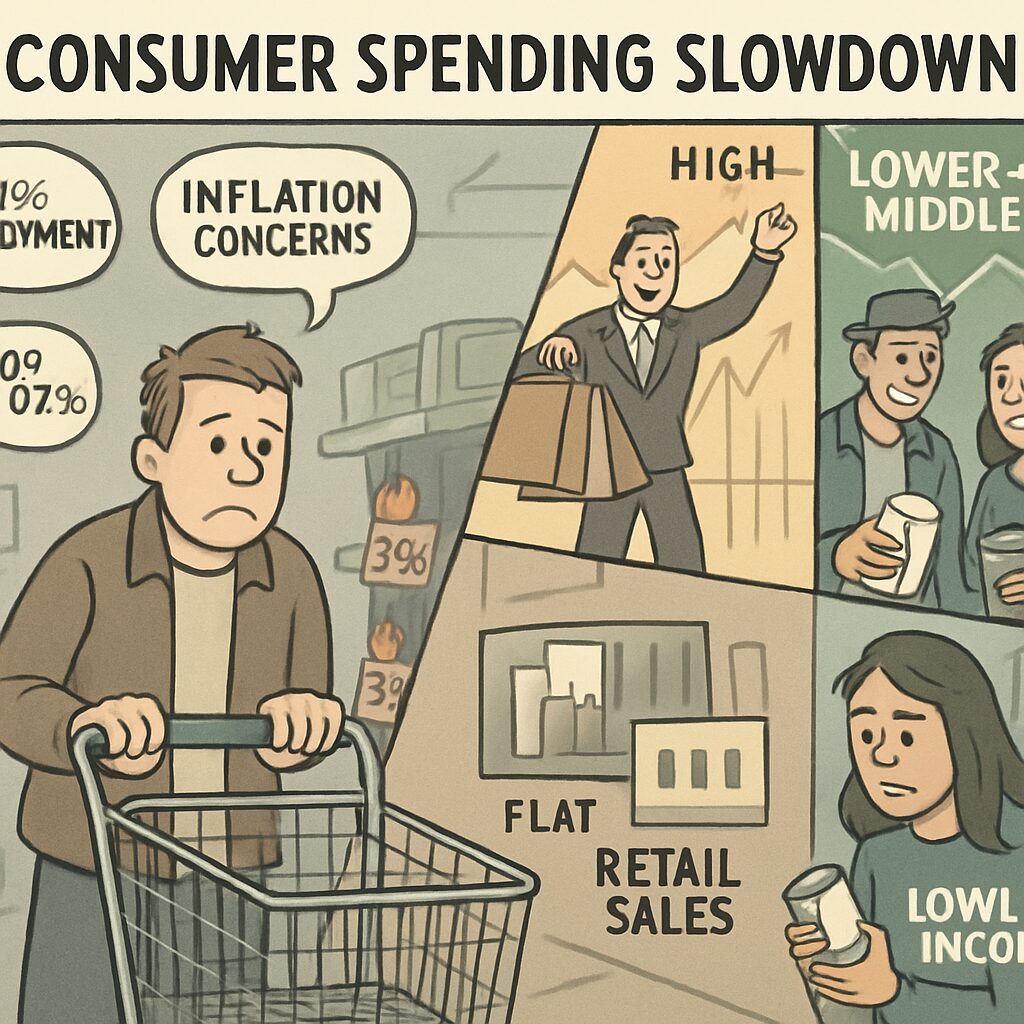
Executive summary: U.S. retail sales were unexpectedly flat in December 2025, marking a pause in consumer spending that has raised concerns about the strength of the economy heading into 2026. The data, released by the Commerce Department, suggests that Americans pulled back during the holiday season amid a faltering labor market and persistent inflation.
The Commerce Department reported on Tuesday that retail sales showed no change in December compared to November, following a 0.6% increase the previous month. This stagnation was unexpected, as consumers had previously continued to spend robustly despite dimming economic sentiment. The report, which had been delayed due to a government shutdown, indicates a potential shift in consumer behavior that could signal broader economic headwinds.
Several factors contributed to the spending slowdown. A weakening labor market, with only modest job growth in December and an unemployment rate dipping to 4.4%, coupled with cooling wage growth—which slowed to 0.7% in the fourth quarter, the lowest pace in over four years—has made consumers more cautious. Persistent inflation has also eroded purchasing power, leading many to prioritize necessities over discretionary items.
The flat sales data revealed a divide in consumer spending patterns. High-income consumers, buoyed by record stock markets, continued to drive spending, while lower- and middle-income Americans shifted towards essential purchases. Sales in categories like furniture and clothing declined by 0.9% and 0.7% respectively, while spending on gasoline and building materials saw upticks, highlighting this economic disparity.
Economists offer mixed perspectives on the implications. Chris Zaccarelli of Northlight Asset Management noted that consumer spending has finally aligned with pessimistic sentiment, suggesting a concerning trend. However, others like Michael Pearce from Oxford Economics believe the weakness may be temporary, citing potential rebounds from tax refunds and Federal Reserve interest rate cuts implemented last year.
The broader context includes upcoming economic reports that will provide a clearer picture. A labor market update on Wednesday and fourth-quarter GDP estimates next week will be closely watched. If the labor market remains stable, consumer spending could recover, but if job growth falters further, the slowdown might deepen, impacting the U.S. economy, which relies on consumption for about two-thirds of its activity.
Looking ahead, the retail sales report underscores the fragility of the economic recovery. With consumer confidence wavering and external pressures like tariffs affecting certain sectors, policymakers and businesses are monitoring for signs of a sustained downturn. The data serves as a cautionary note as the economy enters 2026, with implications for monetary policy and market stability.
In summary, the December spending pause reflects a confluence of economic challenges that could influence future growth. While some analysts view it as a blip, others see it as a warning signal that requires attention to underlying issues such as wage stagnation and inflation to ensure continued economic resilience.

