

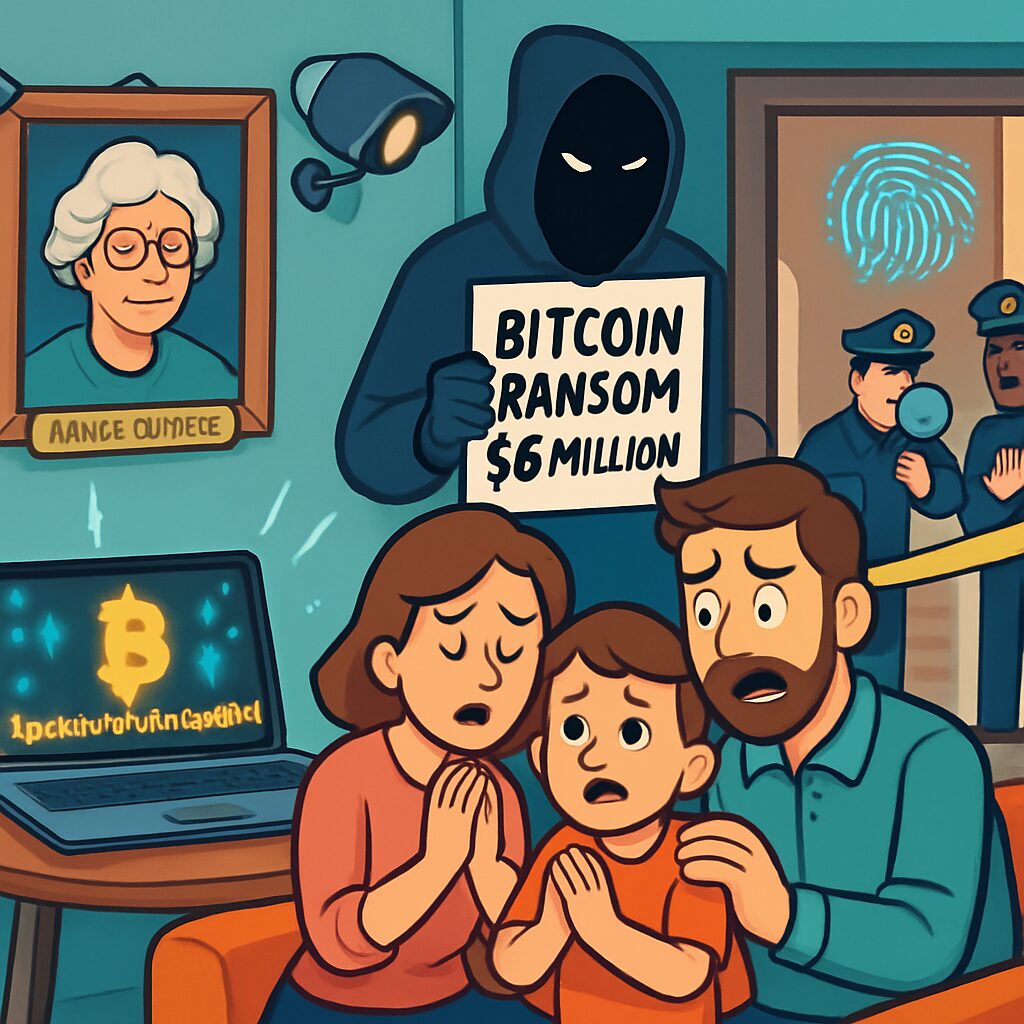
In the high-profile kidnapping case of Nancy Guthrie, the 84-year-old mother of ‘Today’ show anchor Savannah Guthrie, a cryptocurrency expert has highlighted a potential breakthrough: the ransom note’s bitcoin address could serve as a digital fingerprint to trace the abductor. This development comes as investigators grapple with verifying the authenticity of the ransom demands, which set a deadline for payment that has now passed.
Nancy Guthrie was last seen on the evening of January 31 after having dinner with family in Tucson, Arizona, and was reported missing the next day. Law enforcement quickly determined she was taken against her will from her home, where evidence such as blood matching her DNA, a propped-open door, and a disconnected doorbell camera was found. The Pima County Sheriff’s Department has been treating the home as a crime scene, with searches extending to nearby properties and surveillance footage review.
The purported kidnapper sent ransom notes to media outlets, demanding $6 million in bitcoin and setting two deadlines: one on February 5 and another on February 9 at 5 p.m. local time. In response, Savannah Guthrie and her siblings released emotional video appeals, expressing willingness to pay the ransom and pleading for their mother’s safe return. However, investigators have not confirmed the notes’ authenticity and are advising against payment without proof of life, citing risks and the potential for the demands to be a hoax.
Cryptocurrency expert Bezalel Eithan Raviv, CEO of Lionsgate Network, told Page Six that the use of a real bitcoin address in the ransom note is a critical clue. He explained that blockchain forensics can trace transactions, and by sending a small amount to the address, investigators could potentially uncover the wallet’s destination and identify the criminal. Raviv emphasized that cryptocurrency is not anonymous, contrary to common belief, and that with proper resources, the abductor could be located.
Despite this insight, law enforcement faces challenges due to limited expertise in cryptocurrency and blockchain technology. Retired FBI agents Rich Frankel and Brad Garrett noted that investigators are still assessing the credibility of the ransom notes and have not established direct communication with the kidnapper. The absence of proof of life, such as a photo or video of Nancy Guthrie, complicates negotiations, and the possibility of AI-generated content adds another layer of uncertainty.
As the February 9 deadline passed without resolution, the investigation continues with renewed urgency. Authorities have revisited Nancy Guthrie’s home, searched a septic tank, and examined surveillance video from a nearby gas station, though leads have been scarce. The Guthrie family remains hopeful, with Savannah stating in a recent appeal that they believe their mother is still alive and urging the public for assistance.
The case underscores the evolving nature of crime in the digital age, where ransom demands increasingly involve cryptocurrency. Raviv advocates for better training of law enforcement in blockchain forensics to handle such cases effectively. If successful, this investigation could demonstrate how technology can be leveraged to solve crimes that exploit digital anonymity.
In conclusion, while the search for Nancy Guthrie persists with no suspects identified, the crypto expert’s analysis offers a glimmer of hope. The integration of advanced forensic techniques may yet uncover the kidnapper’s identity, emphasizing the need for collaboration between traditional law enforcement and tech experts. The Guthrie family’s ordeal highlights the human cost of such crimes, as they await any sign that will bring their mother home.

