

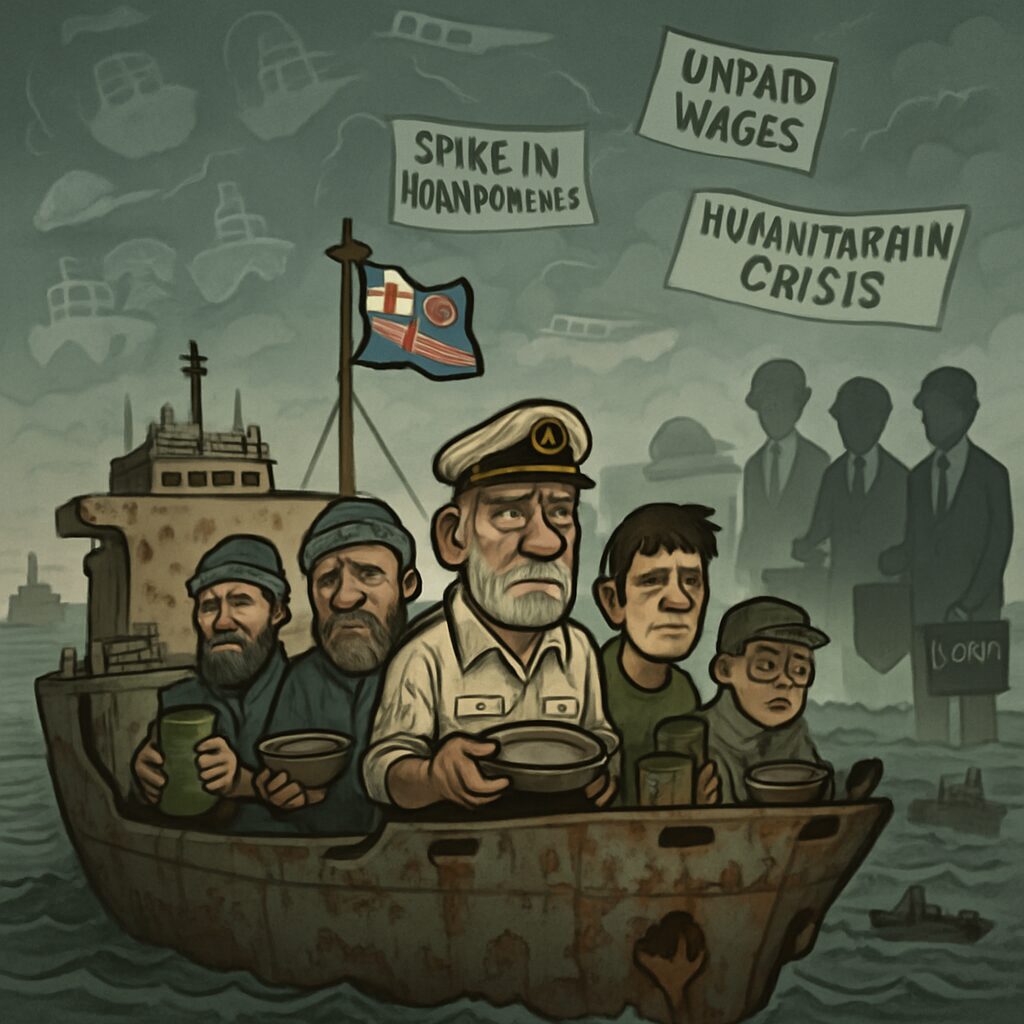
The number of abandoned oil tankers and commercial ships has surged over the past year, with 410 vessels deserted in 2025 alone, marking a nearly one-third increase from 2024 and leaving over 6,200 seafarers stranded without pay or support.
In recent months, a disturbing trend has emerged in global shipping, as oil tankers and other commercial vessels are being abandoned by their owners at an alarming rate. According to reports from the International Transport Workers’ Federation (ITF), 410 ships were abandoned in 2025, up from previous years, with 6,223 merchant seamen affected. This spike represents a significant humanitarian and economic crisis in the maritime industry.
The human toll is starkly illustrated by the case of Ivan, a Russian senior deck officer who spoke from an abandoned tanker off the coast of China. He described severe shortages of food and water, with the crew struggling to survive day by day. The ship, loaded with 750,000 barrels of Russian crude oil valued at around $50 million, has been stranded since December after the crew went unpaid for months. While the ITF has intervened to provide some support, most crew members remain on board, highlighting the dire conditions faced by abandoned seafarers.
Geopolitical instability and the aftermath of the COVID-19 pandemic are key drivers behind this increase. Conflicts worldwide and supply chain disruptions have led to volatile freight costs, pushing some operators to the brink. Additionally, the rise of “shadow fleets”—ageing, often uninsured vessels with obscure ownership—has exacerbated the problem. These ships typically sail under flags of convenience from countries with lax regulations, enabling them to evade sanctions and operate covertly.
Flags of convenience, such as those from Panama, Liberia, and the Marshall Islands, allow shipowners to bypass strict laws, but they also contribute to abandonment issues. In 2025, 337 of the abandoned ships, or 82%, were registered under such flags. Gambia has recently become a popular choice, hosting 35 oil tankers by March 2025, up from none in 2023, despite having no real oversight over these vessels.
The international community, through organizations like the ITF and the International Maritime Organization (IMO), is working to address the crisis. Abandonment is defined as when shipowners fail to pay wages for at least two months or provide necessary support. Last year, abandoned crews were owed $25.8 million in wages, with the ITF recovering about $16.5 million. However, challenges persist due to untraceable owners and unresponsive flag states.
Efforts to protect seafarers include actions by governments, such as India blacklisting 86 foreign vessels in September 2025 over abandonment issues. Trade unions like Nautilus International are calling for a “genuine link” between shipowners and the flags they use, as mandated by international law but poorly enforced. This lack of accountability leaves crews vulnerable to exploitation and neglect.
Looking ahead, the shadow fleet phenomenon, particularly in smuggling Russian oil amid sanctions, poses ongoing risks. Greater international cooperation is needed to enforce regulations and ensure the safety and rights of maritime workers. As Ivan notes, seafarers must now be more vigilant in vetting vessels before signing contracts, but systemic changes are required to prevent future abandonments.

