

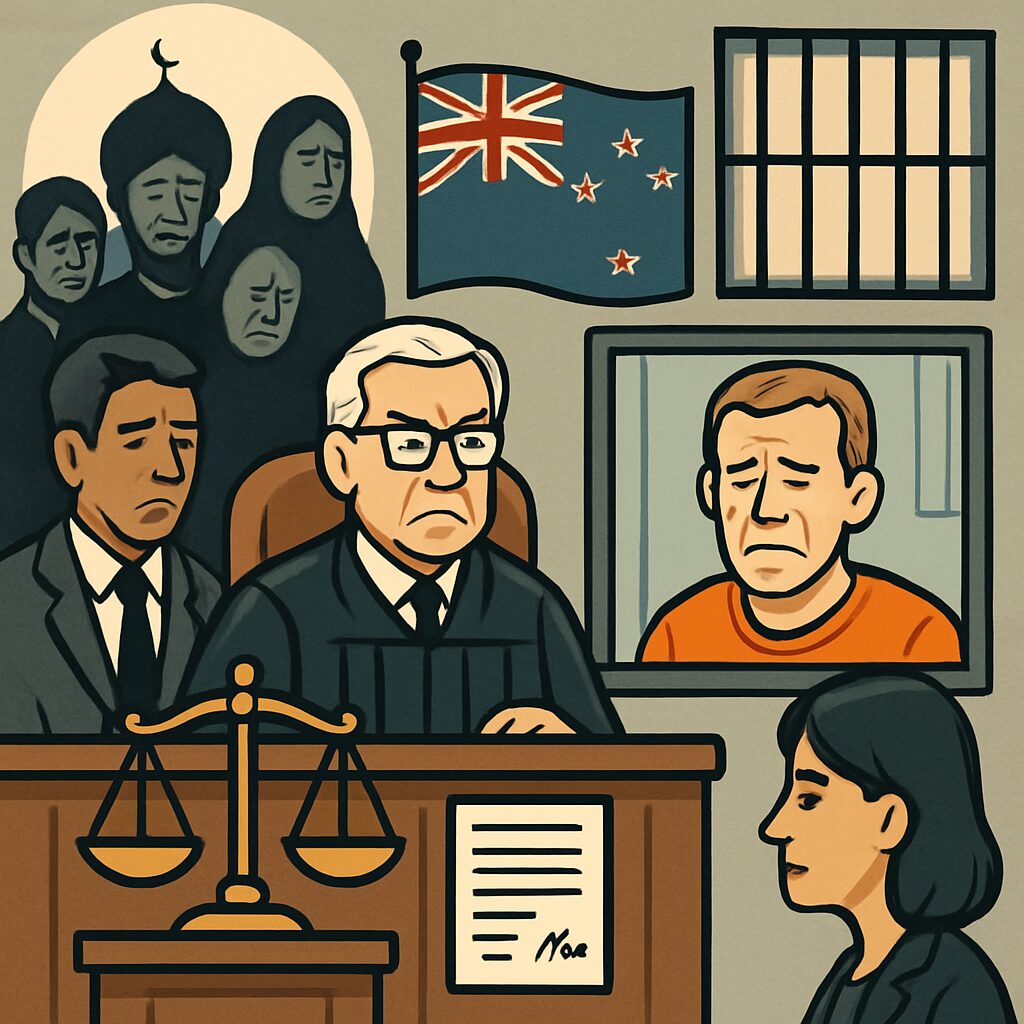
Brenton Tarrant, the Australian white supremacist who killed 51 people in the 2019 Christchurch mosque shootings, has appeared in court to seek permission to withdraw his guilty plea, arguing that harsh prison conditions impaired his mental health at the time of his admission. The hearing at New Zealand’s Court of Appeal in Wellington began on February 9, 2026, and is scheduled to last five days, with Tarrant giving evidence via video link from prison.
Tarrant, serving a life sentence without parole, claimed his mental state was compromised due to ‘torturous and inhumane’ conditions, including solitary confinement and limited privileges, leading to ‘nervous exhaustion’ when he pleaded guilty in March 2020. He argued that this made him incapable of rational decisions, just months before his trial was due to start. The court is primarily considering whether he was fit to enter the plea, with a decision expected later.
Crown lawyer Barnaby Hawes challenged Tarrant’s claims, suggesting little evidence of a serious mental crisis and noting he had alternatives like delaying the trial. The judges will determine if the appeal, filed in 2022 but heard now due to timeliness issues, can proceed. If granted, the case could return to the High Court for a full trial; if denied, a sentence appeal will be heard later this year.
Victims and family members are watching the proceedings via delayed broadcast in Christchurch, with Aya al-Umari, who lost her brother Hussein, expressing the emotional toll of revisiting trauma. She stated that Tarrant seems to seek limelight and relevance, but she is determined not to let him reopen wounds. The hearing has heightened security, with limited public access and provisions for affected communities.
Tarrant initially denied the charges but changed his plea a year after the attacks, admitting to 51 murders, 40 attempted murders, and terrorism. In August 2020, he became the first in New Zealand under current laws to receive life imprisonment without parole. The 2019 shootings at Al Noor Mosque and Linwood Islamic Centre, partly live-streamed, shocked the nation and led to swift legislative action.
In response, New Zealand’s parliament banned military-style semi-automatic weapons within a month and implemented a firearm buy-back scheme. The attacks also triggered the largest coronial investigation in the country’s history, which remains ongoing and may involve Tarrant as a witness. This legal appeal adds another layer to the complex aftermath of the tragedy.
Looking ahead, the court’s decision will impact the legal finality of the case and the healing process for survivors and families. If the plea is withdrawn, a retrial could prolong proceedings; otherwise, focus may shift to the sentence appeal. The outcome underscores ongoing challenges in addressing hate crimes and supporting victims in the wake of such violence.

