

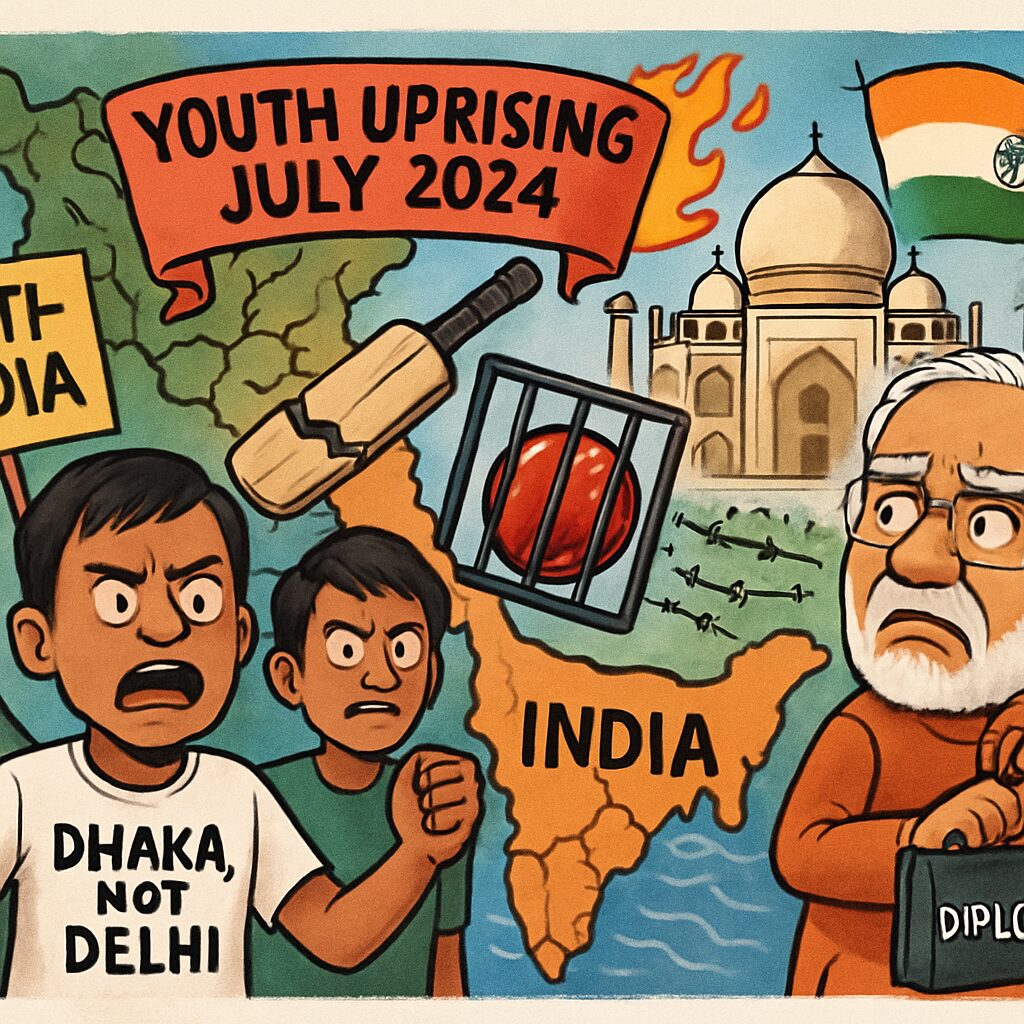
Anti-Indian sentiment is surging among Bangladesh’s youth, driven by perceptions of Indian interference in domestic politics and longstanding bilateral grievances, marking the lowest point in relations between the two neighbors in decades. This shift is reshaping the political landscape ahead of Bangladesh’s upcoming elections, with implications for regional stability and economic ties.
The unrest stems from a Gen Z-led uprising in July 2024 that toppled former Prime Minister Sheikh Hasina after 15 years in power, which critics say grew increasingly autocratic. Hasina fled to India following her resignation, and Delhi has refused to extradite her to face a death sentence imposed in absentia for a brutal 2024 security crackdown that killed around 1,400 people, according to UN estimates. Many young Bangladeshis blame India for supporting Hasina’s regime, citing disputed elections in 2014, 2018, and 2024 that were endorsed by Delhi, which they perceive as enabling democratic erosion.
Longstanding grievances have compounded this sense of betrayal. Issues such as border killings by Indian forces, water-sharing disputes over shared rivers, and trade restrictions have fueled a corrosive belief that India views Bangladesh as a pliant backyard rather than a sovereign equal. Recent incidents, like Delhi’s decision to bar a Bangladeshi cricketer from the Indian Premier League and refusal to relocate Bangladesh’s T20 World Cup matches from India to Sri Lanka, have further inflamed resentment among the youth.
Diplomatic efforts have done little to ease tensions. India has attempted to broaden its outreach, including Foreign Minister S. Jaishankar’s visit to Dhaka last month for a funeral and engagements with opposition parties like the Bangladesh Nationalist Party (BNP) and Islamist groups. However, analysts note that these tactical shifts have failed to arrest the broader slide, with bilateral relations described as at their lowest ebb in decades, worse than during previous crises.
Economic ties are now suffering due to the political strain. Bilateral trade, valued at $13.5 billion, could be higher if tariff barriers were eased, but the chill has led to suspended visa services and calls for boycotts of Indian goods. Cultural retaliation, such as the suspension of IPL broadcasts in Bangladesh, reflects how resentment has spilled into everyday life, undermining people-to-people connections that once thrived.
Despite the hostility, some officials caution against viewing the relationship solely through crises. They emphasize the multi-dimensional ties anchored in geography, shared language, and history, including daily movement across a 4,096-kilometer border. However, public sentiment has hardened sharply, with slogans like “Dhaka, not Delhi” appearing on walls and clothing, symbolizing a broader push for autonomy from Indian influence.
Repairing the relationship will require significant effort, largely from India, to move beyond managing Dhaka through favored intermediaries. Political figures argue that India must align its policies with the aspirations of Bangladeshis, not just government preferences, to rebuild trust. The upcoming election on February 12 offers a potential reset, but experts warn that underlying issues like water sharing and border security will persist, making any normalization slow and challenging.
In conclusion, while the rupture is not irreversible, the burden of repair lies with Delhi to demonstrate respect and equality. The current situation represents more than a diplomatic chill but less than a structural break, with geography and shared heritage ensuring that the two nations cannot ignore each other. The youth-led backlash highlights a pivotal moment in South Asian diplomacy, where future stability depends on addressing core grievances and fostering genuine partnership.

