

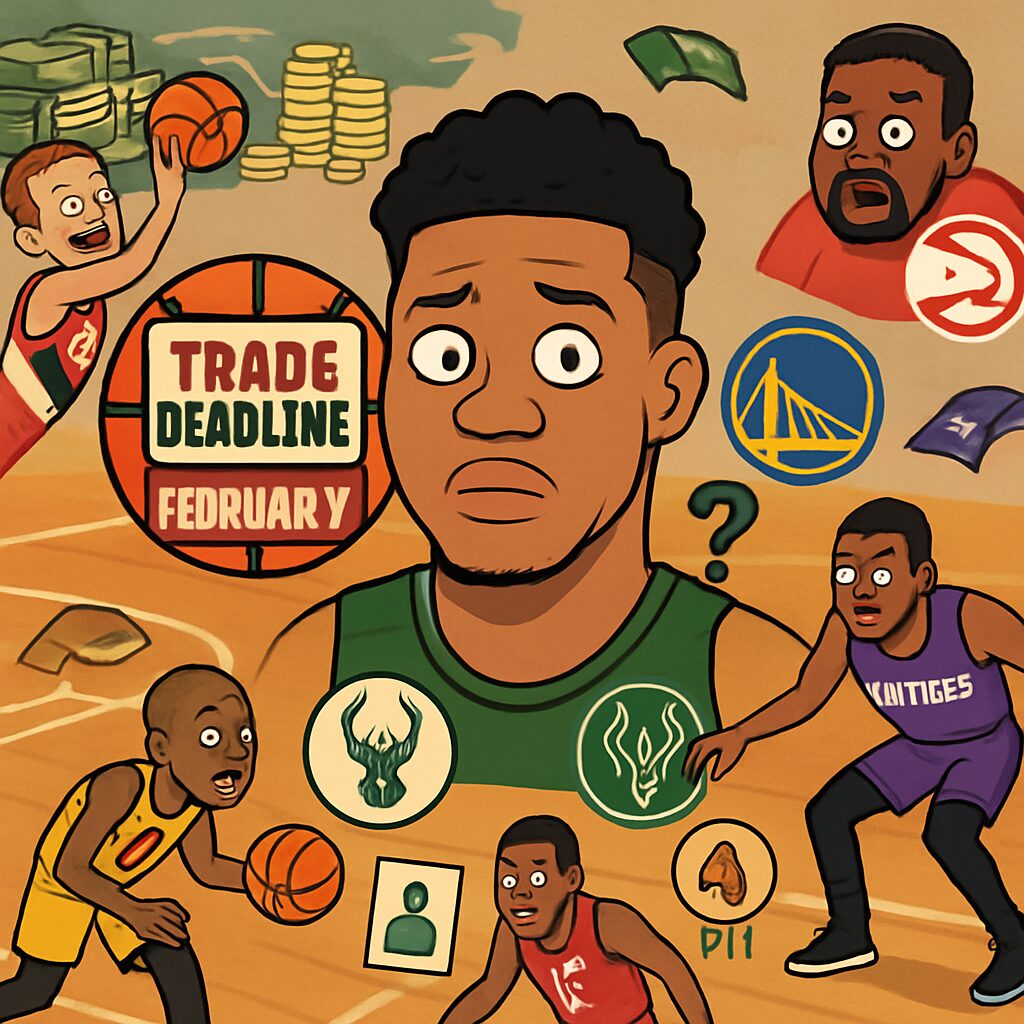
The NBA trade deadline on February 5, 2026, has ignited a wave of activity, with recent deals reshaping team rosters and intense speculation surrounding star player Giannis Antetokounmpo’s potential move. As the deadline approaches, insiders report multiple trades and ongoing negotiations that could alter the league’s competitive landscape.
On February 1, the Portland Trail Blazers acquired forward Vít Krejčí from the Atlanta Hawks in exchange for center Duop Reath and two future second-round picks. Krejčí, a 25-year-old shooter, brings much-needed perimeter scoring to a Blazers team ranked last in three-point percentage, while the Hawks gain draft assets and roster flexibility. This move signals Portland’s intent to bolster its wing depth without sacrificing long-term assets, as Krejčí is on a team-friendly contract with options for future seasons.
In a separate three-team trade, the Cleveland Cavaliers sent De’Andre Hunter to the Sacramento Kings for guards Dennis Schröder and Keon Ellis, with the Chicago Bulls acquiring forward Dario Šarić and draft picks. Hunter, who struggled in Cleveland, is expected to revitalize his career in Sacramento, where he can contribute defensively alongside Keegan Murray. The Cavaliers shed salary to avoid luxury tax penalties, while the Kings absorb Hunter’s contract but face financial constraints heading into next season.
The most significant storyline revolves around Giannis Antetokounmpo, who has informed the Milwaukee Bucks of his desire to part ways, making a trade increasingly plausible before the deadline. The Golden State Warriors have emerged as a front-runner, with general manager Mike Dunleavy actively pursuing a deal that could include multiple draft picks and players. However, sources indicate the Bucks are seeking a premier young player and substantial draft compensation, which may delay negotiations until the summer.
Other teams are in a holding pattern awaiting Milwaukee’s decision, but several have made smaller moves. The New York Knicks are shopping forward Guerschon Yabusele and exploring trades for point guard depth, while the Cleveland Cavaliers may look to move Lonzo Ball after acquiring Schröder. The Sacramento Kings, now over the luxury tax, could make additional deals involving veterans like Zach LaVine or Domantas Sabonis to balance their roster.
Financially, these trades have implications for team payrolls and luxury tax thresholds. For instance, the Cavaliers’ deal saves them over $40 million in tax payments, and the Philadelphia 76ers received a credit from Paul George’s suspension. Such moves highlight the strategic balancing act teams face between competitive aspirations and fiscal responsibility as they navigate the deadline.
As the clock ticks down, expect more activity, particularly with role players and draft picks changing hands. The Warriors’ pursuit of Antetokounmpo could set off a chain reaction, while contenders like the Denver Nuggets and LA Clippers may make minor adjustments. The deadline’s outcome will likely influence playoff races, with teams in both conferences jockeying for position in a tightly packed standings.
Ultimately, the 2026 trade season reflects the NBA’s dynamic nature, where player movement can swiftly alter team fortunes. Whether through blockbuster deals or calculated tweaks, franchises are positioning themselves for a postseason push, with the Giannis saga serving as the focal point of a drama-filled week.

