

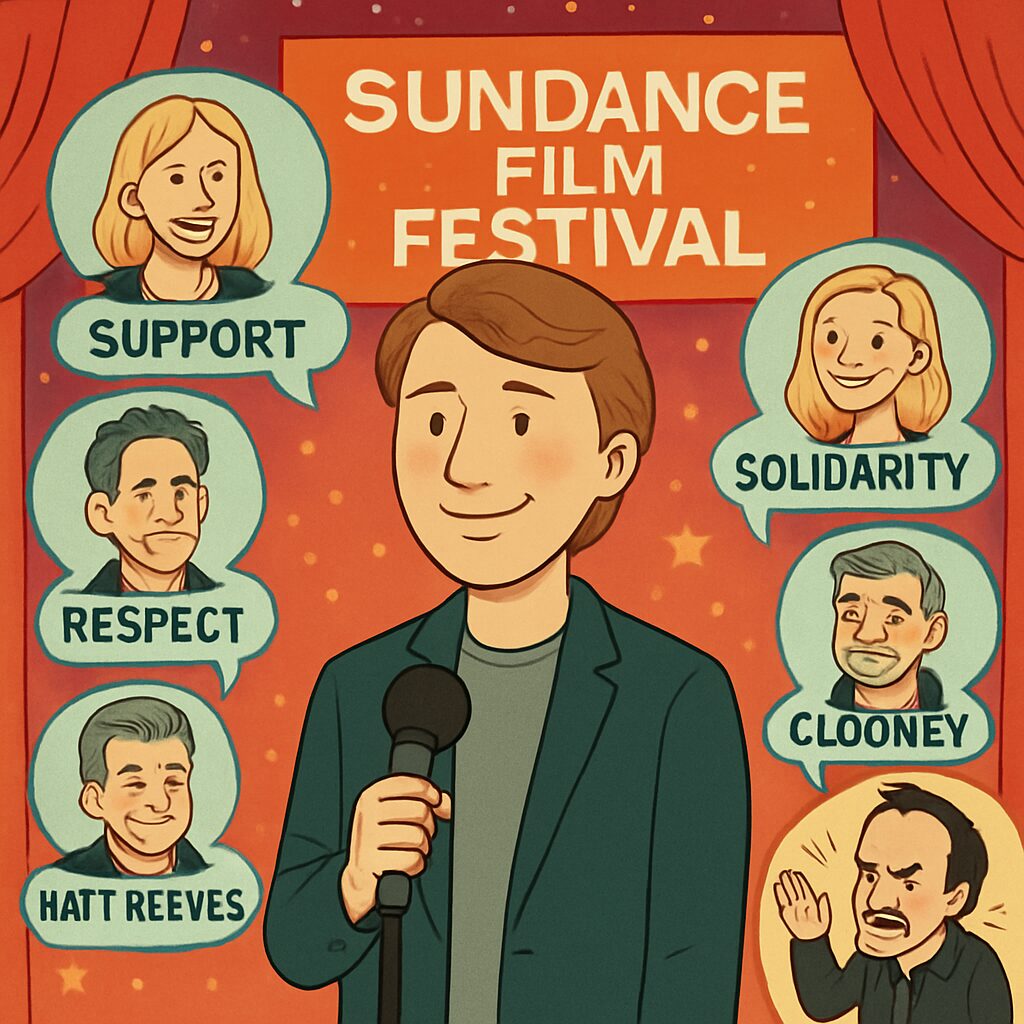
Paul Dano has broken his silence regarding Quentin Tarantino’s scathing critique of his acting, acknowledging the outpouring of support from the entertainment industry and public. The actor made his remarks at the Sundance Film Festival, where he expressed gratitude that others had defended him so he didn’t need to respond directly to Tarantino.
At a 20th anniversary screening of “Little Miss Sunshine” in Park City, Utah, Dano was asked by a Variety reporter about Tarantino’s comments. He chose not to engage with the criticism personally but highlighted the positive reaction from his peers and fans. This marked his first public statement on the matter since the director’s podcast appearance last month, showcasing his characteristic restraint and focus on community rather than conflict.
Tarantino had launched a blistering attack on Dano during an episode of “The Bret Easton Ellis Podcast,” released in December. While listing his favorite 21st-century films, he placed “There Will Be Blood” at number five but asserted it would have ranked higher if not for Dano’s performance. He described the actor as “a weak, weak, uninteresting guy” and “the limpest dick in the world,” criticizing his role opposite Daniel Day-Lewis and claiming that a stronger actor like Austin Butler would have been better. Tarantino also disparaged other actors, including Owen Wilson and Matthew Lillard, in the same interview.
In response, Dano told Variety, “That was really nice. I was also incredibly grateful that the world spoke up for me so I didn’t have to.” His measured tone contrasted with Tarantino’s vitriol, emphasizing appreciation rather than confrontation. The actor’s focus remained on the solidarity shown by colleagues and supporters, reflecting his typically reserved public persona and suggesting a preference for letting his work speak for itself.
The criticism prompted immediate backlash from numerous Hollywood figures. Toni Collette, Dano’s co-star in “Little Miss Sunshine,” vehemently defended him, saying, “F**k that guy. Who does that?” Ben Stiller called Dano “f-ing brilliant,” while Reese Witherspoon praised him as “an incredibly gifted, versatile actor” and “a gentleman.” Alec Baldwin shared a video statement expressing love for Dano and dismissing Tarantino’s opinions. These statements underscored the high regard in which Dano is held within the industry.
Further support came from directors and other actors. “Little Miss Sunshine” co-director Jonathan Dayton labeled Tarantino’s remarks an “embarrassment,” suggesting they stemmed from discomfort with Dano’s raw performance style. Valerie Faris, the other co-director, noted the widespread admiration for Dano. Matt Reeves, who directed Dano in “The Batman,” praised him as “an incredible actor and an incredible person.” George Clooney used an award speech to condemn cruelty in public discourse, explicitly expressing honor at the prospect of working with Dano, Wilson, and Lillard.
Tarantino’s comments have ignited a broader conversation about professionalism and respect in entertainment. Many viewed his critique as unnecessarily harsh, especially given Dano’s acclaimed career, which includes roles in films like “Prisoners,” “Love & Mercy,” and “The Batman.” The incident highlights the power dynamics in Hollywood and the impact of public criticism on artists’ reputations, with some arguing that such personal attacks detract from constructive artistic dialogue.
Moving forward, Dano’s response may reinforce his image as a dignified and respected actor, focusing on his work rather than engaging in feuds. With upcoming projects likely to draw attention, this episode could bolster public sympathy and industry solidarity around him. The exchange serves as a reminder of the importance of constructive criticism and the value of peer support in creative fields, potentially influencing how public figures address disagreements in the future.

