

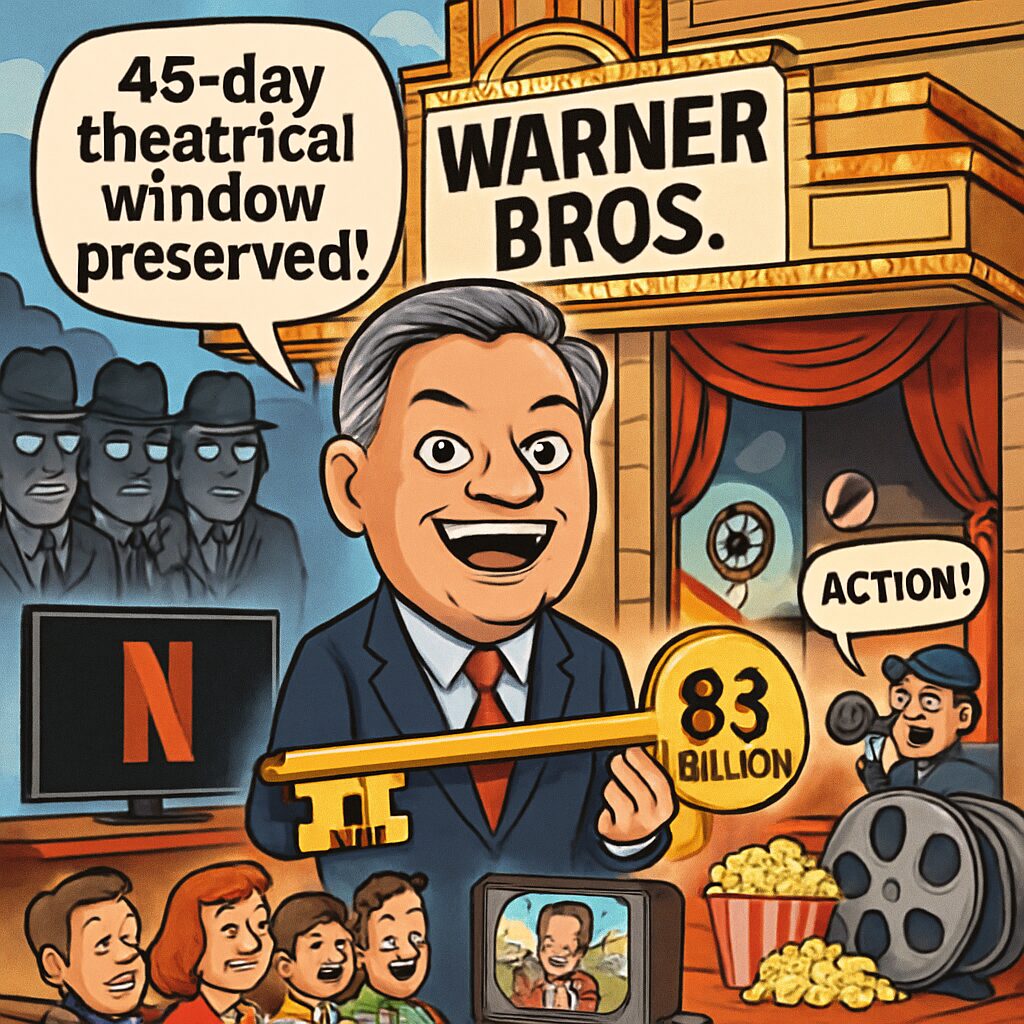
In a significant move that could reshape Hollywood, Netflix co-CEO Ted Sarandos is aggressively pushing forward with the acquisition of Warner Bros., pledging to maintain a 45-day theatrical window for its films—a departure from his long-held skepticism of traditional cinema. This $83 billion deal, announced in late 2025, positions Netflix to become a dominant force in the entertainment industry, but Sarandos must navigate regulatory hurdles and convince skeptics of his newfound appreciation for the big screen.
Sarandos’s personal history has long been defined by his preference for television over movies, a narrative he has frequently shared in interviews and public appearances. Growing up in a turbulent household in Arizona, he found comfort and consistency in weekly TV shows like “Happy Days,” which instilled in him a deep connection to the small screen. This background has fueled his reputation as a disruptor who championed streaming at the expense of theatrical releases, making his current embrace of movie theaters seem incongruous to some observers.
The proposed acquisition, valued at approximately $83 billion, would see Netflix take control of Warner Bros. Discovery, including its extensive film library and production capabilities. Sarandos has emphasized that the deal is not about dismantling Warner Bros.’ theatrical business but rather preserving and enhancing it, citing the division’s profitability and cultural significance. He told the New York Times that upon closing the transaction, Netflix would operate Warner Bros. “largely like it is today,” with a firm commitment to 45-day windows before films move to streaming.
However, the path to completion is fraught with challenges. Regulatory bodies in the U.S. and internationally are scrutinizing the merger for potential antitrust violations, with some lawmakers expressing concerns about reduced competition in the media landscape. Additionally, Netflix faces competition from other suitors like Paramount, which has also expressed interest in Warner Bros., adding complexity to the negotiations. Sarandos must also contend with public criticism, including from former President Donald Trump, who has voiced opposition to the deal on social media.
In recent interviews, Sarandos has worked to clarify his position, asserting that his past comments about theaters being “outmoded” were misinterpreted and that he recognizes the value of cinematic experiences. He highlighted that Warner Bros.’ theatrical operations generate billions in revenue, a stream Netflix is keen to protect and grow. “I want to win opening weekend. I want to win box office,” he declared, signaling a competitive drive that aligns with traditional Hollywood metrics.
The shift in Sarandos’s stance reflects broader industry trends where streaming giants are increasingly acknowledging the importance of theatrical releases for building buzz and revenue. Netflix’s recent extension of its Pay-1 deal with Sony, worth around $7 billion, underscores this strategic pivot. By acquiring Warner Bros., Netflix aims to bolster its content pipeline and diversify its business model, moving beyond subscription-based streaming to capture box office earnings.
Looking ahead, the success of this acquisition hinges on regulatory approval and Sarandos’s ability to reconcile his personal narrative with the demands of running a major studio. If completed, the deal could set a precedent for further consolidation in entertainment, potentially altering how films are distributed and consumed. For now, Sarandos remains focused on convincing stakeholders—from shareholders to filmmakers—that his vision for Warner Bros. honors both its legacy and the future of cinema.

