

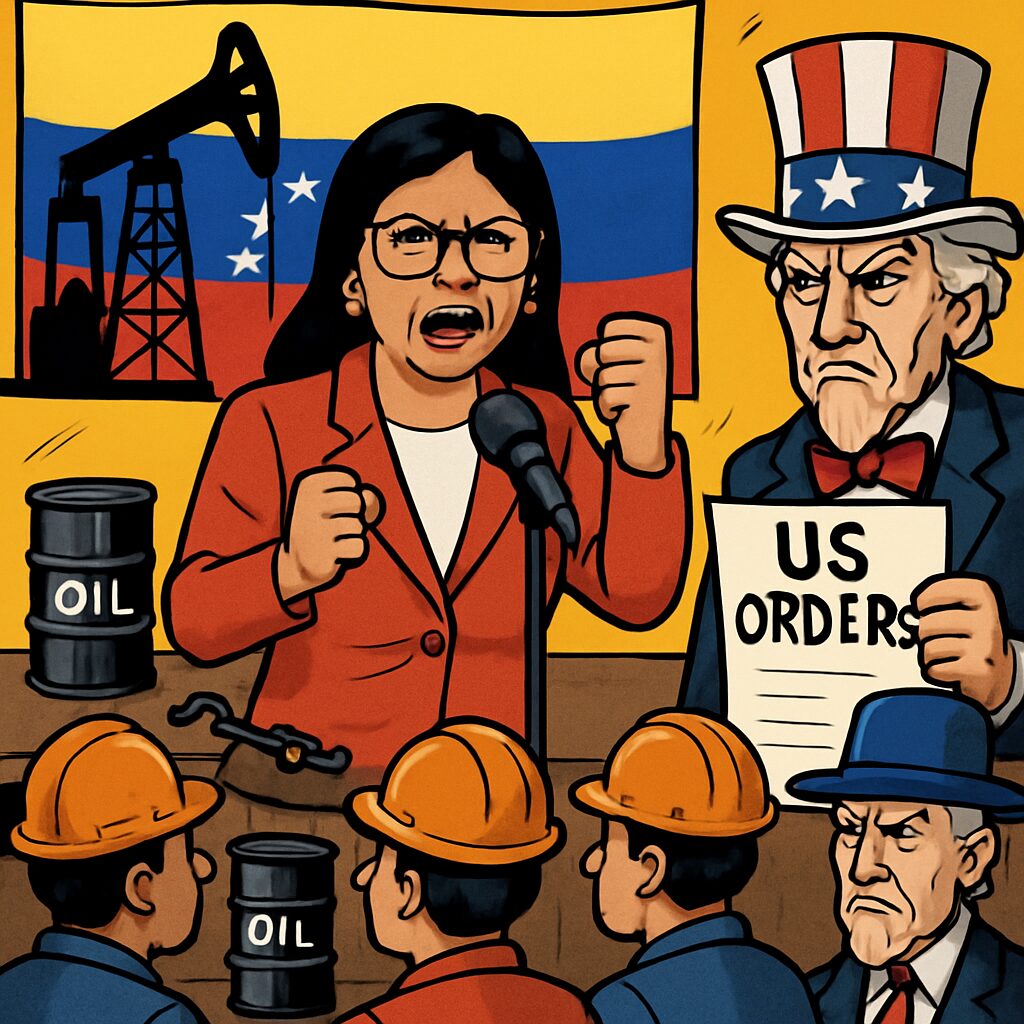
Venezuela’s acting president Delcy Rodriguez has declared that she has had ‘enough’ of taking orders from the United States, signaling a defiant stance amid ongoing pressure from Washington following the capture of former leader Nicolas Maduro. Rodriguez made the remarks during a speech to oil workers in Puerto La Cruz, emphasizing the need for Venezuelan politics to resolve internal conflicts without foreign interference.
The statement comes just weeks after Rodriguez assumed the interim presidency in early January, when U.S. forces conducted a dramatic raid to apprehend Maduro and his wife, Cilia Flores, plunging the country into political turmoil. Since then, the Trump administration has exerted significant pressure on Caracas, demanding concessions on oil production and urging Venezuela to sever ties with allies like China, Iran, Russia, and Cuba. Rodriguez, who was initially backed by the U.S. to lead temporarily, has been walking a tightrope between appeasing Washington and maintaining support from Maduro loyalists at home.
In her address, broadcast by state-run channel Venezolana de Televisión, Rodriguez explicitly rejected Washington’s directives, stating, ‘Enough already of Washington’s orders over politicians in Venezuela. Let Venezuelan politics resolve our differences and our internal conflicts.’ She added that the country has paid a high price for confronting extremism, underscoring her commitment to national sovereignty. This pushback marks a notable shift from her earlier conciliatory tone, as she seeks to consolidate her authority without appearing subservient to U.S. interests.
The U.S. pressure has been multifaceted, with President Donald Trump initially claiming that the United States would ‘run’ Venezuela after Maduro’s capture, though he later endorsed Rodriguez as interim leader. Trump has praised Rodriguez in recent weeks, describing her as a ‘terrific person’ and expressing optimism about relations. However, the administration continues to insist on economic reforms, particularly in Venezuela’s oil sector, which holds the world’s largest reserves of extra-heavy crude and is critical to the nation’s economy.
Internally, Rodriguez faces significant challenges from factions within Venezuela’s political landscape. Maduro loyalists remain wary of any moves perceived as capitulation to the U.S., while left-wing groups and ‘Chavistas No-Maduristas’—supporters of late leader Hugo Chavez who oppose Maduro—are monitoring her actions closely. Additionally, opposition figures like María Corina Machado have engaged with U.S. officials, adding another layer of complexity to the domestic political scene.
As a gesture towards de-escalation, Venezuela has recently released over 100 political prisoners, with rights group Foro Penal reporting one of the highest daily figures since the government promised releases in early January. Interior Minister Diosdado Cabello stated that more than 800 detainees have been freed since December, a move framed as a peace offering to the U.S. Rodriguez has expressed openness to a United Nations visit to verify the releases, though the list remains undisclosed, drawing criticism from activists.
Looking ahead, Rodriguez has called for dialogue with Venezuelan opposition groups to reach agreements on the country’s political future, emphasizing that there should be ‘no political or partisan differences when it comes to peace in Venezuela.’ She also indicated a willingness to address disputes with Washington ‘face to face,’ based on mutual respect and international law. This suggests a potential path for diplomatic engagement, albeit with clear boundaries set by Caracas.
The ongoing tensions highlight the fragile balance Rodriguez must strike as she navigates between U.S. demands and domestic pressures. With Venezuela’s oil industry at stake and political stability hanging in the balance, her leadership will be tested in the coming weeks. The international community is watching closely, as the outcome could reshape relations in the region and impact global energy markets.

