

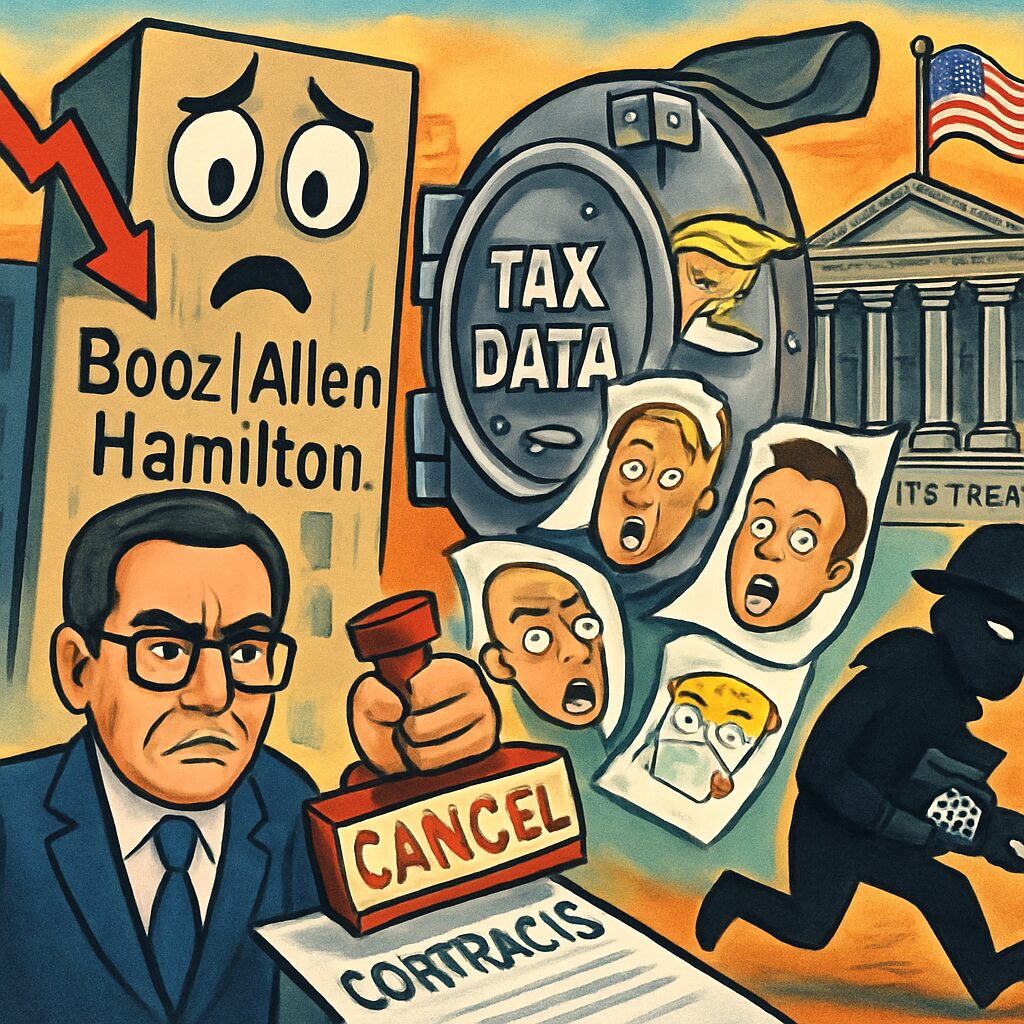
The U.S. Treasury Department announced on Monday the cancellation of all its contracts with Booz Allen Hamilton, totaling $21 million, directly blaming the consulting giant for failing to prevent a massive tax data leak by one of its former employees. Treasury Secretary Scott Bessent stated that the decision was made to uphold public trust, emphasizing that Booz Allen had inadequate safeguards to protect sensitive taxpayer information accessed through its work with the Internal Revenue Service.
The controversy stems from the actions of Charles Edward Littlejohn, a Booz Allen employee from 2018 to 2020, who stole and leaked confidential tax returns of hundreds of thousands of taxpayers, including those of President Donald Trump, Elon Musk, and Jeff Bezos. Littlejohn pleaded guilty in 2023 to unauthorized disclosure of tax return information and was sentenced to five years in prison, with the presiding judge calling it “the biggest heist in IRS history.” The leaks, which were published by The New York Times and ProPublica, revealed that Trump paid no federal income taxes for several years before his presidency, sparking widespread public and political scrutiny.
In response to the Treasury’s announcement, Booz Allen Hamilton’s stock price plummeted by more than 10%, reflecting investor concerns over the loss of government business and reputational damage. The company currently holds 31 separate contracts with the Treasury, amounting to $4.8 million in annual spending and $21 million in total obligations, all of which have now been terminated. This financial hit underscores the significant economic repercussions of the data breach for the firm.
Booz Allen has disputed some of the Treasury’s claims, arguing in a statement that Littlejohn’s criminal activities occurred on government systems, not on the company’s own networks, and that Booz Allen has no ability to monitor such government activity. The firm emphasized its full cooperation with the investigation, which led to Littlejohn’s prosecution, and expressed a desire to discuss the matter further with Treasury officials. However, Treasury officials maintained that the company bears responsibility for the actions of its employees while under contract.
The data breach affected approximately 406,000 taxpayers, according to IRS estimates, making it one of the largest unauthorized disclosures of tax information in U.S. history. The case was prosecuted during the Biden administration, highlighting its bipartisan significance, and Littlejohn is currently incarcerated in a federal prison in Illinois, with a scheduled release date in October 2027. This incident has raised broader questions about the security protocols in place for contractors handling sensitive government data.
President Trump has publicly supported the contract cancellations, framing them as part of his administration’s broader efforts to eliminate waste, fraud, and abuse within the federal government. Treasury Secretary Bessent echoed this sentiment, stating that such actions are essential for restoring Americans’ confidence in governmental institutions. The move signals a tougher stance on contractor accountability, potentially setting a precedent for how similar breaches are handled in the future.
Looking ahead, the cancellation of these contracts may prompt other government agencies to review their relationships with Booz Allen and similar contractors, particularly those involved in handling confidential information. Industry analysts suggest that this could lead to stricter compliance requirements and enhanced security measures across the consulting sector. For Booz Allen, the immediate challenge will be to mitigate the financial impact and rebuild its reputation with federal clients.
In conclusion, the Treasury’s decision to sever ties with Booz Allen Hamilton over the tax return leak underscores the critical importance of data security in government contracting and the severe consequences of failures in this area. As the story continues to develop, it will likely influence policy discussions on contractor oversight and data protection standards, with lasting implications for both public and private sectors.

