

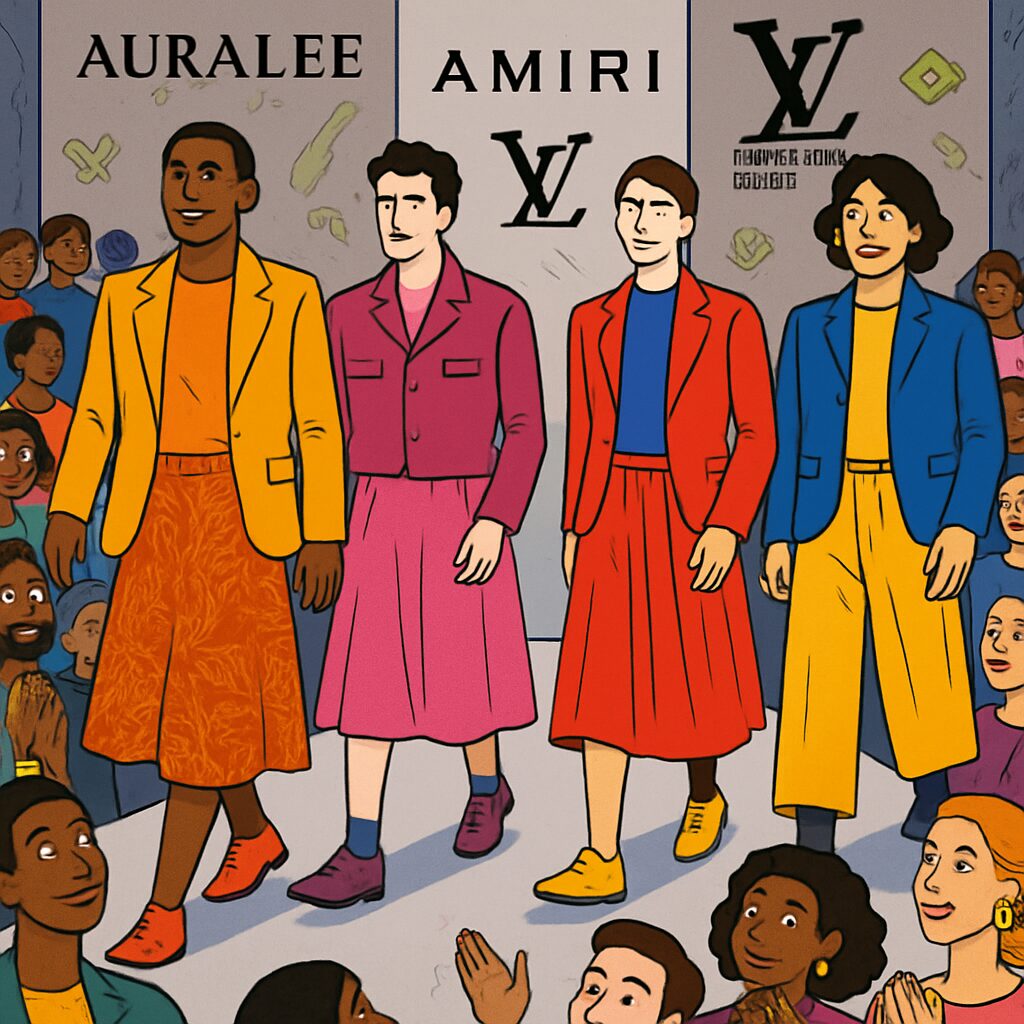
Paris Men’s Fashion Week Fall-Winter 2026 has showcased a bold departure from traditional menswear, with designers introducing midi skirts and vibrant colors to challenge conventional masculinity and expand fashion boundaries. This shift reflects a growing trend towards gender-fluid aesthetics amid ongoing societal debates about what men can wear.
The runway presentations featured a range of unconventional pieces, including midi skirts in fabrics like brocade and separates in hues such as burnt orange, dusty pink, and magenta. Brands like Auralee, Amiri, and Louis Vuitton, under the creative direction of Pharrell Williams, led this charge, emphasizing bright colors and fluid silhouettes. For instance, Auralee’s founder Ryota Iwai described using primary red and yellow to uplift winter designs, while Amiri’s collection blended tailoring with a nonchalant, personal touch.
This move away from neutral tones marks a significant break from the recent ‘quiet luxury’ trend, which prioritized versatile and timeless muted palettes. Designers are now asserting that bold colors can be equally classic, challenging long-held assumptions about sophistication in menswear. The inclusion of skirts and other traditionally feminine elements signals a broader cultural shift towards inclusivity and the blurring of gender lines in fashion.
The context for this innovation is rooted in recent controversies, such as last year’s viral debate over a pink J.Crew sweater, which critics labeled as demasculinizing. In contrast, the current fashion week suggests a gradual acceptance of more expressive male attire, supported by celebrities like Harry Styles and Alexander Skarsgård, who have embraced gender-bending fashion on red carpets.
However, resistance persists from some quarters, including online influencers in the ‘manosphere’ and those adhering to traditional gender roles, who view such deviations as threats to conventional values. Designers face the perennial challenge of balancing wearable everyday clothing with provocative pieces that push aesthetic boundaries and stimulate dialogue.
Beyond aesthetics, the shows highlighted practical innovations, such as sustainable material advancements. Japanese label Doublet, for example, created garments from bio-based resins produced by microorganisms that consume greenhouse gases, merging eco-consciousness with style. Other brands like Sacai and Jacquemus incorporated hybrid aesthetics and playful patterns, enriching the diversity of offerings.
Looking ahead, these collections are expected to influence retail trends and consumer behavior in the coming seasons. While some men may remain hesitant to adopt midi skirts or bright colors, the continued availability of conventional options ensures choice. The fashion industry’s progression towards greater inclusivity points to an evolving expression of masculinity, with Paris Men’s Fashion Week serving as a key catalyst for this ongoing transformation.

