

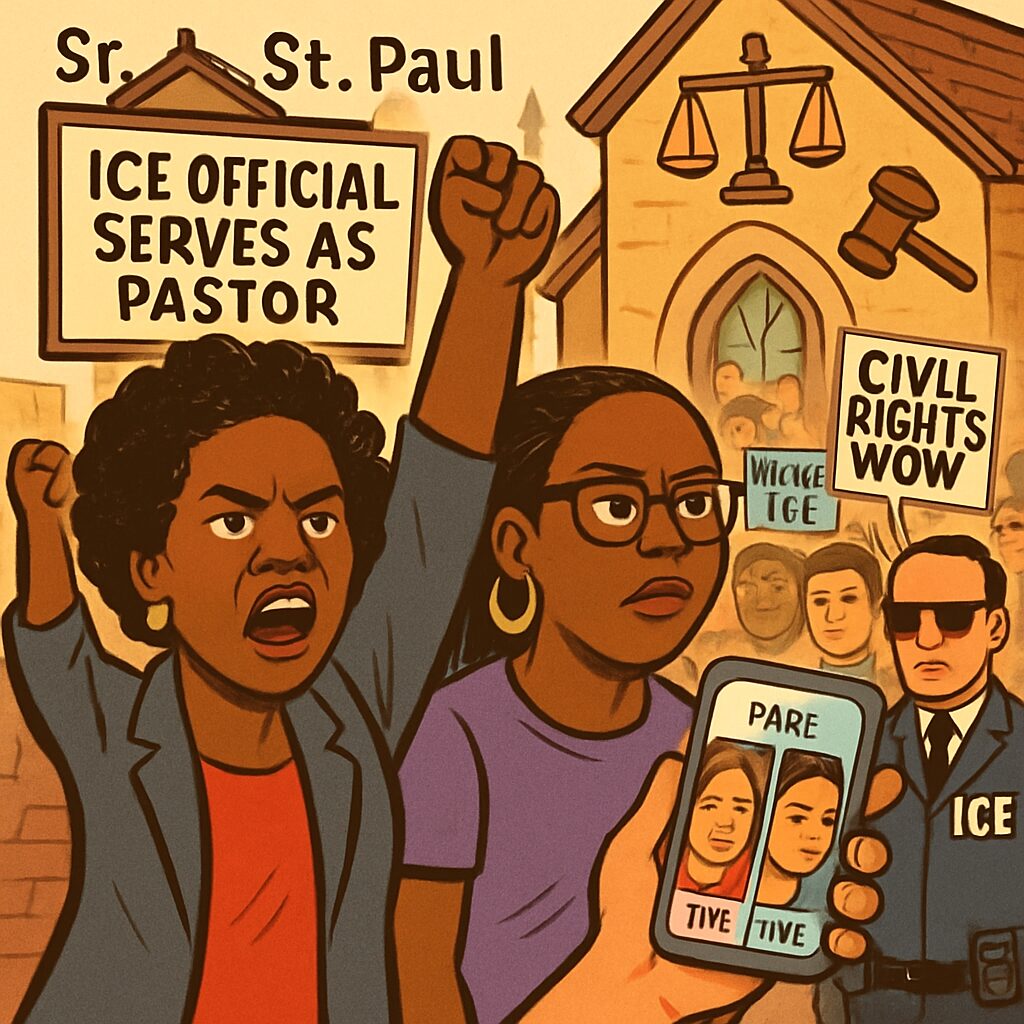
In a significant development in the ongoing protests against U.S. Immigration and Customs Enforcement (ICE), two activists arrested for disrupting a church service in St. Paul, Minnesota, were released from custody on Friday, January 23, 2026, after a judge ruled against their detention. The release came amid controversy over the White House’s manipulation of images depicting one of the activists, highlighting tensions between protestors and federal authorities.
The protest took place at a local church where an ICE official serves as a pastor, drawing attention to the role of religious institutions in immigration enforcement. Nekima Levy Armstrong, a prominent civil rights attorney, and Chauntyll Allen, a member of the St. Paul school board, were arrested along with others for interrupting the service to voice opposition to ICE’s policies. Their actions were part of a broader movement condemning the agency’s practices, which activists say tear families apart and terrorize communities.
On Friday, a federal judge ordered the release of Armstrong and Allen, stating that the government had not met its burden to justify detention. Video footage shared online showed the two women emerging from custody with fists raised in defiance, embracing loved ones in emotional scenes. A third activist, William Kelly, was also ordered released, with the judge citing no danger to the public. The releases were celebrated by supporters as a victory for free speech and resistance against perceived authoritarian overreach.
The event was overshadowed by a separate controversy involving the White House, which had posted a digitally altered image on social media depicting Armstrong crying during her arrest. The manipulation was uncovered by news outlets, including The Guardian, after Homeland Security Secretary Kristi Noem shared the original image showing Armstrong composed. The altered photo was captioned to label Armstrong as a ‘far-left agitator,’ sparking accusations of propaganda and unethical conduct by the administration.
In response, Armstrong released a video of her arrest recorded by her husband, Marques Armstrong, which showed her calmly interacting with federal agents and questioning their recording of the event. At no point in the seven-minute video did she appear to cry, contradicting the White House’s portrayal. In an audio message, Armstrong accused the Trump administration of using AI to fabricate images and politically persecute her for speaking out against immigration policies.
The incident has ignited debates over the use of technology in misinformation campaigns and the limits of government power. Armstrong and other activists argue that their protest was a peaceful stand against brutality, while authorities maintain that disruptions to public order warrant legal action. The exposure of the image manipulation has raised concerns about the integrity of official communications and the potential for abuse in political discourse.
Moving forward, the released activists have vowed to continue their advocacy against ICE, with Armstrong emphasizing the need for dignity and respect in the face of government actions. Legal proceedings may continue, but the judge’s decision to release them suggests skepticism over the charges. This case underscores the ongoing conflict between immigration enforcement and civil liberties, with implications for future protests and the transparency of federal operations.

