

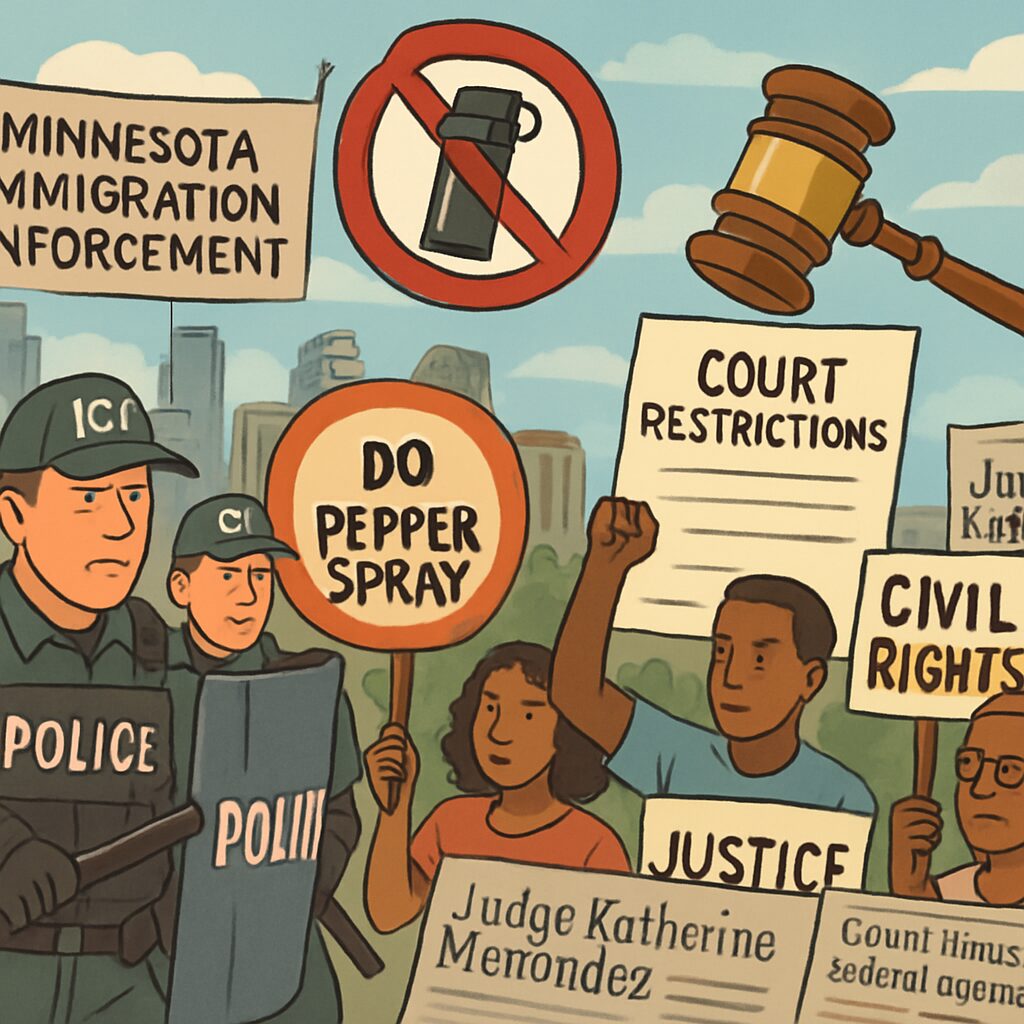
A federal judge in Minnesota has imposed significant restrictions on federal immigration agents, prohibiting them from arresting peaceful protesters or using pepper spray and nonlethal munitions during ongoing demonstrations in Minneapolis. The ruling comes amid heightened tensions over a large-scale immigration enforcement operation in the state.
On January 16, 2026, U.S. District Judge Katherine Menendez issued an 83-page order that blocks federal agents deployed to Minnesota as part of the Trump administration’s immigration surge from using pepper spray or nonlethal munitions on, or arresting, peaceful protesters. The order also bars agents from stopping or detaining drivers and passengers without reasonable suspicion that they are interfering with law enforcement operations. Judge Menendez, appointed by former President Joe Biden, described some allegations against agents as “disturbing,” including claims that agents threatened to break car windows and followed protesters to their homes.
The court’s decision responds to weeks of protests in Minneapolis sparked by the deployment of thousands of federal agents to the area for immigration enforcement. These operations, described by officials as the largest ever, aim to apprehend individuals suspected of being in the U.S. illegally and investigate fraud allegations. The protests intensified after Renee Good was fatally shot by an Immigration and Customs Enforcement agent last week, leading to clashes between demonstrators and law enforcement.
Protesters had filed a lawsuit against the Department of Homeland Security, accusing federal agents of violating their First Amendment right to free speech and Fourth Amendment protection against unreasonable seizures. They alleged a “campaign of constitutional violations,” including the use of excessive force and unwarranted arrests during demonstrations. The plaintiffs provided accounts to the court detailing how agents had used pepper spray and made arrests without justification.
In her ruling, Judge Menendez found that the protesters were likely to succeed in showing that their constitutional rights had been violated. She emphasized that while law enforcement has the authority to address dangerous conduct, stopping cars not breaking the law is not justified. The judge noted the unique nature of the protests, where small, mobile groups gather wherever immigration officers are operating, creating a complex dynamic for law enforcement.
The federal government defended the agents’ actions, with Assistant Secretary of Homeland Security Tricia McLaughlin stating that officers have faced assaults, vandalism, and threats, necessitating the use of minimal force to uphold the rule of law. Government attorneys argued that pepper spray and arrests were needed to quell “violent, obstructive, dangerous, and often criminal behavior” that impeded immigration operations. They also accused some plaintiffs of obstructing or assaulting federal officers.
The ruling occurs against a backdrop of escalating conflict between state and federal authorities. Minnesota Governor Tim Walz and Minneapolis Mayor Jacob Frey are under federal investigation for allegedly conspiring to impede immigration agents, which both officials have denounced as politically motivated. This investigation adds another layer to the tension, with Walz accusing the administration of “threatening political opponents” and Frey calling it an attempt at intimidation.
Judge Menendez’s order will remain in effect until the immigration surge in Minneapolis concludes. The decision sets a precedent for how federal agents can interact with protesters during such operations and may influence ongoing legal battles. As the protests continue, the ruling aims to balance law enforcement needs with the protection of civil liberties, highlighting the ongoing debate over immigration enforcement and protest rights in the United States.

