

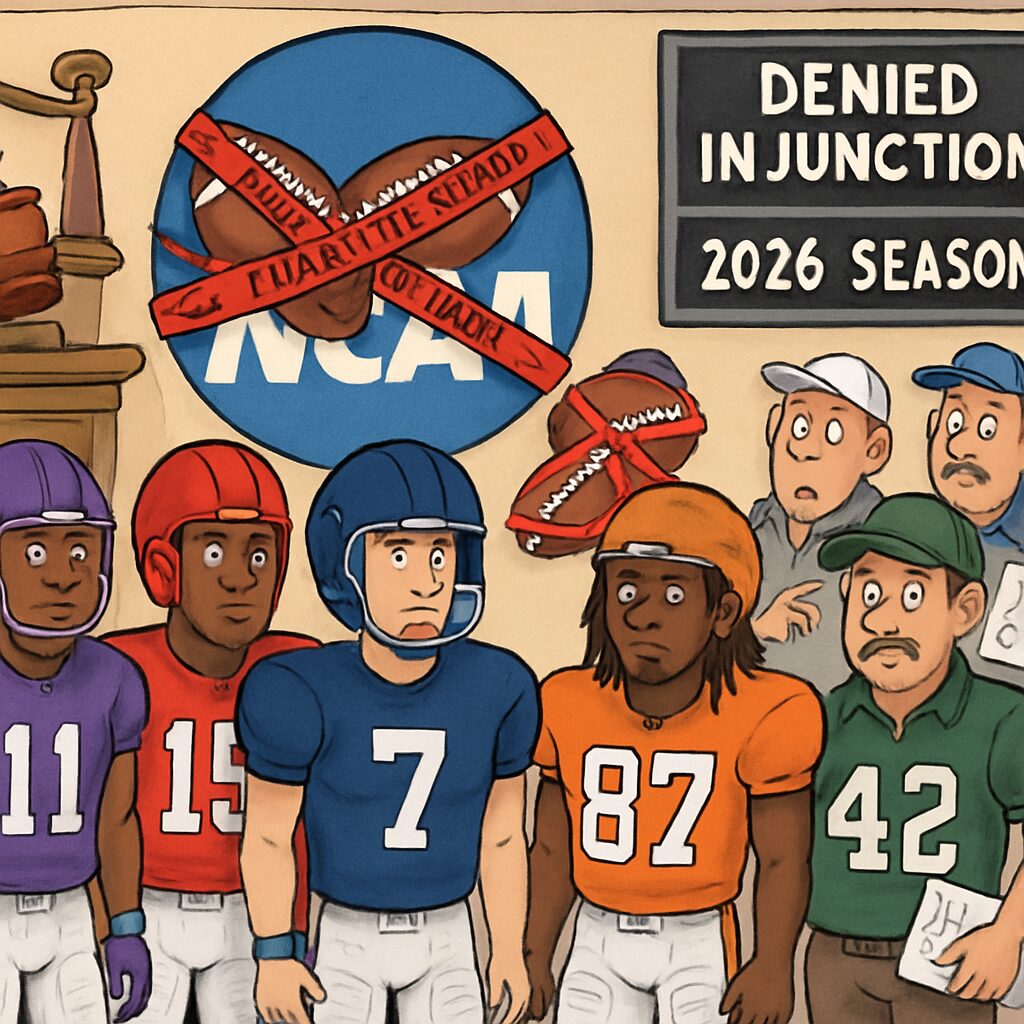
A federal judge in Tennessee has denied a preliminary injunction to five college football players seeking to play a fifth season this fall, dealing a setback to their challenge of the NCAA’s eligibility rules. The ruling, issued by U.S. District Judge William L. Campbell on January 15, 2026, means that Vanderbilt linebacker Langston Patterson, Wisconsin kicker Nathanial Vakos, tight end Lance Mason, long snapper Nick Levy, and Nebraska long snapper Kevin Gallic are unlikely to compete in the 2026-27 season.
The players argued that the NCAA’s redshirt rule, which restricts athletes to four seasons over five years, violates U.S. antitrust laws, especially now that athletes can earn compensation through name, image, and likeness (NIL) deals and revenue sharing. Judge Campbell found that the plaintiffs did not demonstrate a likelihood of success on their claim, leading to the denial of the injunction.
This case is part of a larger lawsuit seeking class action status, which includes seven other named plaintiffs and could affect thousands of current and former NCAA athletes in football, baseball, and tennis. The lawsuit was filed by attorney Ryan Downton, who also represented Vanderbilt quarterback Diego Pavia in a similar case that resulted in an injunction being granted last year.
In contrast to Pavia’s success, where he was allowed to play an additional season due to his junior college background, this ruling underscores the judicial hesitancy to mandate broad changes to NCAA rules without a full trial. Downton expressed disappointment but acknowledged the court’s cautious approach, stating that a major rule change was not warranted based on the limited record.
The NCAA defended the decision, emphasizing the importance of maintaining eligibility rules to preserve opportunities for future student-athletes. Meanwhile, the case will proceed, but the timing makes it improbable for the players to benefit in the upcoming season.
In related developments, college football coaches recently recommended increasing the number of games players can participate in while redshirting from four to nine, reflecting ongoing discussions about eligibility reforms. However, formal NCAA rule changes have been delayed amid broader transformations in college sports.
The denial of this injunction adds to a series of legal challenges against NCAA eligibility policies, creating uncertainty but also highlighting the evolving landscape of athlete rights and compensation in collegiate athletics.

