

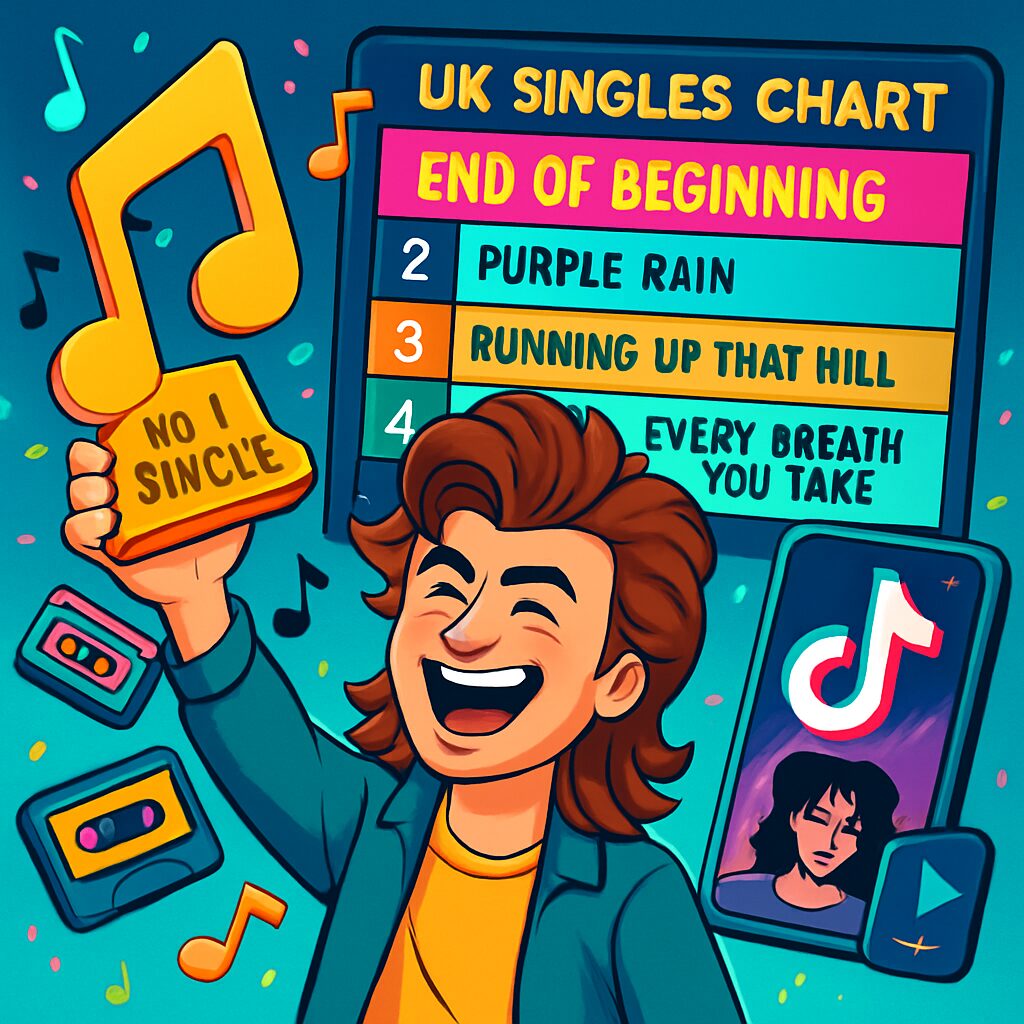
Stranger Things actor Joe Keery, known musically as Djo, has secured his first No. 1 single on the UK Singles Chart with ‘End of Beginning,’ catapulted by the show’s finale and viral social media trends. This achievement is part of a broader chart upheaval that has seen multiple 1980s classics from the series’ soundtrack re-enter the top 40, highlighting the enduring impact of the Netflix hit on music consumption.
Keery’s song, originally released in 2022, had previously peaked at number four but leaped to the top spot in the chart dated January 9, 2026, following the December 31 finale of Stranger Things’ fifth and final season. According to the Official Charts Company, ‘End of Beginning’ was streamed 5.4 million times in the UK this week and amassed over 55 million global plays on Spotify, dethroning Taylor Swift’s ‘The Fate of Ophelia’ from the global number one position. The track’s resurgence is largely attributed to TikTok, where fans created edits using the song to commemorate the show’s conclusion, demonstrating the platform’s power in driving music trends.
Beyond Keery’s success, the finale has triggered a nostalgic wave, propelling several older songs back into the UK top 40. Prince’s ‘Purple Rain’ soared to number 12, Kate Bush’s ‘Running Up That Hill’—previously a chart-topper in 2022 due to Stranger Things—rose to number 14, and The Police’s ‘Every Breath You Take’ jumped 41 spots to number 17, its highest chart position in 43 years. Other entries include Fleetwood Mac’s ‘Landslide’ at number 20, Diana Ross’s ‘Upside Down’ at number 26, and Tiffany’s ‘I Think We’re Alone Now’ at number 27, with David Bowie’s ‘Heroes’ and The Clash’s ‘Should I Stay or Should I Go’ also making appearances.
This phenomenon is not isolated to Stranger Things, as seen with Zara Larsson’s 2016 hit ‘Lush Life’ climbing to number eight thanks to a TikTok dance trend. However, the show’s influence is particularly pronounced, with Sarah Kloboves of Chartmetric noting that TikTok taps into nostalgia to engage both older and younger audiences. For older listeners, these catalogue hits evoke sentimentality, while younger users discover them anew, creating a broad appeal that transcends generational divides.
The chart disruptions underscore the symbiotic relationship between television and music in the digital age. Stranger Things has a history of boosting songs, most notably with Kate Bush’s 2022 resurgence, and this latest finale continues that legacy by blending narrative emotion with viral content. The series’ curated soundtrack, featuring iconic 1980s tracks, has become a cultural touchstone, revitalizing interest in classic music and demonstrating how media can breathe new life into old art.
Looking ahead, this trend may encourage other productions to leverage music more strategically, while artists and labels could benefit from similar placements. For Keery, the chart success marks a significant milestone in his dual career, potentially opening doors for future musical endeavors. As streaming and social media continue to shape music consumption, events like this highlight the fluidity of charts and the ongoing relevance of back-catalogue music in contemporary culture.
In conclusion, the Stranger Things finale has not only provided a fitting end to the beloved series but also reshaped the music landscape, proving that even in its conclusion, the show retains the power to influence popular culture in profound ways.

