

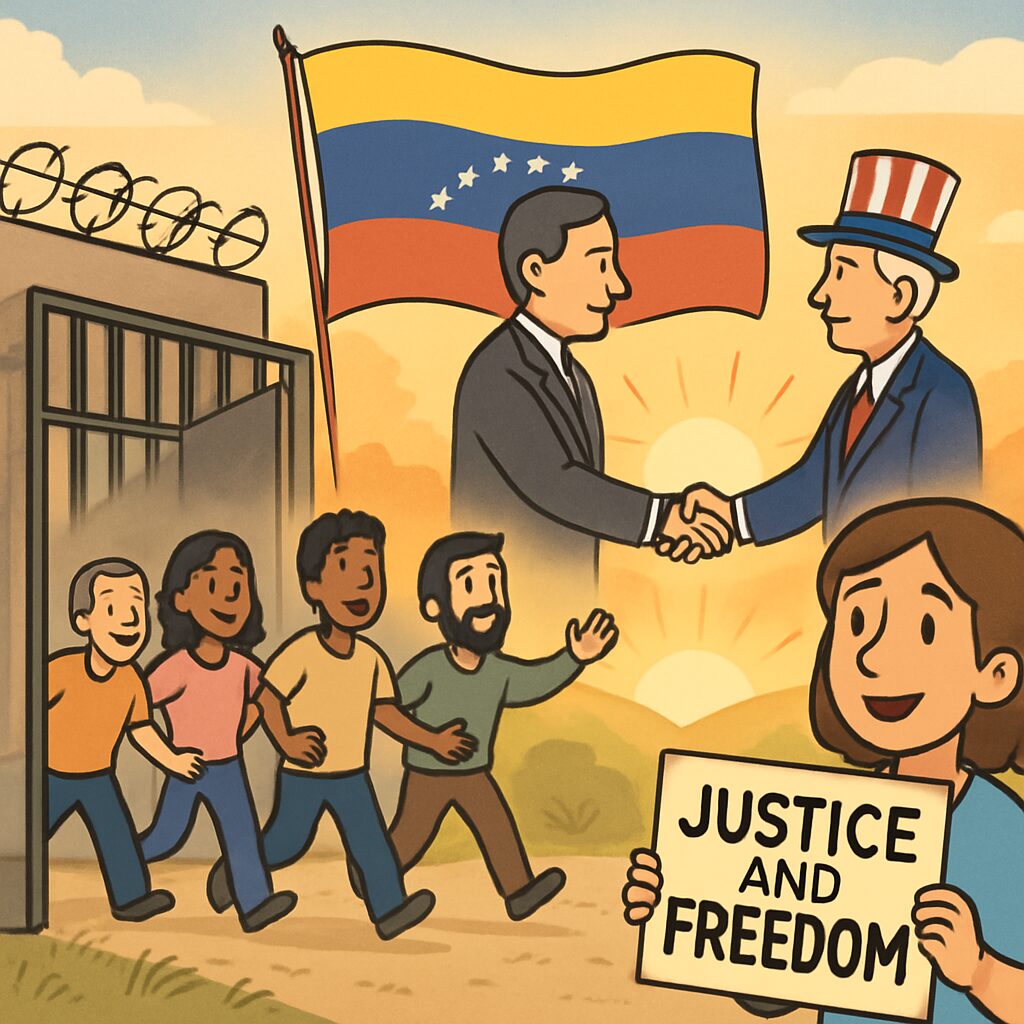
The Venezuelan government has initiated the release of political prisoners in a significant move described as a gesture to consolidate peace, following the recent U.S. seizure of former President Nicolás Maduro. This development marks a potential shift in Venezuela’s political dynamics and has been cautiously welcomed by human rights groups and opposition figures.
On Thursday, Jorge Rodríguez, the head of Venezuela’s National Assembly, announced on state television that an “important number” of detainees would be freed immediately. He framed the decision as a unilateral effort to promote national unity and peaceful coexistence, coming just days after U.S. forces captured Maduro in a raid on Caracas, where he faces drug trafficking charges in New York. The timing underscores the interim government’s willingness to cooperate with international demands amid heightened geopolitical tensions.
Among the first confirmed releases is Rocío San Miguel, a Spanish-Venezuelan human rights activist detained in 2024 on allegations of treason and conspiracy. Her family reported her transfer to the Spanish embassy in Caracas, and Spain’s foreign ministry confirmed the release of five Spanish nationals, including San Miguel, who are now preparing to travel to Spain. This highlights the international dimension of the prisoner releases, addressing concerns from allies and human rights advocates.
Human rights organizations estimate that Venezuela holds between 800 and 1,000 political prisoners, many arrested after the widely disputed 2024 elections. These detainees have endured harsh conditions in facilities like El Helicoide, a notorious prison in Caracas known for reports of torture and abuse. U.S. President Donald Trump has pledged to close El Helicoide, calling it a “torture chamber,” though activists warn that other detention sites across the country remain operational and require scrutiny.
Opposition leader María Corina Machado hailed the releases as a victory for justice, stating in a social media message that “injustice will not last forever.” However, she and other activists urge caution, noting that previous announcements of prisoner releases have often fallen short. For example, over the holiday season, the regime promised to free 187 people, but independent verification confirmed only a fraction of those releases, raising concerns about transparency and follow-through.
The context of Maduro’s capture adds layers to Venezuela’s evolving political landscape. Since his arrest, the interim administration led by Delcy Rodríguez has engaged with U.S. officials on issues such as oil sales and security reforms. This cooperation suggests a pragmatic approach by the new leadership, but it also raises questions about sovereignty and the long-term role of foreign intervention in Venezuela’s affairs.
Looking ahead, the prisoner releases could foster broader political dialogue and stability, but significant challenges persist. Ensuring the freedom of all political detainees, addressing systemic human rights abuses, and navigating economic crises will require sustained effort and international oversight. As Venezuela moves forward, the world watches closely, with implications for regional democracy and U.S.-Latin American relations hanging in the balance.

