

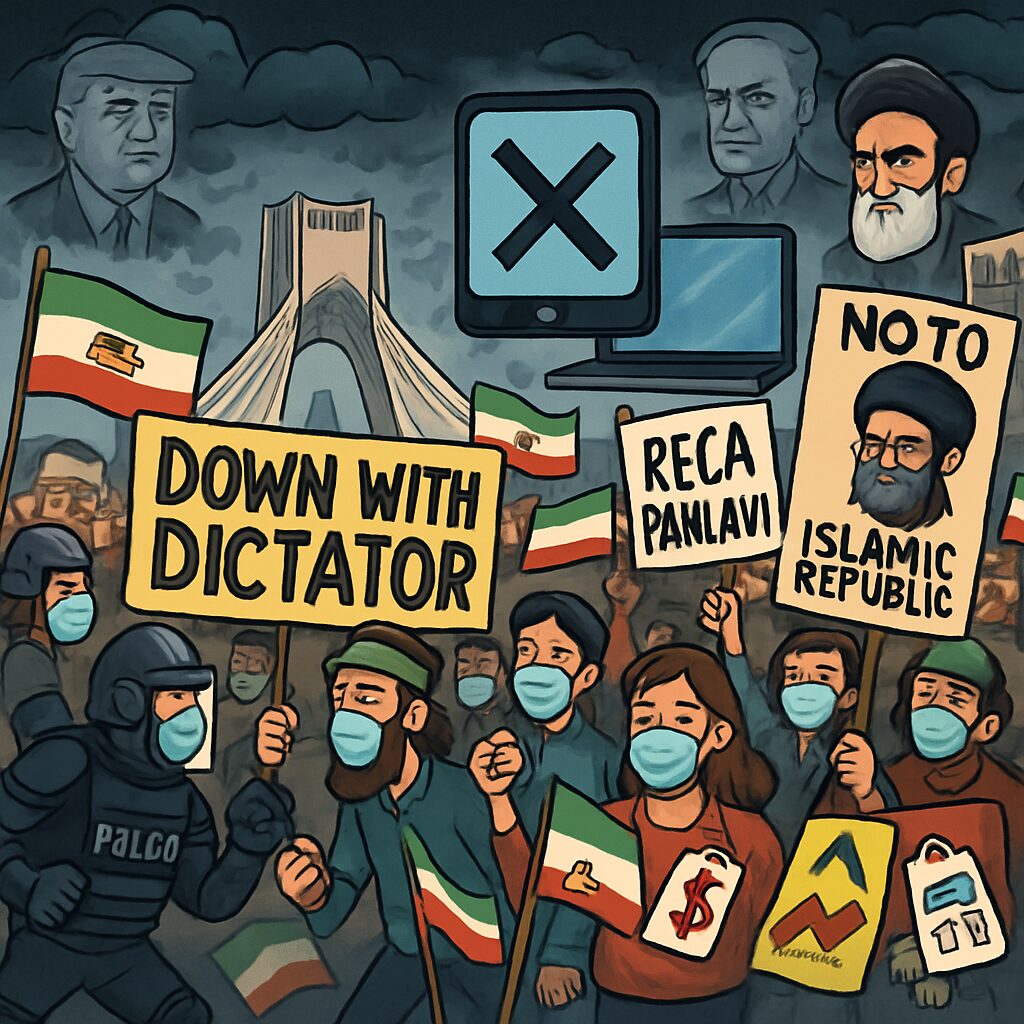
On Thursday, Iran experienced a complete internet blackout as anti-government protests spread across the country, marking the largest show of dissent in years. The unrest, now in its 12th consecutive day, has engulfed all 31 provinces, with protesters voicing frustration over economic collapse and calling for political change. Verified footage shows massive crowds in Tehran and other cities, chanting slogans against the supreme leader and in support of the exiled crown prince.
The protests began on December 28 after a sharp decline in the value of the Iranian rial, which has sunk to record lows amid soaring inflation. What started with shopkeepers in Tehran quickly escalated, with university students and citizens from various regions joining in. Human rights groups report that demonstrations have reached over 100 cities and towns, with videos showing peaceful marches as well as violent clashes with security forces.
According to Iran Human Rights, at least 45 protesters, including eight children, have been killed by security forces since the unrest began. The Norway-based NGO highlighted that Wednesday was the deadliest day, with 13 confirmed deaths. Other monitors, like HRANA, cite lower figures but confirm multiple fatalities and over 2,000 arrests. Iranian authorities have acknowledged some deaths, including security personnel, and have increasingly used force to quell the protests.
In response to the spreading turmoil, authorities imposed a nationwide internet blackout on Thursday night, severely restricting communication. Internet watchdog NetBlocks reported the blackout, noting it follows earlier connectivity losses in cities like Kermanshah. Concurrently, a general strike was observed in Kurdish regions and other areas, with shopkeepers heeding calls from exiled Kurdish groups to close their businesses in protest.
The protests lack a central leadership but have seen growing support for Reza Pahlavi, the exiled son of the former shah, who has urged continued demonstrations. Protesters are chanting for the overthrow of Supreme Leader Ayatollah Ali Khamenei and the return of Pahlavi, reflecting deep-seated discontent with the clerical establishment. Iranian President Masoud Pezeshkian has called for restraint, but the government blames economic woes on Western sanctions and internal mismanagement.
The United States has issued warnings, with President Donald Trump threatening military intervention if Iranian authorities kill protesters. U.S. Treasury Secretary Scott Bessent described Iran’s economy as “on the ropes,” adding to the pressure. German Foreign Minister Johann Wadephul condemned the excessive use of force, while Iran’s military has threatened pre-emptive strikes against external threats.
The economic crisis is a key driver, with the rial’s collapse making everyday life unaffordable for many Iranians. Food prices have surged by over 70% in the past year, and medicine costs have risen by about 50%. The government’s removal of subsidized exchange rates has exacerbated the situation, leading to widespread anger and despair among the population.
This protest movement, while not yet as large as the 2022 Woman, Life, Freedom demonstrations, represents a significant challenge to Iran’s leadership. Analysts suggest the state may feel less secure following recent conflicts, such as the war with Israel. The decentralized nature of the protests and the internet blackout indicate a tense standoff, with the potential for further escalation or dialogue depending on governmental response.

