

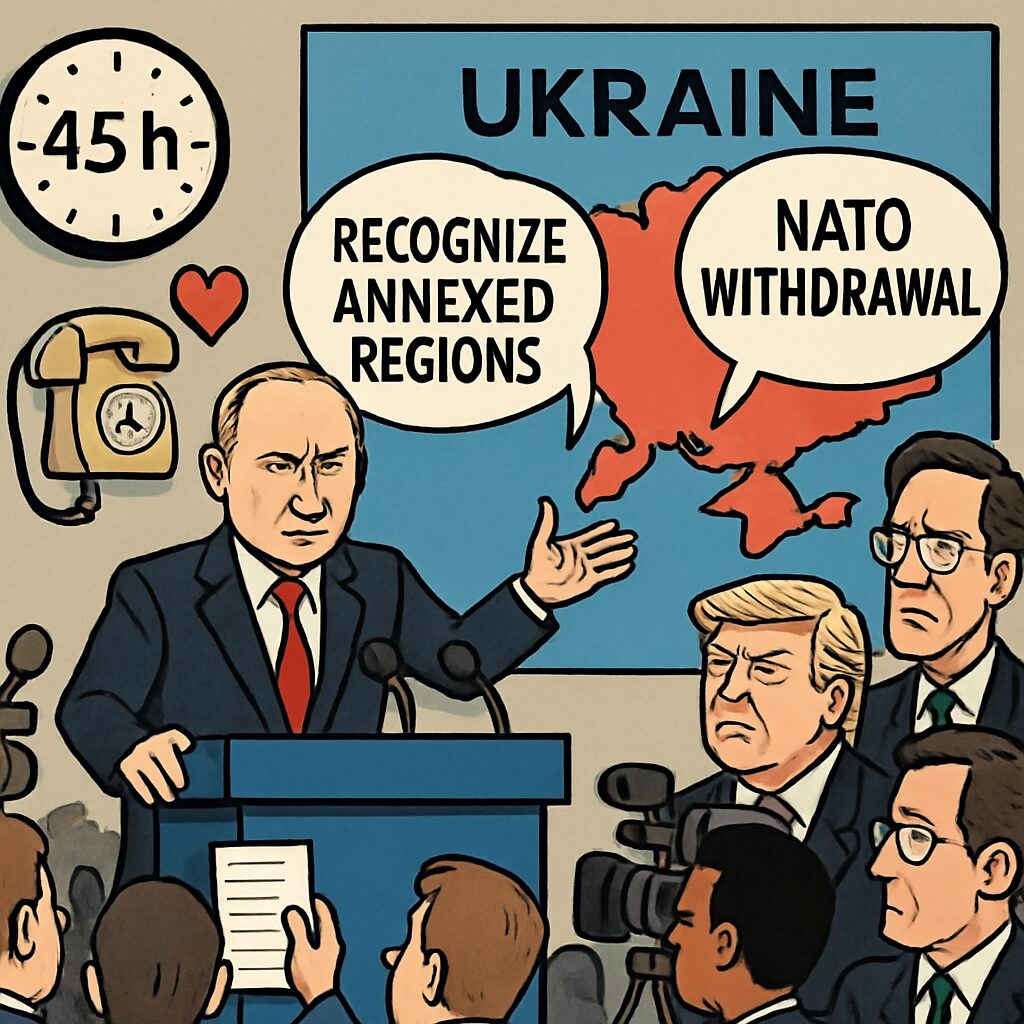
Russian President Vladimir Putin’s annual year-end press conference, held on December 19, 2025, served as a platform for him to declare confidence in Russia’s military progress in Ukraine and to outline tough conditions for peace. The event, which combined a live news conference with a nationwide call-in show, lasted approximately four and a half hours and was tightly orchestrated, reflecting the Kremlin’s control over the narrative.
Putin asserted that Russian forces have “fully seized strategic initiative” on the battlefield and are advancing across all sectors, with the enemy retreating. He emphasized that Moscow’s military goals would be achieved if Ukraine does not agree to Russia’s terms, signaling a continued commitment to the conflict that began in February 2022. The Russian leader pointed to slow but steady gains over the years, contrasting with initial expectations of a swift victory.
On the topic of peace, Putin reaffirmed Moscow’s readiness for a settlement that addresses the “root causes” of the war, referencing the Kremlin’s unchanged demands. These include the recognition of Russian control over four key regions and Crimea, annexed in 2014, as well as Ukraine’s withdrawal from additional eastern areas not yet captured. He also insisted that Ukraine abandon its bid to join NATO and limit the size of its army, conditions that Kyiv has repeatedly rejected.
Putin praised U.S. President Donald Trump’s diplomatic efforts to end the war but made it clear that Russia’s core demands remain non-negotiable. He mentioned compromises made during the Alaska summit in August but did not elaborate, instead warning that Moscow would seek to extend its gains if peace talks fail. This stance underscores the deep divide between Russian and Ukrainian positions, with little room for immediate resolution.
The press conference also featured Putin’s criticism of Western claims about Russian plans to attack European nations, which he dismissed as “sheer nonsense” aimed at deflecting from domestic issues. He singled out NATO Secretary-General Mark Rutte, noting that Trump’s national security strategy does not label Russia as a direct adversary, questioning the alliance’s preparedness for conflict.
Domestically, Putin used the event to address concerns from Russian citizens, such as delays in pension payments for soldiers’ families, promising quick resolutions. The format included questions from journalists and video links across the country, with moments like a marriage proposal adding a human touch to the otherwise serious proceedings. Putin’s apology and vows to fix problems are typical of the event, designed to showcase his responsiveness and authority.
In terms of international finance, Putin condemned European Union discussions on using frozen Russian assets to fund Ukraine, calling it “robbery” that would undermine confidence in the eurozone. This comment came as EU leaders agreed to provide a loan to Kyiv but failed to unlock the frozen assets, highlighting the economic dimensions of the conflict.
Looking ahead, the press conference reinforced the likelihood of prolonged hostilities unless a diplomatic breakthrough occurs. Putin’s unwavering stance and the lack of significant concessions from either side suggest that the war in Ukraine will continue to shape global politics, with implications for security, energy, and international alliances. The event underscored Russia’s determination to pursue its objectives, leaving the path to peace uncertain and fraught with challenges.

