

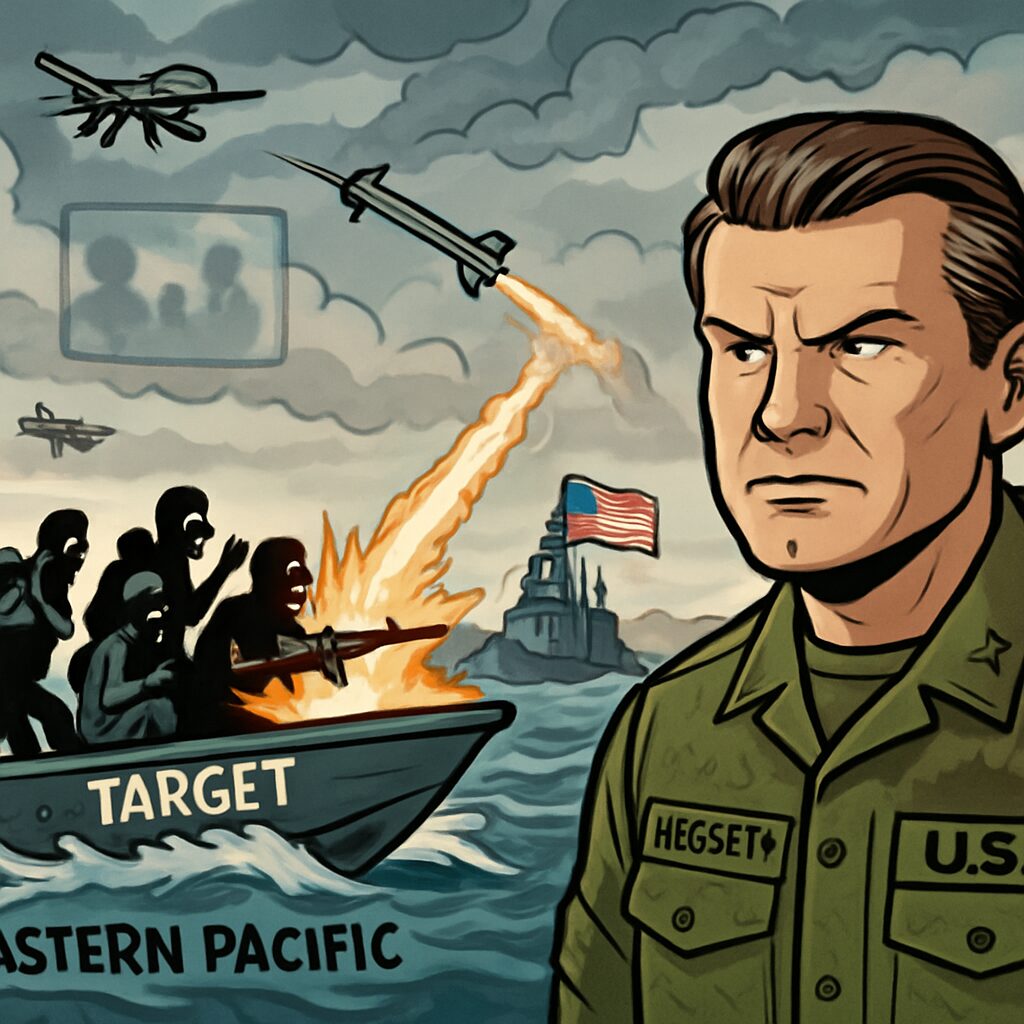
The U.S. military conducted a lethal kinetic strike on an alleged drug-trafficking boat in the eastern Pacific Ocean on December 17, 2025, killing four people, according to announcements from U.S. Southern Command. Defense Secretary Pete Hegseth ordered the attack, which was executed by Joint Task Force Southern Spear targeting a vessel operated by a designated terrorist organization in international waters, with no U.S. casualties reported.
This incident is the latest in Operation Southern Spear, a campaign launched by the Trump administration to combat narcotics trafficking. Since September 2, the U.S. has carried out 26 such strikes on suspected drug-running vessels in the Eastern Pacific and Caribbean, resulting in at least 99 fatalities. The administration asserts these operations are crucial for disrupting drug flows into the United States, though public evidence for individual targets remains limited.
Intelligence indicated the December 17 strike targeted a boat on a known narco-trafficking route, with the victims described as four male narco-terrorists. U.S. Southern Command released unclassified video of the attack, consistent with past practice, but the Pentagon has refused to share full, unedited footage, citing security concerns. This opacity has fueled debates over transparency and accountability in the military’s actions.
The strikes are closely linked to U.S. policy toward Venezuela, which the Trump administration accuses of colluding with drug cartels. In response, the U.S. has ramped up its military presence in the region, deploying additional troops and naval assets, while President Trump imposed a “total and complete blockade” on sanctioned oil tankers to and from Venezuela, intensifying economic pressure.
Controversy flared after reports revealed a September 2 strike involved a follow-on attack that killed two survivors, raising legal and ethical questions about “double tap” tactics. Some lawmakers and experts have suggested this could constitute a war crime, prompting calls for greater oversight. Defense Secretary Hegseth has defended the strikes, arguing that releasing sensitive videos publicly is not viable.
Congress has escalated scrutiny, with bipartisan efforts to obtain more information. Briefings with Hegseth have been tense, and legislative measures, such as provisions in the defense authorization bill to withhold funding until videos are provided to committees, highlight ongoing tensions between the executive and legislative branches.
Venezuelan President Nicolás Maduro has denied drug-trafficking allegations and condemned U.S. actions as warmongering and colonialist, accusing the Trump administration of seeking regime change. This has further strained diplomatic relations, with Maduro’s government rallying against perceived U.S. aggression.
Looking ahead, the U.S. military campaign is expected to persist, with potential for additional strikes and escalated conflict with Venezuela. The situation underscores complex issues of executive power, international law, and the challenges of addressing transnational crime in a volatile geopolitical landscape.

