

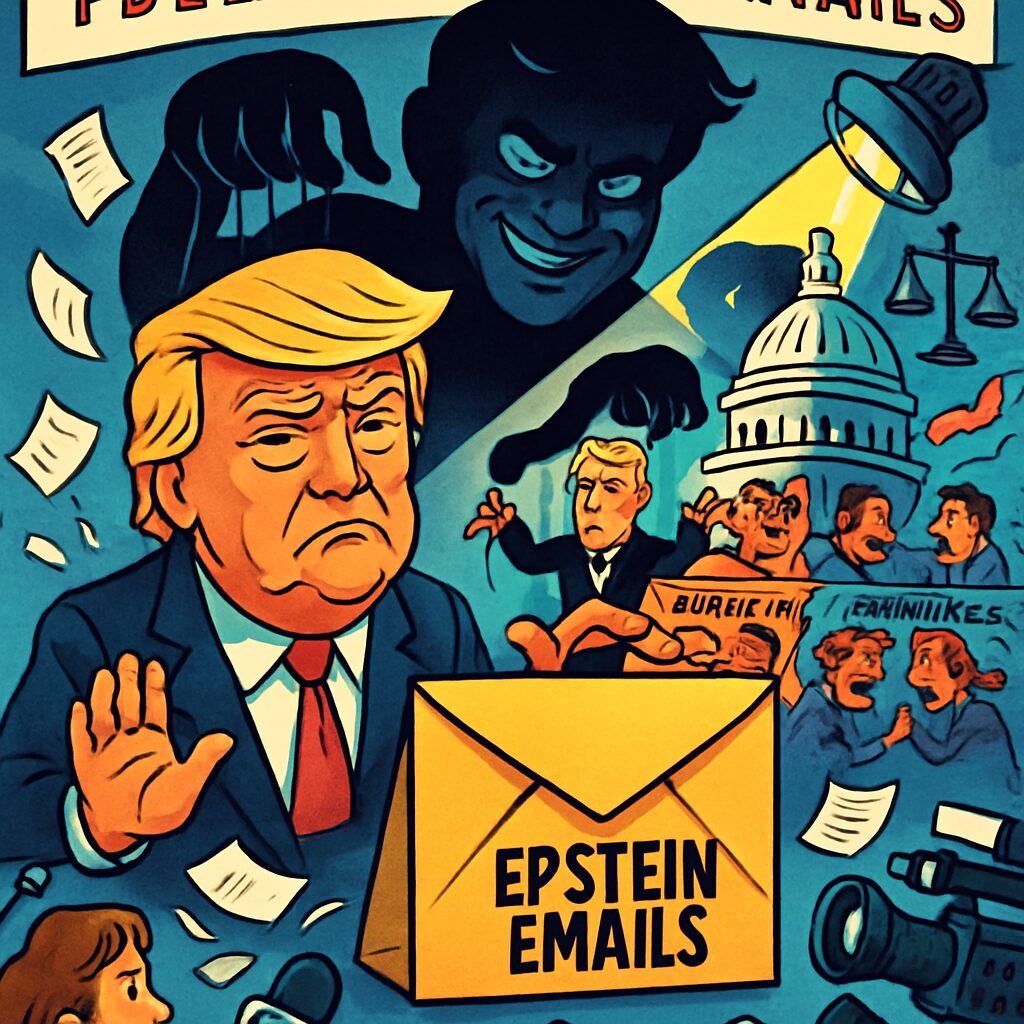
House Democrats released new emails from Jeffrey Epstein’s estate that mention President Trump, detailing their relationship and suggesting Trump’s awareness of Epstein’s activities, while the White House condemned the release as a political attack.
On Wednesday, Democrats on the House Oversight Committee published a series of emails from the estate of convicted sex offender Jeffrey Epstein, which directly reference President Donald Trump. The emails, spanning from 2011 to 2019, include correspondence with Epstein’s associate Ghislaine Maxwell and author Michael Wolff, providing new insights into Trump’s interactions with Epstein. This release is part of ongoing efforts to uncover the full extent of Epstein’s network and its ties to powerful figures, amid heightened political tensions in Washington.
In one notable email from 2011 to Maxwell, Epstein described Trump as the “dog that hasn’t barked” and stated that Trump had spent “hours at my house” with one of the alleged victims, identified as Virginia Giuffre. Another email from 2015 shows Wolff advising Epstein on how to handle questions about Trump, suggesting he could “let him hang himself” or “save him” depending on the political landscape. A 2019 email from Epstein to Wolff claims that Trump “knew about the girls” and had asked Maxwell to stop, though it lacks further elaboration.
Trump and Epstein were known to be friends for years, with Trump asserting that they fell out in the early 2000s. Trump has consistently denied any involvement in Epstein’s crimes and emphasized that he banned Epstein from his Mar-a-Lago club. However, the new emails indicate ongoing communication and potential awareness during Trump’s presidential campaign and early presidency, challenging his previous statements and raising questions about the depth of their association.
The White House responded swiftly, with Press Secretary Karoline Leavitt labeling the emails as “selectively leaked” to create a “fake narrative” and smear Trump. In retaliation, House Republicans released over 20,000 pages of documents, accusing Democrats of cherry-picking information. This exchange underscores the politicization of the Epstein case, with both parties using it to attack each other and influence public opinion.
The released documents also mention other high-profile individuals, including Prince Andrew, who is referenced in emails, and former UK ambassador Peter Mandelson, who maintained contact with Epstein as late as 2016. These connections highlight the widespread nature of Epstein’s network and the ongoing scrutiny of his associates.
Survivors of Epstein’s abuse, such as Annie Farmer, have called for full transparency and the release of all documents, arguing that partial disclosures leave many questions unanswered. Farmer emphasized that the estimated one thousand women and girls harmed by Epstein and his associates deserve justice and complete information.
The release coincides with the House returning to session after a prolonged government shutdown, with Democrats pushing for a vote to force the Department of Justice to release more Epstein-related files. This ongoing effort places political pressure on Trump, who once campaigned on exposing the Epstein saga, and could impact his administration’s credibility and the upcoming election cycle.

