

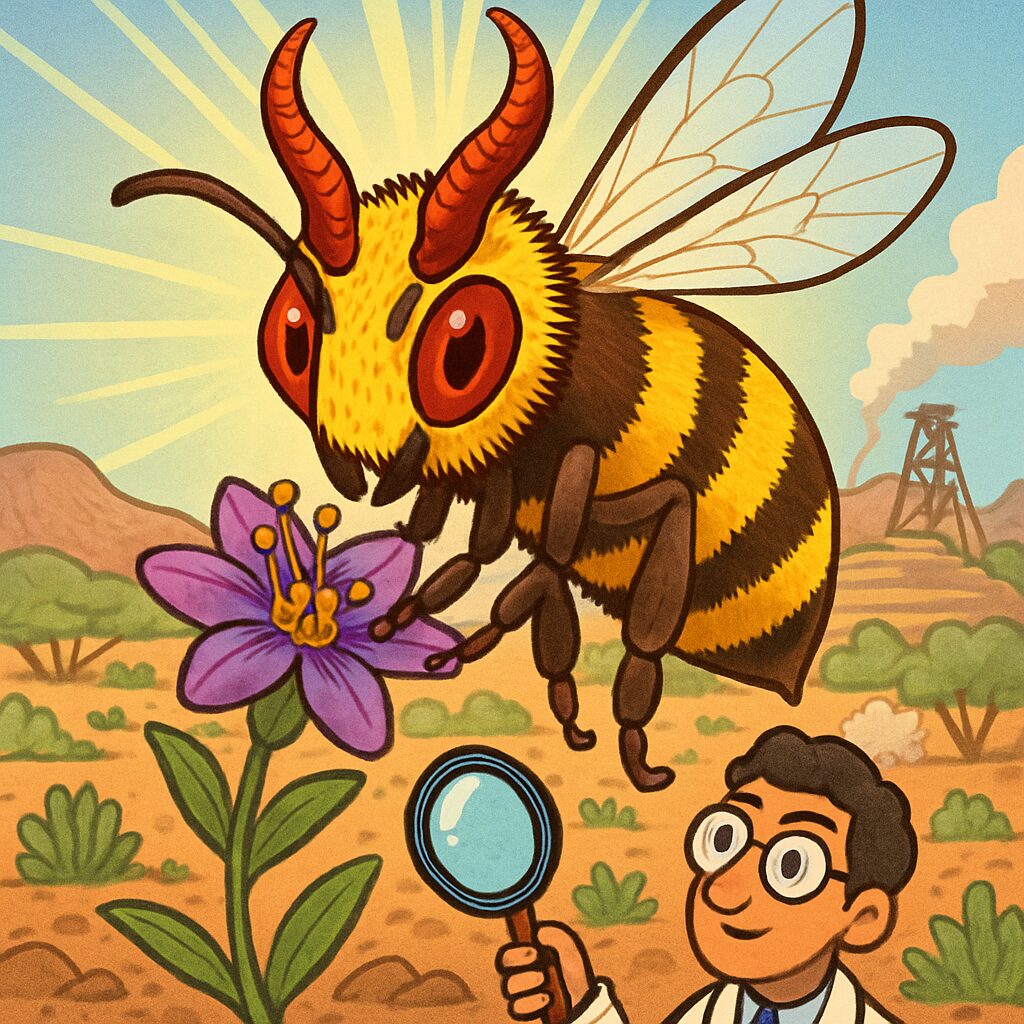
Scientists have unveiled a new native bee species in Australia, dubbed “Megachile (Hackeriapis) lucifer” for its devil-like horns, a discovery that highlights the untapped diversity of pollinators and the pressing need for enhanced conservation measures. Reported today by multiple reliable sources, this finding emerged from Western Australia’s remote Goldfields, where researchers chanced upon the insect while studying a rare plant.
The discovery was made by Dr. Kit Prendergast of Curtin University during a 2019 survey of a critically endangered wildflower that grows exclusively in the Bremer Ranges, about 470 kilometers east of Perth. She immediately noted the female bees’ unique facial horns, which set them apart from any known species. After years of meticulous study, including morphological and behavioral analysis, the bee was confirmed as new to science, with its description published in the Journal of Hymenoptera Research. This careful process ensured the identification was accurate and peer-reviewed.
Dr. Prendergast named the species “lucifer,” inspired by the Netflix character, as the horns evoked a devilish appearance, and the Latin meaning “light bringer” reflects the insight this discovery provides into bee biodiversity. The horns, found only on females, are thought to serve multiple purposes, such as defense against predators, collecting pollen or nectar, or gathering materials like resin for nest construction. However, their exact function remains a subject for future investigation, adding to the mystery of this unique insect.
This bee is the first new member of its group to be identified in more than 20 years, underscoring how many species may still be unknown, particularly in regions like Australia’s Goldfields. The area is rich in endemic flora and fauna but faces significant threats from mining activities and climate change, which could wipe out species before they are even documented. Dr. Prendergast emphasized that such discoveries remind us of the vast unknowns in entomology and the importance of continuous exploration.
In her research, Dr. Prendergast highlighted that many mining companies do not include native bees in environmental impact assessments, leading to potential oversight of crucial pollinators. This gap in surveying means that undescribed species, which might play vital roles in supporting threatened plants and ecosystems, are at risk of extinction without any record of their existence. She called for improved policies to integrate pollinator surveys into development approvals to prevent irreversible losses.
The interdependence between the new bee and the endangered wildflower it pollinates illustrates the fragile balance of these ecosystems. Loss of either could have cascading effects, reducing biodiversity and resilience to environmental stresses. Bees are essential for the reproduction of most flowering plants, and their decline poses a global challenge to agriculture and natural habitats, making this discovery a critical case study in conservation biology.
To address these risks, the study calls for the formal protection of the Bremer Ranges as conservation land, preventing clearing and mining disturbances. This move would not only safeguard the newly discovered bee and its associated plants but also set a precedent for incorporating pollinator surveys into development approvals across Australia. Dr. Prendergast hopes this will inspire broader efforts to preserve hidden species.
Ultimately, the “Lucifer” bee discovery serves as a wake-up call for increased investment in biodiversity research and conservation. It reminds us that even in well-studied countries, nature holds surprises that can inform better environmental stewardship and ensure the survival of irreplaceable species for future generations.

