

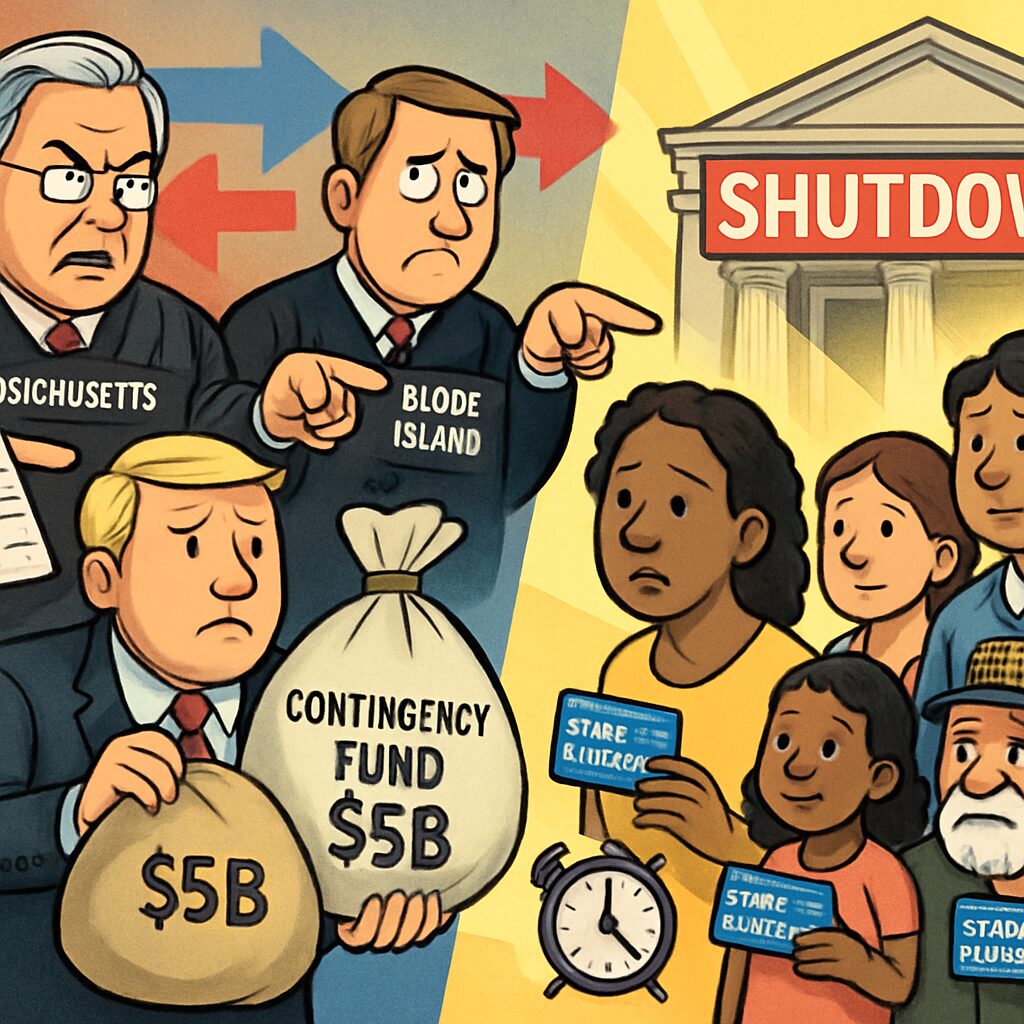

Two federal judges have ruled that the Trump administration must continue funding the Supplemental Nutrition Assistance Program (SNAP) during the government shutdown, ordering the use of contingency funds to prevent a lapse in food aid for millions of Americans.
The ongoing U.S. government shutdown, now entering its second month since October 1, 2025, has threatened to suspend SNAP benefits, which provide essential food purchasing assistance to approximately 42 million low-income individuals. The U.S. Department of Agriculture had announced that November payments would not be made due to the funding lapse, but federal judges in Massachusetts and Rhode Island issued rulings on Friday to counter this decision. Their interventions came in response to lawsuits from states and advocacy groups arguing that cutting off benefits would cause severe harm.
In Massachusetts, U.S. District Judge Indira Talwani ruled that the administration is legally required to tap into a $5 billion contingency fund to make at least partial SNAP payments. She gave the government until Monday to report on its plans, explicitly rejecting arguments that the fund could not be used during the shutdown. Judge Talwani emphasized that Congress intended for SNAP benefits to be funded even when appropriations are insufficient, and she found the administration’s interpretation erroneous.
Simultaneously, in Rhode Island, Judge John J. McConnell Jr. granted a temporary restraining order, requiring the Trump administration to distribute SNAP benefits in full by Monday or make partial payments using contingency funds by Wednesday. He highlighted that irreparable harm would occur if benefits were suspended, affecting families, seniors, and veterans who depend on the program for food security. The judge noted that contingency funds, along with other reserves, could be utilized to ensure payments.
SNAP, commonly known as food stamps, provides an average of $187 per month per household through reloadable debit cards, serving as a critical source for groceries for many vulnerable populations. The potential cutoff had raised alarms about increased food insecurity, malnutrition, and associated health issues, particularly for children. Several states had pledged to cover shortfalls with their own funds but faced warnings from the federal government about reimbursement challenges.
President Trump responded on Truth Social, stating that he had instructed lawyers to seek court clarification on funding SNAP and blamed Democrats for any delays. He expressed willingness to provide funding if given legal direction, drawing parallels to actions taken for military pay during the shutdown. Agriculture Secretary Brooke Rollins had previously argued that the contingency fund was reserved for emergencies like natural disasters, not the shutdown, but the judges’ rulings countered this stance.
The legal decisions underscore the deepening political divide over the shutdown, with Republicans and Democrats trading blame for the impasse. The rulings reinforce that hunger cannot be used as a political tool, and the administration must now comply or face further court actions. Beneficiaries and states await the outcome, as the cases could set precedents for managing emergency funds during future budgetary crises.