

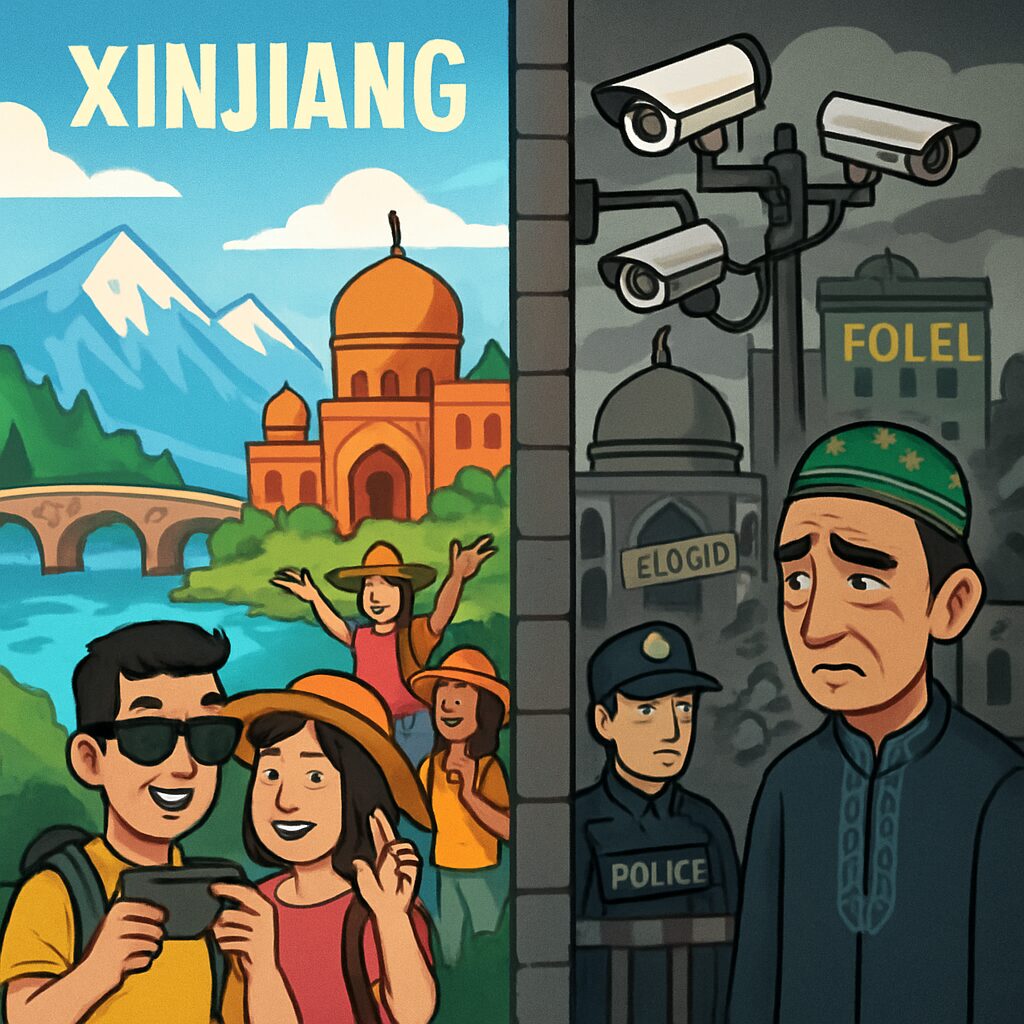

China’s Xinjiang region has experienced an unprecedented tourism boom, welcoming 300 million visitors in 2024, more than double the 2018 figure, as the Chinese government promotes its natural beauty while facing ongoing allegations of human rights abuses against the Uyghur Muslim minority.
For years, Xinjiang was perceived as one of China’s most dangerous areas, marked by ethnic tensions and violence that kept many tourists away. However, under President Xi Jinping’s leadership, Beijing has invested heavily in infrastructure and rebranded the region, showcasing its stunning landscapes—from remote mountains to pristine lakes—and cultural heritage along the historic Silk Road. This shift has transformed Xinjiang into a popular destination, with tourism revenue soaring to 360 billion yuan in 2024, a 40% increase from 2018.
The Chinese government has pumped billions into developing the region, including building over 200 international hotels and producing state-funded TV dramas like ‘To the Wonder’ set in the Altay prefecture. These efforts aim to attract both domestic and foreign tourists, with ambitious targets to host over 400 million visitors annually by 2030. Many travelers, such as Singaporean Sun Shengyao, describe the scenery as a blend of New Zealand, Switzerland, and Mongolia, though some initially hesitated due to safety concerns.
Tourist experiences often highlight the region’s beauty but also reveal a highly surveilled environment, with police checkpoints and security cameras commonplace. While visitors like Anna, a Chinese national, find the landscapes breathtaking, they note overcrowding at major attractions. Foreign tourists, including those from Singapore, report limited interactions with Uyghur locals and restrictions on visiting mosques, raising questions about the authenticity of the cultural experiences offered.
Behind the idyllic facade, human rights organizations and the United Nations have documented grave violations, including the detention of over a million Uyghurs in ‘re-education camps,’ allegations of forced sterilizations, and the destruction of cultural sites. China denies these claims, but the region remains largely cut off from independent media, with Uyghurs in exile recounting stories of disappeared relatives and cultural erosion.
Critics argue that the tourism push involves cultural appropriation, with the government promoting ‘ethnic’ experiences while allegedly erasing Uyghur identity. Uyghur-American activist Irade Kashgary describes it as selling a sanitized version of her culture, where Uyghurs are presented as colorful attractions rather than a people facing oppression. Meanwhile, hundreds of villages have had their names changed, and mosques have been closed or repurposed to curb Islamic practices.
Social media and state-promoted content play a key role in shaping perceptions, with influencers and travel agencies highlighting Xinjiang’s beauty without mentioning the controversies. Platforms like RedNote and Weibo are flooded with posts raving about the region’s autumn poplar forests and iconic architecture, helping to normalize it as a vacation spot, particularly among domestic Chinese tourists.
Looking ahead, the tourism boom brings economic benefits but raises ethical dilemmas about complicity in human rights abuses. As Beijing tightens control, calling for the ‘Sinicisation of religion,’ the future of Xinjiang hinges on balancing development with accountability. The carefully crafted image presented to tourists contrasts sharply with the harsh realities faced by the Uyghur people, underscoring a deep tension between economic progress and human dignity.