

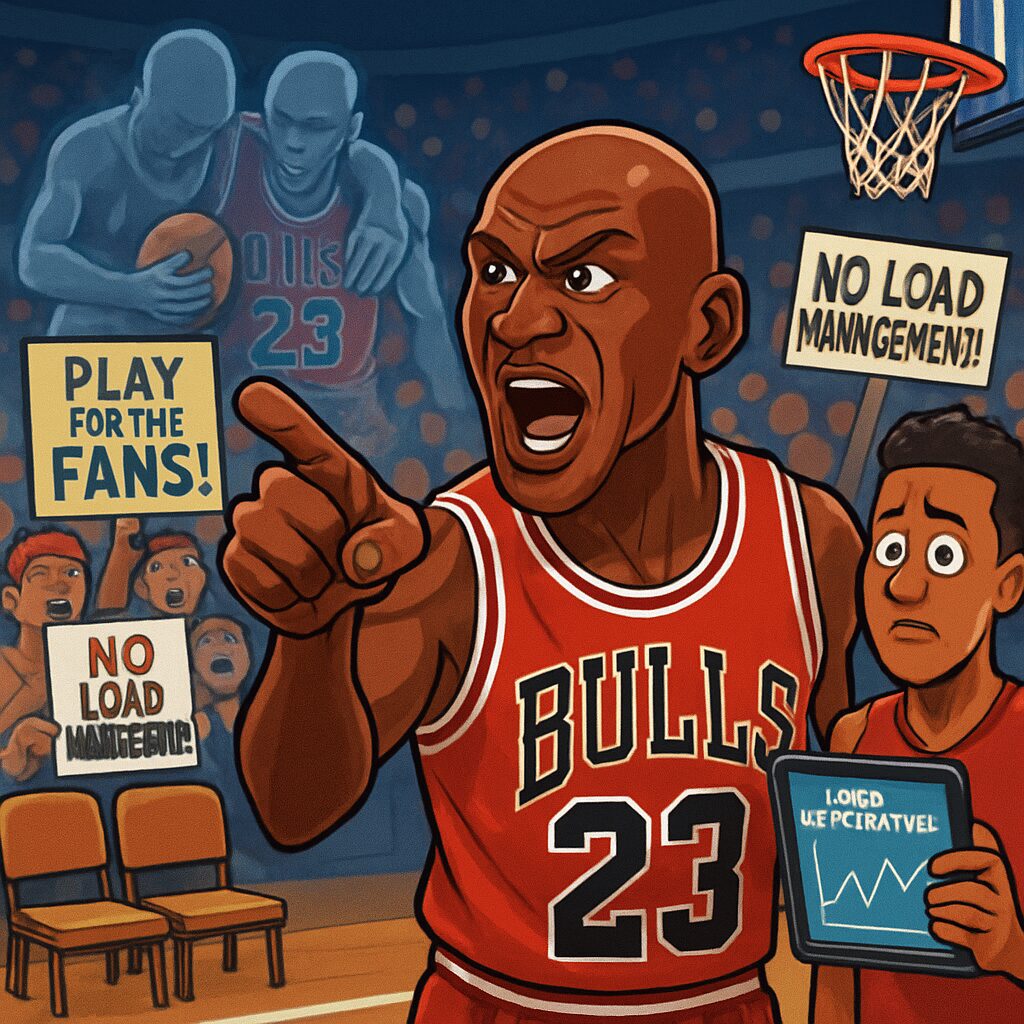

Basketball legend Michael Jordan has strongly criticized the NBA’s load management practices, stating that players should not miss games unnecessarily and emphasizing the importance of performing for fans. His remarks were made during a recent interview on NBC’s “MJ: Insights to Excellence” series, where he argued that resting healthy players undermines the spirit of competition and fan expectations.
In the interview, which aired as part of a doubleheader on NBC, Jordan was questioned by host Mike Tirico about his views on load management. He didn’t hold back, asserting that such practices “shouldn’t be needed, first and foremost.” Jordan explained that he never wanted to sit out a game because each appearance was an opportunity to prove himself and connect with audiences. He highlighted that fans who work hard to buy tickets deserve to see players give their all, reinforcing his belief in the duty of athletes as entertainers.
Load management, the strategy of resting players to prevent fatigue and reduce injury risk, has become a hot-button issue in the NBA over the past decade. Teams often bench star players during the regular season, leading the league to implement rules that tie player availability to eligibility for awards like MVP and All-NBA honors. Jordan’s comments come amid ongoing debates about how to balance player welfare with the integrity of the game and fan satisfaction, reflecting a broader discussion in sports about long-term health versus immediate performance.
Reflecting on his own career, Jordan shared personal anecdotes to illustrate his philosophy. He recalled playing through a sprained ankle early on to establish his reputation, viewing every game as a chance to build his legacy. This mindset, he suggested, was crucial to his success and should inspire current players to prioritize resilience. Jordan’s emphasis on consistency and availability contrasts with modern approaches that often rely on data analytics to schedule rest, highlighting a cultural shift in how athletes manage their bodies and careers.
One of the most vivid examples Jordan cited was the famous “flu game” from the 1997 NBA Finals. In Game 5 against the Utah Jazz, he played despite severe illness—likely food poisoning—scoring 38 points and leading the Chicago Bulls to a critical victory. Jordan described how, once on the court, the emotions and team needs pushed him to persevere, ultimately collapsing into teammate Scottie Pippen’s arms after the game. This iconic moment has become a symbol of his toughness and dedication, often referenced in discussions about player commitment.
Jordan also addressed the fan experience, noting that he felt compelled to perform even for critics in the audience. He joked about wanting to “shut up” hecklers by delivering a strong performance, underscoring that entertainers have a responsibility to engage with those who support them. This perspective adds depth to the load management debate, as it ties player actions directly to fan loyalty and the economic aspects of the sport, where ticket sales and viewership can be impacted by star absences.
The interview sheds light on generational differences in NBA culture, where Jordan’s era valued grit and nightly availability, while today’s game often prioritizes injury prevention and career longevity. His views may influence current players and league policies, as the NBA continues to refine its approach to player health. By sharing his experiences, Jordan not only critiques modern practices but also offers a historical context that enriches the conversation about what it means to be a professional athlete.
In conclusion, Jordan’s unwavering stance against load management reinforces his legacy as a competitor who always put the game and fans first. As the NBA evolves, his comments are likely to resonate in locker rooms and front offices, reminding everyone of the sport’s core values. The discussion may prompt further reflection on how to honor tradition while adapting to new understandings of athlete well-being, ensuring the league remains exciting and accessible for all.