

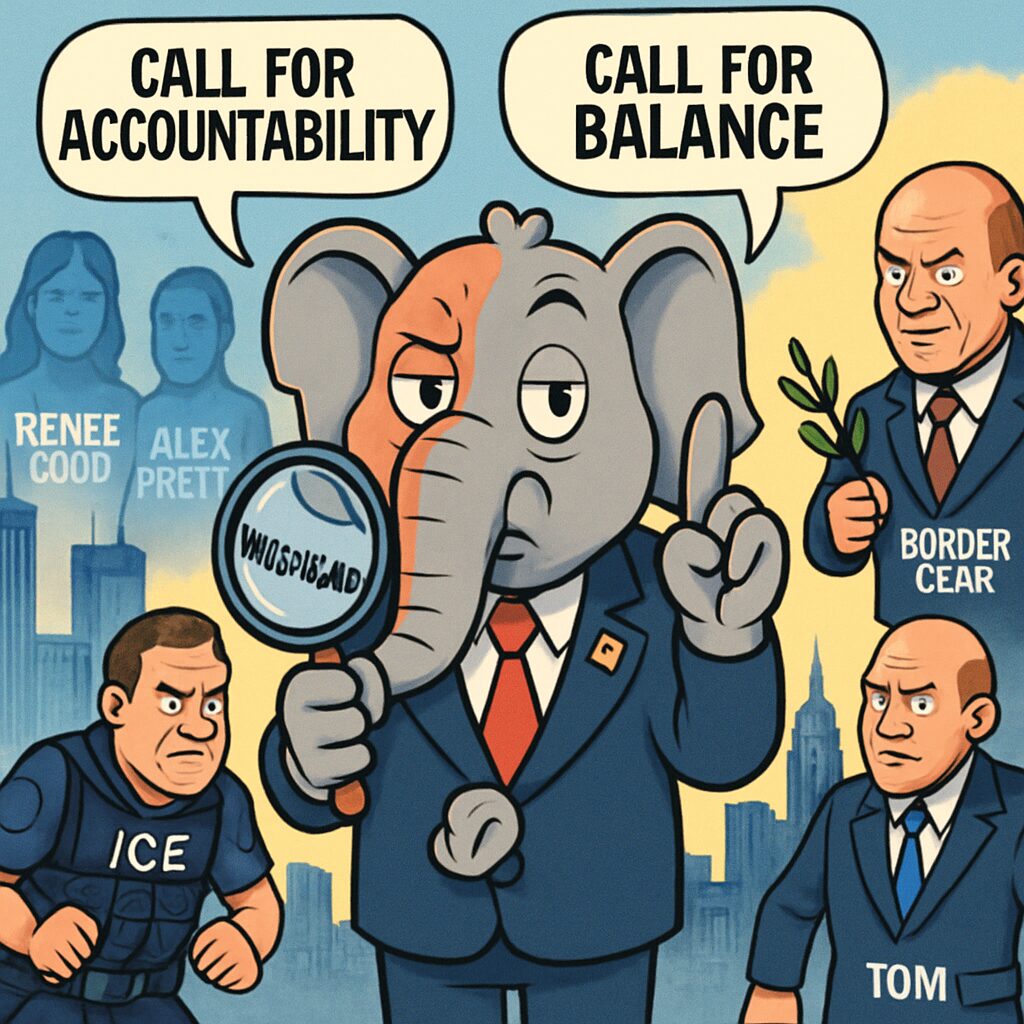
Republican lawmakers are voicing growing criticism over the U.S. Immigration and Customs Enforcement (ICE) agency’s use of force in Minneapolis following the fatal shootings of two American citizens, but they are notably avoiding direct attacks on President Donald Trump, highlighting the party’s delicate balancing act ahead of the midterm elections.
The controversy erupted after ICE agents fatally shot Renee Good on January 7 and Alex Pretti on January 25 in Minneapolis, during operations under Trump’s immigration crackdown. These incidents have sparked nationwide protests and forced Republicans to address escalating public anger over federal enforcement tactics.
In response, numerous Republican senators and representatives have called for thorough investigations and congressional oversight. Senator Rand Paul, chairman of the Senate Homeland Security Committee, requested that leaders from ICE and other agencies testify before his panel. Senator Lisa Murkowski urged a “comprehensive, independent investigation,” stating that ICE agents do not have unlimited authority. House Homeland Security Chairman Andrew Garbarino also called for a full investigation, emphasizing Congress’s duty to ensure safety.
Despite the criticism, most Republicans have refrained from blaming Trump or his broader immigration agenda. Lawmakers like Representative Max Miller issued carefully worded statements focusing on “transparency and accountability” without mentioning the president. Similarly, Senator Ted Cruz criticized the administration’s rhetoric but not its policies, saying the tone could be improved. This caution reflects the party’s reluctance to upset Trump’s base, which strongly supports his immigration measures.
The White House has adjusted its stance amidst the backlash. Initially, Trump and officials aggressively defended the shootings, but after video evidence suggested Pretti was unarmed, the president softened his rhetoric. He dispatched border czar Tom Homan to Minneapolis to “de-escalate” the situation, and held calls with local Democratic leaders to ease tensions. White House Press Secretary Karoline Leavitt stated that no one wants to see people hurt, signaling a more conciliatory approach.
Republican responses are divided, with moderates pushing for accountability and Trump allies defending the administration. Senator Thom Tillis called for DHS Secretary Kristi Noem to resign, while others like Representative Tom Emmer blamed local leaders for endangering federal agents. The National Rifle Association also criticized inflammatory remarks from a Trump-appointed prosecutor, adding to the complexity.
Politically, this issue threatens to exacerbate partisan divides, with Democrats opposing additional DHS funding and risking a government shutdown. As the midterm elections approach, Republicans must balance criticism of specific actions with support for Trump’s overall record, a strategy that could impact voter perceptions and party cohesion.
Looking ahead, the focus will be on the investigations’ findings and Trump’s further responses. How this situation unfolds will shape immigration policy debates and Republican messaging in the critical months leading up to the elections.

