

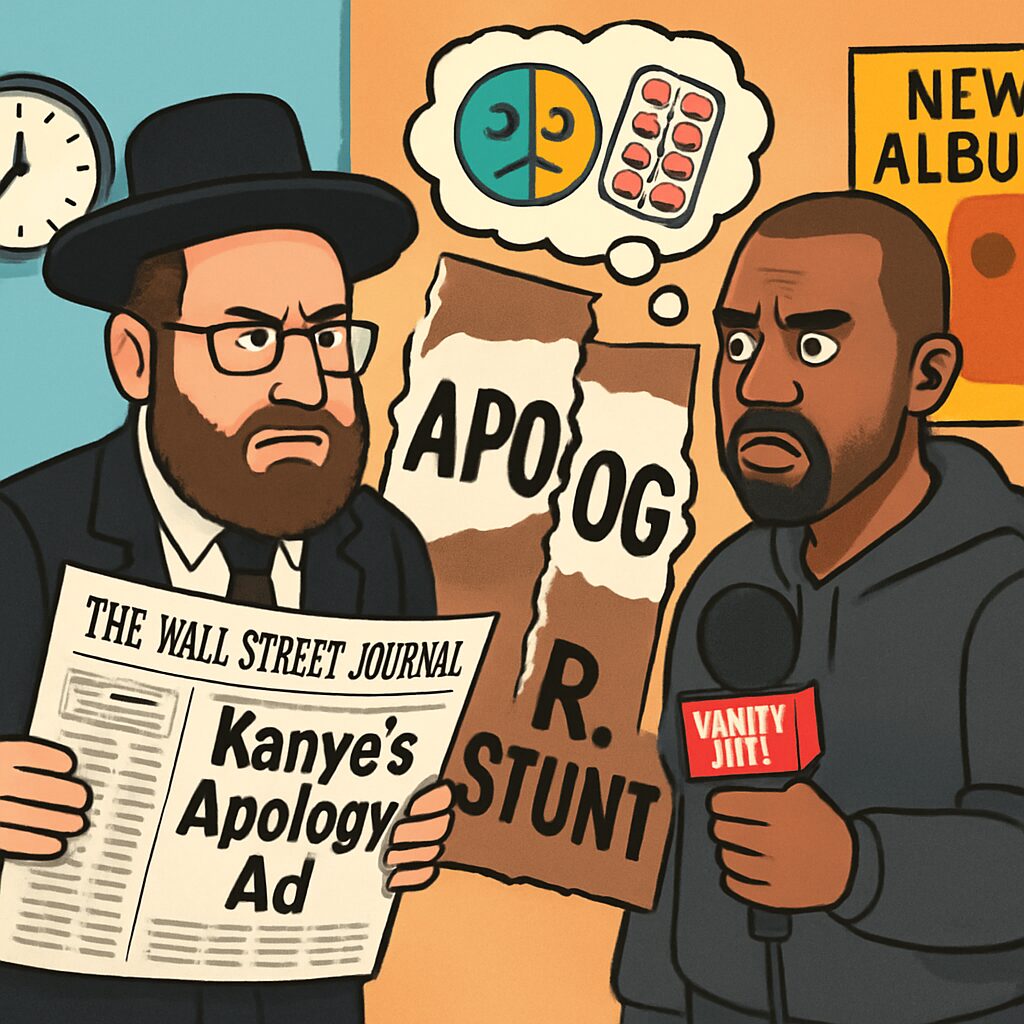
Rabbi Shmuley Boteach has publicly rejected Kanye West’s apology for past antisemitic remarks, labeling it a public relations stunt ahead of the rapper’s new album release. Meanwhile, Kanye insists in a Vanity Fair interview that his remorse is genuine and not motivated by commercial interests.
In an exclusive with TMZ, Rabbi Shmuley Boteach, an influential American rabbi, slammed Kanye West’s full-page apology advertisement in The Wall Street Journal. Boteach criticized the ad for costing approximately $75,000 and failing to address specific offensive actions, such as the “Heil Hitler” track from Kanye’s music. He emphasized that Kanye’s attempt to blame a past car accident for his hate speech is unconvincing, stating that head injuries do not typically lead to antisemitism.
Kanye West, in his interview with Vanity Fair, denied that the apology is a PR move. He expressed deep regret for his comments that hurt the Jewish and Black communities, attributing his past behavior to bipolar episodes. The rapper detailed his struggle with medication and credited his wife, Bianca Censori, with helping him seek treatment in Switzerland, highlighting his ongoing efforts to find the right balance for his mental health.
The apology ad, published in The Wall Street Journal, was part of Kanye’s attempt to make amends for years of controversial statements. However, Boteach points out that the omission of direct references to his most inflammatory works undermines the sincerity of the gesture. He calls Kanye an “American Nazi” and asserts that the rapper has indirectly contributed to anti-Jewish sentiment, particularly through music played in clubs.
Experts weigh in on the situation, with Dr. Avinoam Patt of NYU’s Center for the Study of Antisemitism expressing skepticism. Patt notes that while mental health issues are serious, they do not excuse or explain antisemitic rhetoric, and Kanye has a long pattern of such behavior. He suggests that meaningful actions, beyond words, are necessary for any authentic reconciliation.
The timing of the apology coincides with the release of Kanye’s new album, raising questions about its motivations. Boteach and others view it as a strategic move to rehabilitate his public image and boost sales. In contrast, Kanye maintains that his primary goal is to promote love and positivity, distancing himself from his past hate speech.
Looking ahead, the controversy highlights the challenges public figures face when addressing past harms. For Kanye, regaining trust will require consistent, demonstrable changes in behavior and output. The Jewish community and observers will be watching closely to see if his future actions align with his stated intentions.
In conclusion, while Kanye West seeks forgiveness through public statements, critics like Rabbi Shmuley Boteach remain unconvinced, underscoring the deep divisions and ongoing impact of his words. The episode serves as a reminder of the power and responsibility that come with celebrity influence in sensitive social issues.

