

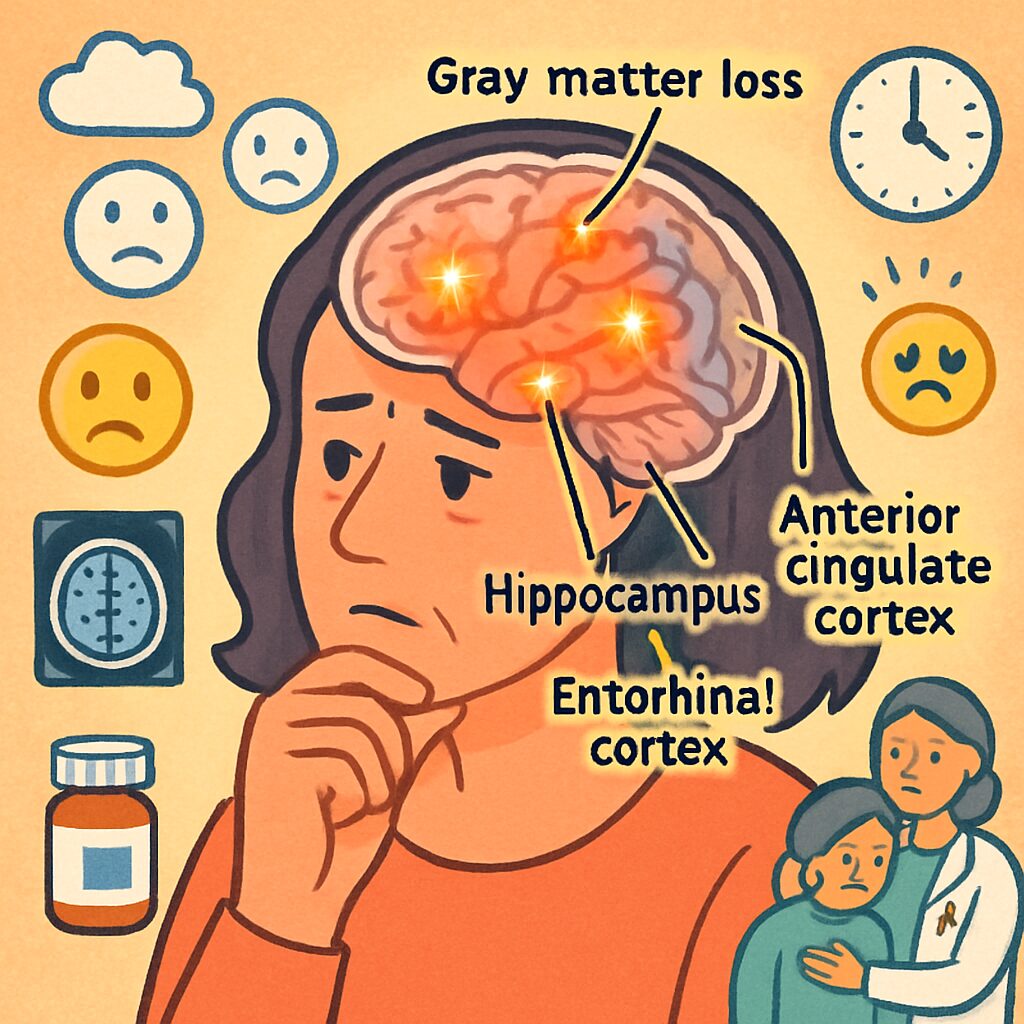
A groundbreaking UK study published today in the journal Psychological Medicine has found that menopause is associated with significant brain changes resembling those seen in Alzheimer’s disease, including loss of grey matter in regions critical for memory and emotion. This research, involving nearly 125,000 women, suggests that these alterations may contribute to the higher risk of dementia in women compared to men.
The study, led by researchers from the University of Cambridge and utilizing data from the UK Biobank, included MRI scans of 11,000 participants to examine brain structure. It revealed reductions in grey matter volume in the hippocampus, which is essential for learning and memory; the entorhinal cortex, a gateway for information flow; and the anterior cingulate cortex, involved in attention and emotional regulation. These areas are notably affected in the early stages of Alzheimer’s, pointing to a potential biological link between menopause and cognitive decline.
Beyond structural changes, the study documented increased levels of anxiety and depression among post-menopausal women. Participants reported higher rates of seeking help from healthcare providers for mental health issues, along with more pronounced symptoms of depression and sleep disturbances such as insomnia and fatigue. These findings highlight the multifaceted impact of menopause on both brain health and overall well-being.
Hormone replacement therapy (HRT), commonly prescribed to alleviate menopausal symptoms, did not appear to prevent the loss of grey matter. However, the research indicated that HRT might slow the natural age-related decline in reaction times. Importantly, the study noted that women on HRT often had pre-existing poorer mental health, suggesting that the therapy is sometimes prescribed in anticipation of worsening symptoms rather than as a cure-all.
Professor Barbara Sahakian, the senior author, emphasized that the brain regions showing changes are those vulnerable to Alzheimer’s. “Menopause could make these women vulnerable further down the line,” she said, adding that this might explain why nearly twice as many women develop dementia as men. This insight underscores the importance of considering hormonal factors in dementia research and prevention strategies.
The study also found that post-menopausal women experienced slower reaction times compared to pre-menopausal women, although memory tasks showed no significant differences. Dr. Katharina Zühlsdorff explained that menopause seems to accelerate the natural slowing of reaction times with age, but HRT can act as a brake on this process. This nuanced understanding of cognitive effects provides a clearer picture of how menopause influences brain function.
Dr. Christelle Langley, a co-researcher, called for greater sensitivity to the mental health challenges during menopause, urging women not to hesitate in seeking help. “We all need to be more sensitive to not only the physical, but also the mental health of women during menopause,” she said. The research advocates for a holistic approach to menopausal care, integrating support for psychological well-being alongside physical symptom management.
Moving forward, the findings stress the need for long-term studies to track whether these brain changes indeed increase dementia risk. Experts like Michelle Dyson from the Alzheimer’s Society caution that while the study adds valuable evidence, direct causality remains unconfirmed. In the meantime, maintaining a healthy lifestyle through exercise, balanced diet, and avoiding smoking and excessive alcohol is recommended to mitigate dementia risk. This study marks a significant step in unraveling the complex relationship between menopause and brain health, paving the way for targeted interventions in the future.

