

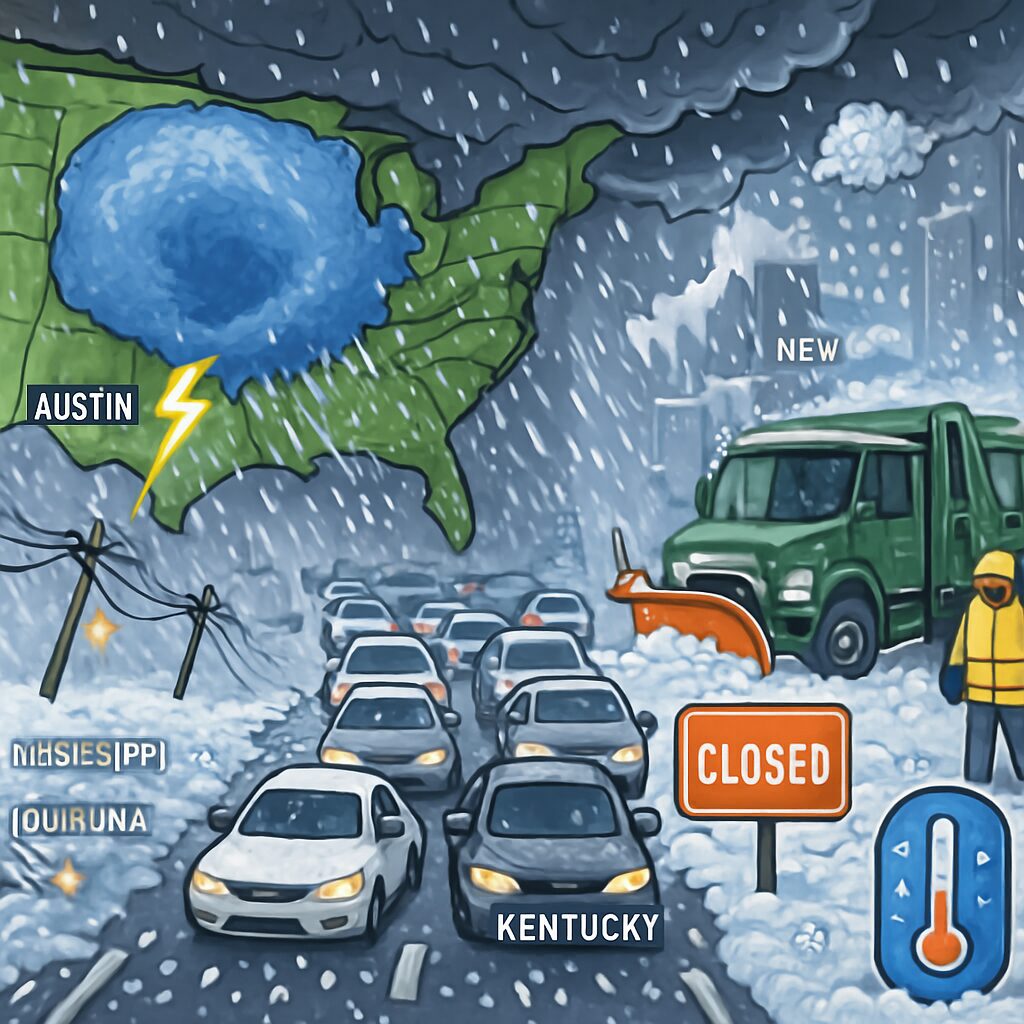
A major winter storm is intensifying and expanding across the United States, bringing a dangerous mix of thunder ice, heavy snow, and freezing rain from the South to the Northeast, causing widespread travel disruptions, power outages, and life-threatening conditions. The storm, which spans nearly 2,000 miles from Texas to New England, has already led to over 14,800 flight cancellations and hazardous road conditions, with authorities urging residents to stay indoors.
The storm’s impact is growing rapidly, with snow and ice accumulation threatening regions from the Southern Plains through the Midwest and into the Mid-Atlantic. According to CNN live updates, thundersleet—a rare phenomenon where lightning accompanies sleet—has been observed in areas like Austin, Texas, exacerbating the ice threat. The National Weather Service has reported increasing power outages, with nearly 70,000 customers in Mississippi and Louisiana left in the dark, and numbers climbing in Texas and Tennessee.
Travel has become a nightmare, with stretches of interstate highways shut down due to dangerous conditions. In Kentucky, heavy snow has triggered multiple car accidents, while in New York City, officials have modified garbage trucks with plows and put thousands of sanitation workers on standby to combat the blizzard. The Metropolitan Transportation Authority has warned commuters to avoid unnecessary travel, with bus and subway services facing delays and cancellations.
The storm is fueled by a clash of air masses, leading to severe weather threats beyond winter precipitation. The Storm Prediction Center has issued a Level 2 of 5 risk for severe thunderstorms in parts of the Southeast, including damaging winds and isolated tornadoes. This adds another layer of danger, particularly for areas already dealing with ice and power outages, where residents may struggle to receive warnings.
Forecasts from sources like The New York Times indicate that the storm was anticipated to bring a menacing mix of snow and ice, with updates highlighting its rapid intensification. Ice accumulation is a primary concern, especially in North Carolina, Virginia, and Maryland, where freezing rain is expected to glaze surfaces and weigh down power lines. The European forecast model predicts significant ice buildup in the Mid-Atlantic, raising fears of prolonged outages.
Authorities across affected states have issued stern warnings. In Greensboro, North Carolina, police emphasized that travel is no longer safe, urging people to stay off roads. Record-setting cold temperatures are locking snow and ice in place, with subzero wind chills forecast for over half of Americans in the coming days, prolonging the crisis for those without power.
The storm’s economic and human toll is mounting, with businesses disrupted and emergency services stretched thin. In Michigan, a college student was found dead after going missing in extreme cold, underscoring the life-threatening nature of the conditions. As the storm continues to move eastward, communities in the Northeast are bracing for what could be their heaviest snowfall in years, with Boston potentially facing its biggest snowstorm since 2022.
Looking ahead, the storm is expected to persist through Sunday, with snow bands intensifying in the Midwest and ice spreading into the Northeast. Recovery efforts will likely be hampered by the extreme cold, and residents are advised to prepare for extended power outages and hazardous conditions. This event highlights the increasing volatility of winter weather patterns and the need for robust preparedness in vulnerable regions.

