

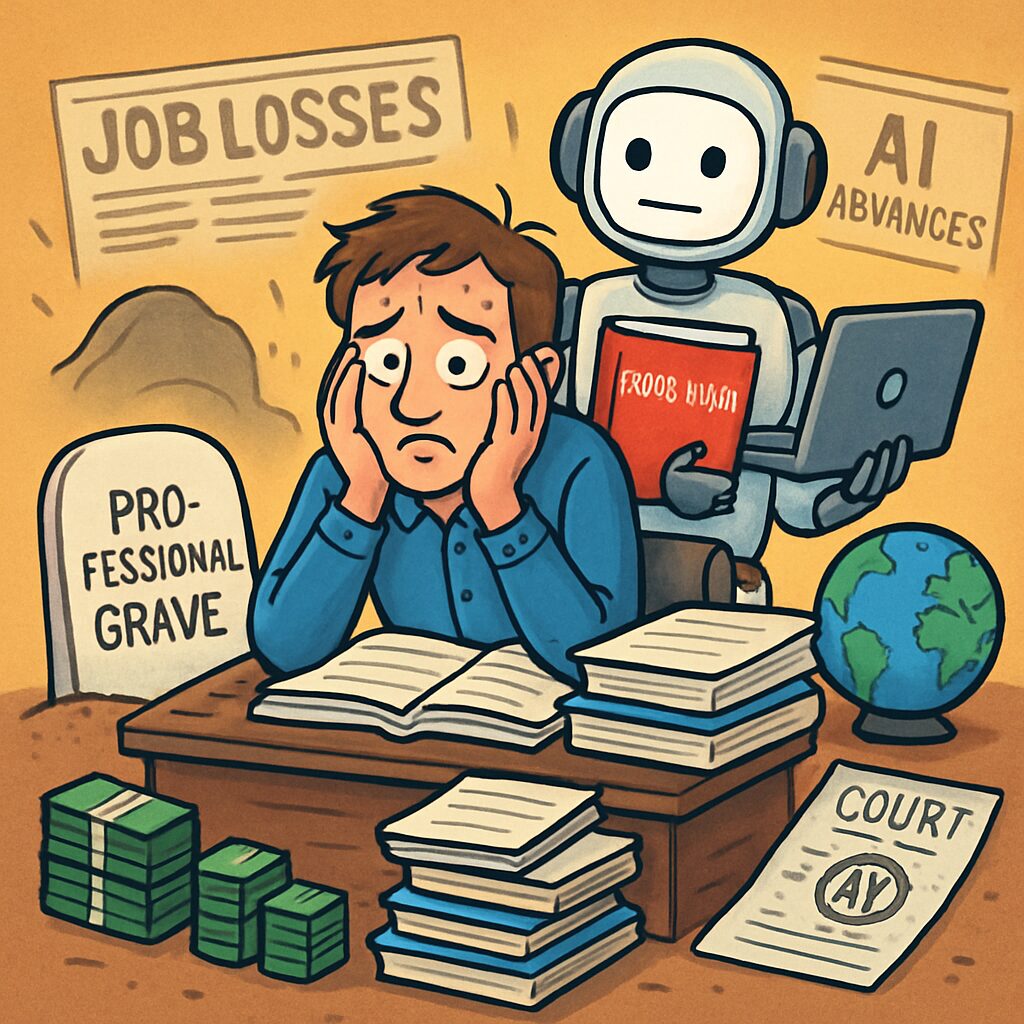
Artificial intelligence is rapidly displacing human translators, with professionals across the globe reporting significant income losses and job reductions as AI-powered translation tools become more sophisticated and widely adopted. This trend is forcing many in the industry to seek alternative work or retrain, while raising concerns about the future of language professions.
Timothy McKeon, a rare Irish-language translator, saw his income drop by about 70% after European Union institutions reduced their reliance on human translators in favor of AI tools. McKeon refuses to edit machine-generated translations, arguing that doing so helps train the software that is making his skills obsolete. “You’re essentially expected to dig your own professional grave,” he said, highlighting the ethical dilemma faced by translators.
The impact is not isolated. A 2024 survey by the UK’s Society of Authors found that over a third of translators had lost work due to generative AI, with 43% reporting decreased income. In the United States, research by Oxford University economists Carl Frey and Pedro Llanos-Paredes estimated that roughly 28,000 more translator jobs would have been created in the absence of machine translation from 2010 to 2023, indicating a slow but steady erosion of employment opportunities.
In Wisconsin, court interpreter Christina Green is battling a proposed bill that would allow AI translation in legal proceedings, which she fears could eliminate her job and set a precedent for other states. Her translation company recently lost a Fortune 10 client to an AI service, forcing layoffs. “People and companies think they’re saving money with AI, but they have absolutely no clue what it is, how privacy is affected and what the ramifications are,” Green warned.
Fardous Bahbouh, an Arabic-language translator for international media including CNN, has seen a considerable reduction in written work, attributing it to technological advances and financial pressures on media outlets. She is pursuing a PhD on the translation industry and argues that governments are not doing enough to help translators transition or protect their livelihoods. “I worry a great deal that governments are not doing enough to help them transition into other work, which could lead to greater inequality, in-work poverty and child poverty,” Bahbouh said.
Despite the challenges, human translators remain crucial in high-stakes fields. Andy Benzo, president of the American Translators Association, emphasized that while AI is suitable for low-risk tasks, human oversight is essential in diplomatic, legal, financial, and medical contexts where nuances and accuracy are paramount. “I’m a translator and a lawyer and in both professions the nuance of each word is very specific and the large language models aren’t there yet,” Benzo noted.
Literary translation is one area less affected by AI, as commissions for book translations continue to come in, according to Ian Giles of the UK’s Translators Association. However, the broader trend points to a shrinking profession, with Kristalina Georgieva, head of the International Monetary Fund, reporting a reduction from 200 to 50 translators at the fund due to increased technology use.
The situation underscores the need for stronger labor protections and retraining programs. As AI continues to advance, the translation industry serves as a cautionary tale for other professions facing automation, highlighting the urgent need for policy responses to mitigate job displacement and support affected workers.

