

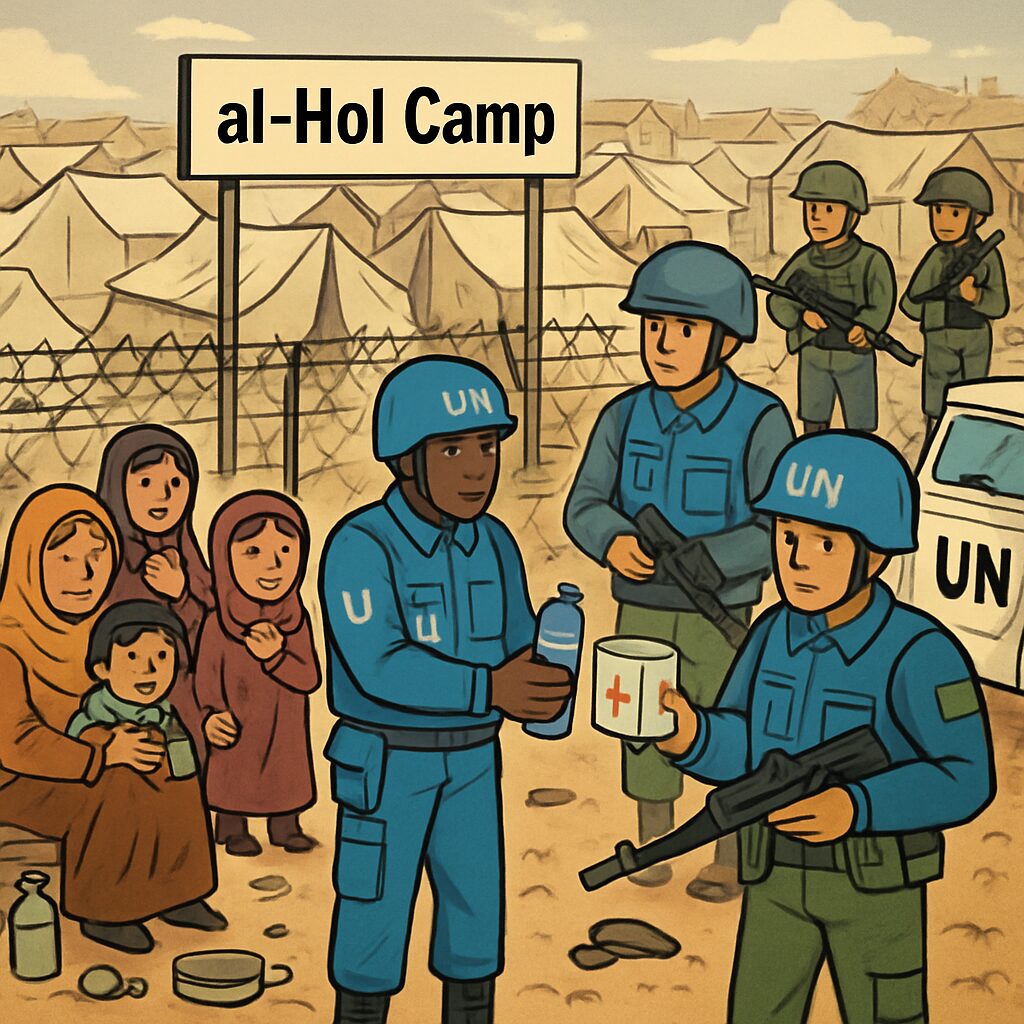
The United Nations is set to assume control of the al-Hol camp in northeastern Syria, a facility housing thousands of individuals with alleged ties to the Islamic State group. This follows the withdrawal of Kurdish-led forces and subsequent unrest that forced aid agencies to suspend operations, highlighting the volatile security situation in the region.
The camp, located in Hasakah province, has been a focal point in Syria’s protracted conflict, managed by Kurdish authorities since the territorial defeat of IS. Recent advances by Syrian government forces prompted the Kurdish-led Syrian Democratic Forces (SDF) to withdraw, triggering panic among residents who rushed camp perimeters, leading to looting and instability. A ceasefire agreement has now brought much of northeast Syria under Damascus’s control, ending years of autonomous Kurdish rule and paving the way for UN intervention.
During a UN Security Council briefing on Thursday, official Edem Wosornu confirmed that the UN refugee agency (UNHCR) has taken over camp management responsibilities. She emphasized collaboration with Syrian authorities to restore humanitarian access, which was disrupted by the violence. Syrian forces have established a security perimeter around al-Hol, but UN spokesman Stéphane Dujarric cautioned that conditions inside remain “tense and volatile,” with aid operations still on hold.
The unrest began as SDF forces retreated in the face of Syrian military movements, causing residents to attempt escapes and exacerbating humanitarian crises. Al-Hol holds over 70,000 people, mostly women and children with links to IS, living in dire conditions that have worsened due to the suspension of aid. The UN’s takeover aims to stabilize the camp and resume essential services, but challenges persist in ensuring safety and addressing basic needs.
In a parallel development, the United States has started transferring suspected IS fighters from prisons in northeast Syria to Iraq. US Central Command announced the relocation of up to 7,000 detainees, with 150 already moved to a secure location across the border. Iraqi authorities have committed to prosecuting them under Iraqi law, citing regional security concerns, but stressed that this should not become a long-term burden for Iraq alone.
Rights groups, including Reprieve, have expressed serious concerns about the transfers, warning that detainees could face torture, unfair trials, or execution. They highlighted the presence of foreign nationals, such as British citizens, among those detained and urged governments to intervene. The situation underscores the ethical and legal dilemmas in managing post-conflict detainees and the need for international cooperation to protect human rights.
Looking forward, the UN’s management of al-Hol is a critical step toward restoring order, but long-term solutions require coordinated efforts on repatriation and rehabilitation. Many countries have resisted taking back their citizens from the camps, citing security risks, leaving thousands in limbo. The international community must balance counterterrorism objectives with humanitarian imperatives to address the root causes of displacement and support Syria’s fragile transition.
Ultimately, the UN’s intervention at al-Hol reflects the ongoing complexities of Syria’s conflict aftermath, where immediate stabilization efforts intersect with broader geopolitical tensions. As humanitarian access is gradually restored, the focus will shift to ensuring sustainable outcomes for camp residents while mitigating risks to regional stability.

