

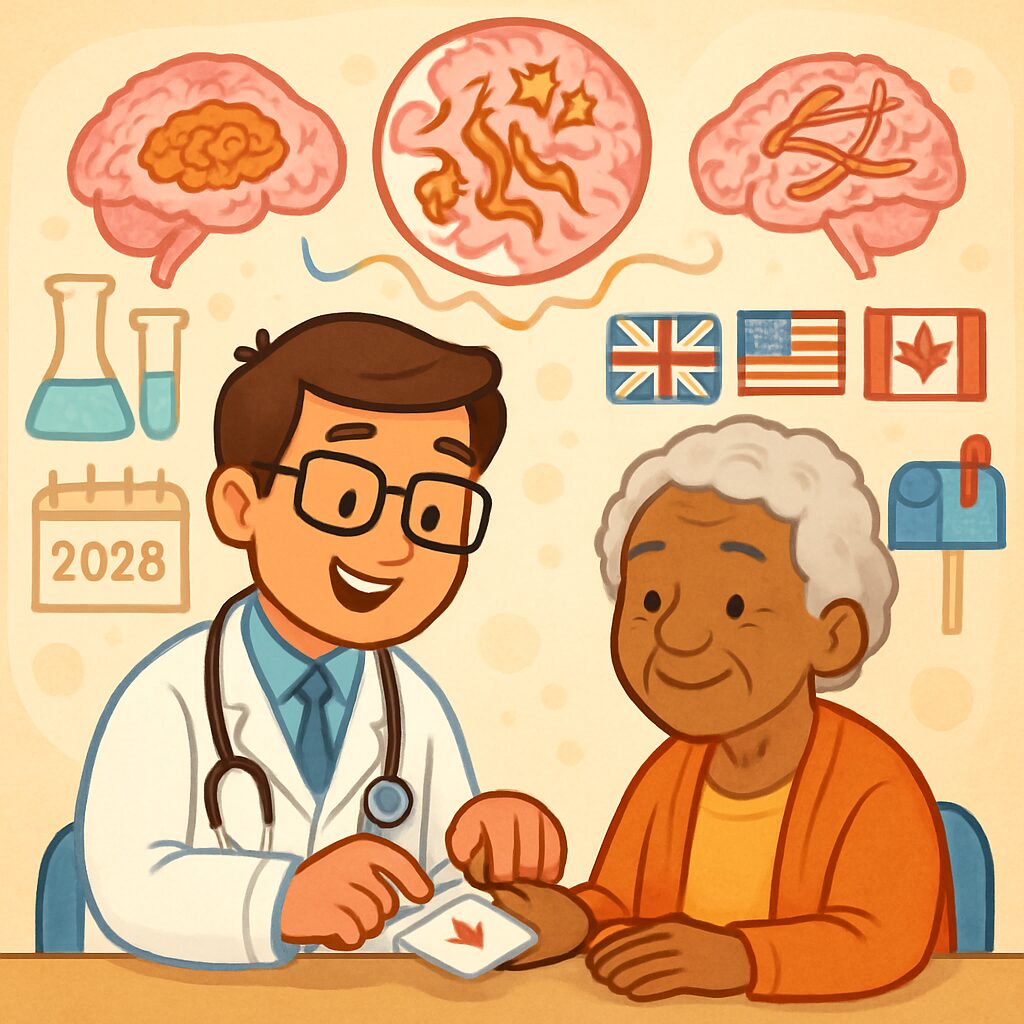
A new international trial is exploring whether a simple finger-prick blood test could transform the diagnosis of Alzheimer’s disease, offering a less invasive and accessible method for early detection. This development promises to address diagnostic delays and improve patient care through timely intervention.
The Bio-Hermes-002 study, led by LifeArc and the Global Alzheimer’s Platform Foundation, involves 1,000 volunteers over 60 from the UK, US, and Canada, aiming to detect biomarkers like amyloid and tau proteins linked to Alzheimer’s. By analyzing blood samples, researchers hope to identify individuals at risk years before symptoms manifest, potentially revolutionizing how the disease is diagnosed.
Currently, Alzheimer’s confirmation relies on expensive and invasive procedures such as PET scans or lumbar punctures, which are underutilized with only 2% of patients receiving them. These limitations often lead to prolonged diagnostic journeys, delaying access to emerging treatments that could slow disease progression.
The finger-prick test offers a minimally invasive alternative that can be self-administered at home. Samples are collected on a special card and mailed to labs without refrigeration, reducing barriers related to healthcare infrastructure and geographical isolation. This approach could democratize testing, especially in remote or underserved communities.
Supporting this effort, a study published in Nature Medicine by University of Gothenburg researchers validated the accuracy of finger-prick tests for Alzheimer’s biomarkers. Involving 337 participants across Europe, it found that levels of p-tau217 in dried blood spots strongly correlated with traditional samples, showing 86% agreement with spinal fluid. Other biomarkers like GFAP and NfL also demonstrated high reliability, reinforcing the test’s potential.
Early detection is critical as new Alzheimer’s treatments become available. Prof Fiona Carragher of the Alzheimer’s Society emphasized that rapid and accurate diagnosis must be a priority for healthcare systems to ensure patients benefit from these therapies. Blood tests could streamline this process, enabling earlier intervention and better outcomes.
Personal accounts highlight the human impact: Dr. Michael Sandberg, a London GP, participated in the trial after his mother’s Alzheimer’s diagnosis and found relief in a negative result. His experience underscores how such diagnostics can provide clarity and hope for families grappling with dementia’s uncertainties.
As the trial progresses with over 880 participants enrolled and completion expected by 2028, efforts include ensuring diversity, with at least 25% from underrepresented groups. If successful, the test could extend beyond Alzheimer’s to screen for other neurodegenerative diseases like Parkinson’s and ALS, marking a significant advance in global health.

