

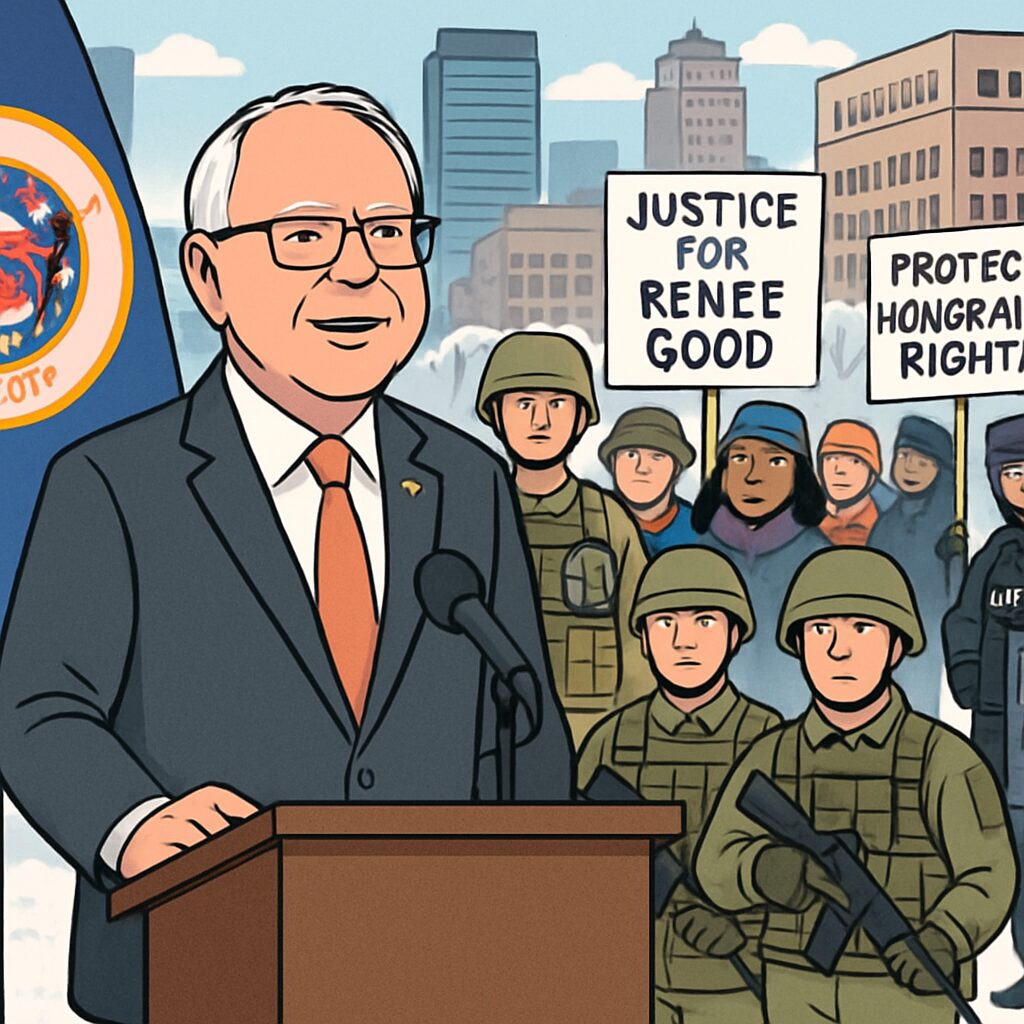
Minnesota Governor Tim Walz has mobilized the state’s National Guard to support local law enforcement amid ongoing protests against U.S. Immigration and Customs Enforcement (ICE) agents. The move comes as tensions escalate following the fatal shooting of a mother by an ICE agent and subsequent clashes between demonstrators and federal officers.
On Saturday, January 17, 2026, Governor Walz directed the Minnesota National Guard to mobilize and stage in readiness to assist public safety agencies. Officials clarified that the troops have not been deployed to city streets but are prepared to protect life, preserve property, and support the rights of peaceful assembly. This decision was announced via the Minnesota Department of Public Safety’s social media posts, emphasizing a precautionary stance.
The protests stem from the killing of Renee Nicole Good, a 37-year-old mother of three, who was fatally shot by an ICE agent on January 7 in Minneapolis. Her death has ignited widespread outrage, fueling demonstrations that criticize the Trump administration’s immigration enforcement tactics. Protesters have gathered regularly, particularly at the Bishop Henry Whipple Federal Building, where federal agents are based for Operation Metro Surge.
Federal response has been robust, with thousands of ICE agents deployed to Minnesota, and President Donald Trump has repeatedly threatened to invoke the Insurrection Act to deploy U.S. armed forces domestically. Adding to the tension, the Department of Justice is investigating Governor Walz and Minneapolis Mayor Jacob Frey for possible obstruction of federal law enforcement, allegations that both Democrats deny as politically motivated.
A federal judge intervened on Friday, January 16, imposing restrictions on federal agents involved in the operation. U.S. District Judge Katherine Menendez ruled that agents cannot arrest peaceful protesters or use crowd-control measures like pepper spray against them without justification. This legal move aims to curb aggressive tactics that have led to injuries, including the hospitalization of two children after tear gas exposure.
On January 17, protests continued with large crowds braving subfreezing temperatures in downtown Minneapolis. Demonstrators faced off with federal law enforcement in riot gear, leading to several detentions, though authorities reported no major arrests. Counter-protests also occurred, with a small group supporting ICE being outnumbered by larger anti-ICE gatherings, highlighting the divisive nature of the issue.
The mobilization of the National Guard reflects the state’s effort to maintain order while balancing civil liberties. Political leaders, including Democratic governors and members of Congress, have condemned the federal approach, accusing it of intimidation and abuse of power. Local businesses have suffered due to the heightened presence and unrest, with some describing the environment as a ‘hunting ground’ for immigration enforcement.
Looking ahead, the Minnesota National Guard remains on standby, ready to assist if tensions escalate further. Legal battles are ongoing, with state lawsuits challenging the federal operation, and the DOJ investigation could have significant political ramifications. The situation underscores deep national divides over immigration policy and the use of federal force in domestic protests.

