

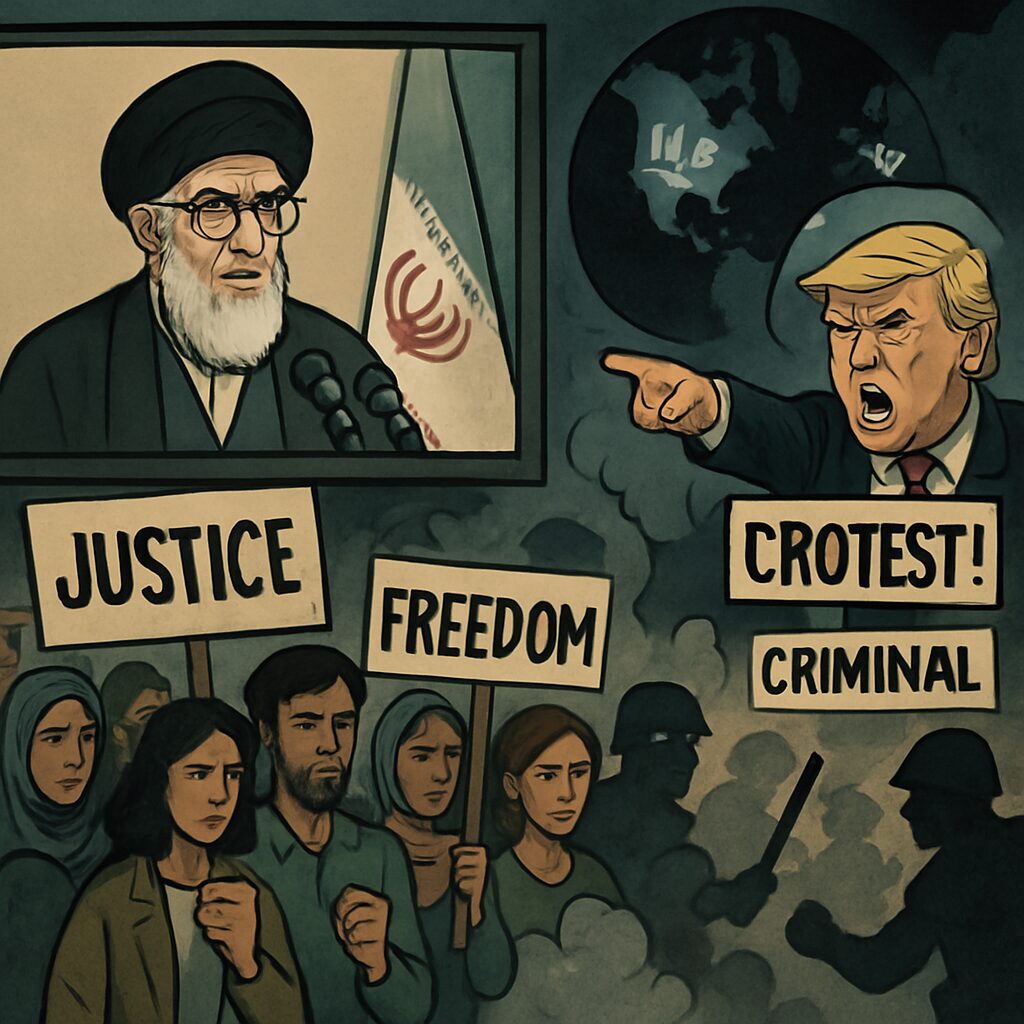
Iran’s Supreme Leader Ayatollah Ali Khamenei has publicly acknowledged for the first time that thousands of people were killed during recent anti-government protests, blaming the United States and Israel for the deaths while accusing U.S. President Donald Trump of being a ‘criminal’ for supporting the demonstrators. This unprecedented admission came during a televised speech on Saturday, marking a significant moment in the ongoing unrest that has shaken the country. The protests, which began in late December over economic hardships, quickly evolved into widespread calls for the end of Khamenei’s rule, with demonstrators taking to the streets across Iran. Security forces responded with brutal tactics, including opening fire on crowds, leading to a high death toll. According to the U.S.-based Human Rights Activists News Agency (HRANA), at least 3,090 people have been killed, though some activist groups estimate the number to be much higher. The Iranian government, however, has downplayed the figures, with Foreign Minister Abbas Araghchi claiming only hundreds died and attributing higher estimates to a misinformation campaign. In his speech, Khamenei described the killings as occurring in an ‘inhuman, savage manner’ and asserted that actors linked to the U.S. and Israel were responsible. He categorised the protesters into two groups: those supported by foreign powers and naive individuals manipulated by them. This framing aligns with the regime’s longstanding narrative of blaming external enemies for domestic dissent, without providing concrete evidence for such claims. Amid the crackdown, the Iranian government imposed a near-total internet blackout starting January 8, severely hampering communication and information flow. Cybersecurity watchdog NetBlocks reported that connectivity dropped to about 2% of normal levels, making it difficult to verify events on the ground. Although there were slight improvements in recent days, access remains heavily restricted, obscuring the true scale of the unrest and the government’s actions. U.S. President Donald Trump has been vocal in his support for the protesters, urging them to ‘keep protesting’ and threatening military intervention if security forces continue to kill demonstrators. In response, Khamenei called Trump a ‘criminal’ and stated that the U.S. must be ‘held accountable.’ Trump retaliated by labeling Khamenei a ‘sick man’ and calling for new leadership in Iran, escalating tensions between the two nations. The crackdown has led to mass arrests, with HRANA reporting over 24,000 protesters detained. There are fears that some could face the death penalty, as indicated by Tehran’s prosecutor, though Iranian officials have denied plans for executions. The uncertainty over the fate of detainees adds to the humanitarian concerns, with international observers calling for restraint and transparency. Looking ahead, the situation remains volatile. Khamenei claimed that the protests have been ‘extinguished,’ but with internet restrictions still in place, it’s unclear if the unrest has fully subsided. The economic grievances that sparked the demonstrations persist, and the regime’s legitimacy is under strain. The U.S. and other countries are monitoring closely, with potential implications for regional stability and Iran’s nuclear negotiations. As both sides dig in, the path forward is fraught with risk, and the world watches to see if this admission marks a turning point or merely a temporary pause in Iran’s ongoing turmoil.


- Advertisment -