

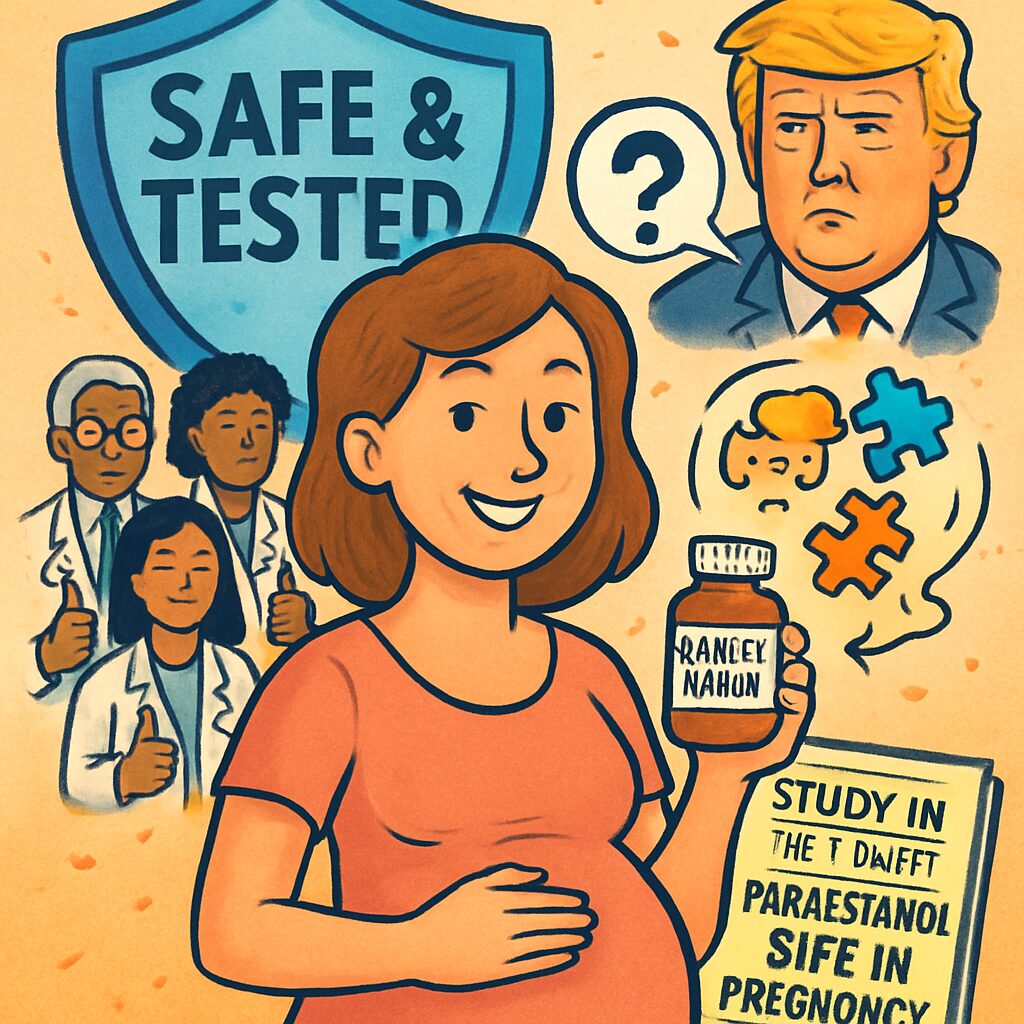
A comprehensive review published in The Lancet has found no evidence that taking paracetamol during pregnancy increases the risk of autism, ADHD, or intellectual disability in children, directly refuting claims made by former US President Donald Trump. This ‘gold standard’ study reassures pregnant women that the painkiller remains safe when used as directed.
The study, led by Professor Asma Khalil and published in The Lancet Obstetrics, Gynaecology and Women’s Health, analyzed 43 previous studies involving hundreds of thousands of children. It concluded that there is no link between maternal paracetamol use and neurodevelopmental disorders, addressing widespread anxiety sparked by Trump’s remarks.
In September 2025, during a White House press conference, Trump advised pregnant women to avoid Tylenol (the US brand name for paracetamol), claiming it causes autism. His comments were quickly condemned by medical experts worldwide as baseless and causing unnecessary fear among expectant mothers.
The new review prioritized sibling-comparison research, which controls for genetic and environmental factors, providing strong evidence against any causal link. For instance, a large Swedish study included in the analysis found that familial tendencies for autistic traits are more plausible explanations for any observed associations.
Researchers emphasized that avoiding paracetamol based on inconclusive evidence could harm both mother and baby. Untreated fever or severe pain during pregnancy is associated with risks like miscarriage, congenital anomalies, and preterm birth, making safe pain relief essential.
Health authorities globally, including in Australia and the UK, classify paracetamol as a category A medication, meaning it is safe for use in pregnancy. Experts like UK Health Secretary Wes Streeting and Australian researcher David Trembath have reiterated that women should feel reassured and consult their doctors.
The study’s authors hope their findings will end the politicization of scientific uncertainty and prevent misinformation. They note that pregnant women are often susceptible to shame and self-blame, which can be exacerbated by unfounded claims.
Beyond refuting the specific claims, the research underscores the importance of evidence-based medicine and the need to support people with disabilities rather than seeking false causes. Autism advocates stress focusing on inclusion and opportunities for disabled individuals.
In conclusion, this landmark study provides robust reassurance to healthcare providers and pregnant women, affirming that paracetamol is a safe and effective option for managing pain and fever during pregnancy, and it calls for an end to misleading narratives.

