

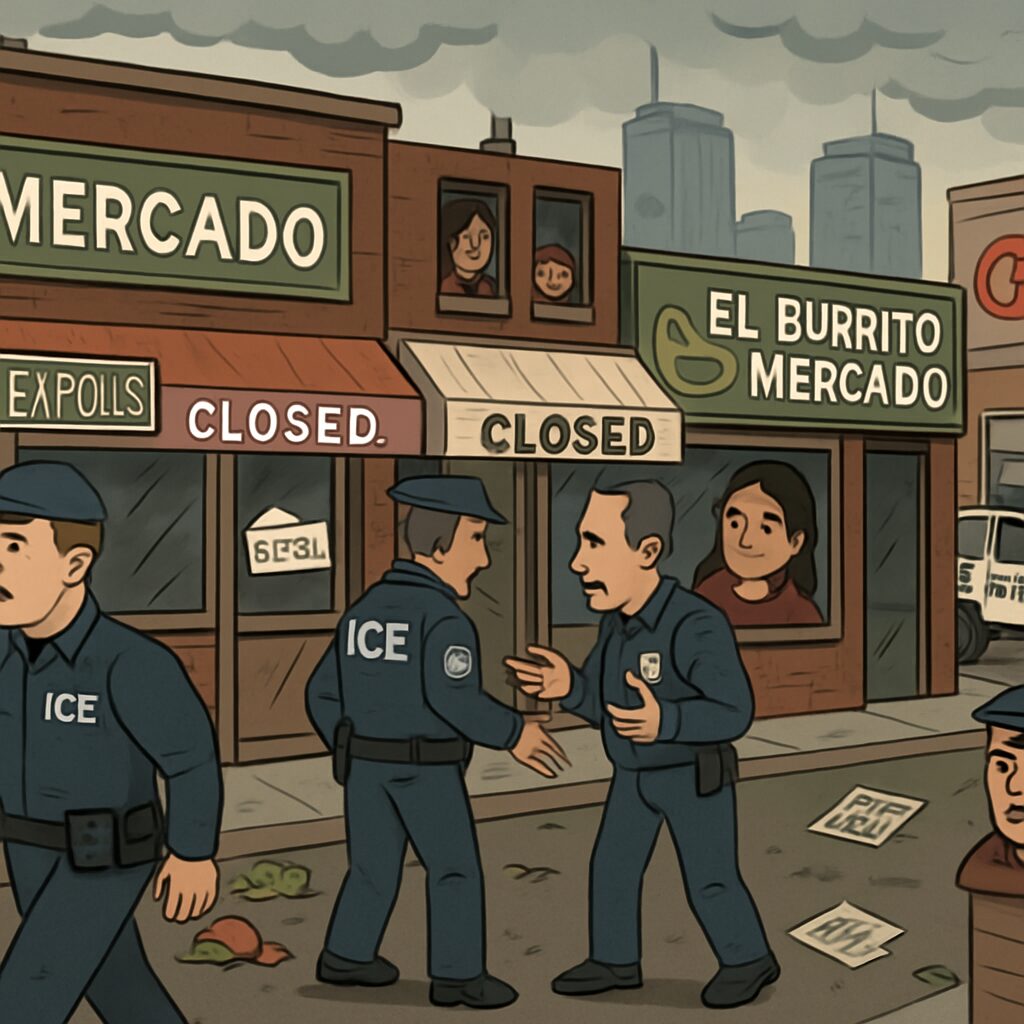
Federal immigration agents have transformed businesses in Minnesota’s Twin Cities into ‘hunting grounds,’ sparking economic turmoil and fear within immigrant communities. ICE’s intensified operations in Minneapolis and St. Paul have led to widespread store closures, plummeting sales, and a chilling effect on daily life, with local businesses reporting revenue drops of up to 80% and comparing the volatility to the COVID-19 pandemic.
The crackdown, part of the Trump administration’s immigration enforcement push, has seen thousands of agents descend on the area, resulting in over 2,000 arrests since last month. El Burrito Mercado, a 47-year-old Mexican supermarket and restaurant in St. Paul, has become a focal point, with CEO Milissa Silva-Diaz stating that ICE is using her business as a hunting ground, causing staff call-outs and early closures. The economic fallout escalated after the death of a U.S. citizen, Renee Good, by an ICE agent last week, prompting dozens of businesses to temporarily shut down and events like comedian John Mulaney’s shows and a Pride festival to be canceled.
Other establishments, such as Homi restaurant and Don Panchos Bakery, have switched to pickup-only orders or sent employees home with pay due to safety concerns. At La Guadalupana Market, daily customers dropped from 200 to 30, leading to $3,000 in wasted produce over two weeks. Many legal and undocumented immigrants have stopped going out in public, crippling economic activity in neighborhoods reliant on immigrant patronage and labor.
Target, headquartered in Minneapolis, has also become a flashpoint, with ICE agents conducting visible patrols in its stores and arresting employees. Local leaders are calling on Target to protect workers, but large companies have largely remained silent to avoid political backlash. The broader impact threatens Minnesota’s economy, which depends on immigrants to address workforce shortages; the state’s foreign-born labor force has grown by 41% since 2010, compared to 4% for U.S.-born workers.
In response, the Twin Cities and Minnesota have sued the Trump administration to halt the operation, citing economic damages and potential hits to tax collection. Similar economic blows have been reported in other major cities like Chicago and Los Angeles. The White House has defended the operations, asserting that removing criminal illegals enhances community safety and long-term business prosperity.
However, business owners argue that the immediate devastation is unsustainable, with many fearing for their livelihoods and the future of immigrant-owned enterprises. The uncertainty over how long ICE will remain in the area leaves communities grappling with anger, frustration, and a desperate hope for resolution. As the situation evolves, the resilience of Minnesota’s diverse economy hangs in the balance, with no clear end in sight to the disruption caused by immigration enforcement.

