

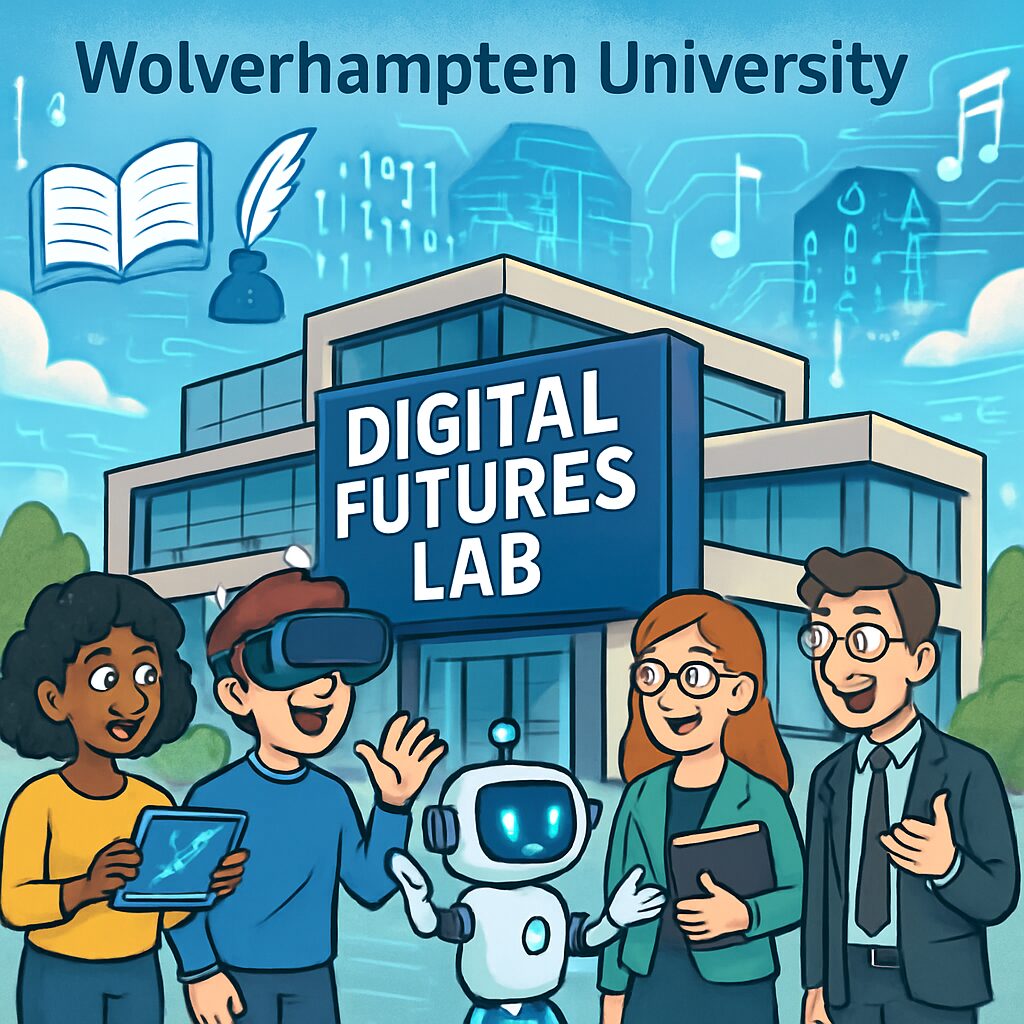
Wolverhampton University has launched the Digital Futures Lab, a new humanities innovation hub focused on integrating Virtual Reality (VR) and Artificial Intelligence (AI) into arts and humanities disciplines. Scheduled to open on February 7, the hub aims to foster interdisciplinary collaboration and demonstrate how digital technologies can transform research, business, and cultural practices, marking a significant step in digital humanities innovation.
The Digital Futures Lab represents a strategic investment by Wolverhampton University to position itself at the forefront of technological advancement in education. By providing a platform for academics, students, businesses, and organizations to collaborate, the lab will enable joint projects that leverage VR and AI to address complex societal challenges. This initiative highlights the university’s commitment to blending traditional humanities with computational methods, reflecting a broader trend in higher education towards digital integration.
Professor Sebastian Groes, the lab director, emphasized that the hub embodies the university’s dedication to pioneering research and cultural enhancement. He noted that as higher education evolves, the arts and humanities are increasingly adopting digital tools to gain new perspectives on literature, language, and society. Groes added that the lab will develop creative, technology-driven solutions aimed at tackling social issues, improving health and wellbeing, and contributing to global sustainability goals.
At the upcoming launch event, attendees will be introduced to cutting-edge applications of VR and AI, showcasing how these tools are reshaping approaches to language, literature, and culture. Presentations will cover topics such as AI-driven chatbots, algorithms for data analysis, and immersive VR experiences, illustrating the practical benefits of digital integration in humanities fields. These demonstrations are designed to inspire innovation and highlight the potential for real-world applications.
The establishment of the Digital Futures Lab builds on Wolverhampton University’s existing expertise in technology, following the opening of the Centre for Cyber Resilience and Artificial Intelligence (CYBRAI) in May last year. CYBRAI has already established itself as a leading force in the field, and the new humanities hub expands the institution’s portfolio, creating synergies between cyber resilience and digital humanities. This expansion underscores the university’s holistic approach to innovation.
This move aligns with broader educational trends where institutions are incorporating digital tools to enhance learning and research outcomes. By combining expertise in areas like computational literary studies, Wolverhampton is developing solutions that advance academic knowledge while having tangible impacts, such as using AI to analyze texts for social insights or VR to preserve cultural heritage. The lab’s work is expected to bridge gaps between technology and the humanities, fostering a more interconnected academic landscape.
The launch of the Digital Futures Lab is anticipated to attract partnerships with businesses and organizations seeking to innovate in the digital space, potentially leading to new products, services, and research initiatives. Such collaborations could drive economic growth and social progress, aligning with the university’s mission to contribute positively to society through innovation. The hub’s success will depend on its ability to engage diverse stakeholders and demonstrate measurable outcomes.
Looking ahead, the Digital Futures Lab is poised to play a crucial role in preparing students and professionals for future challenges in an increasingly technological world. By fostering creativity, critical thinking, and technical skills, Wolverhampton University’s initiative sets a precedent for how humanities can thrive alongside digital advancements, ensuring that the arts remain relevant and impactful in the modern era.

