

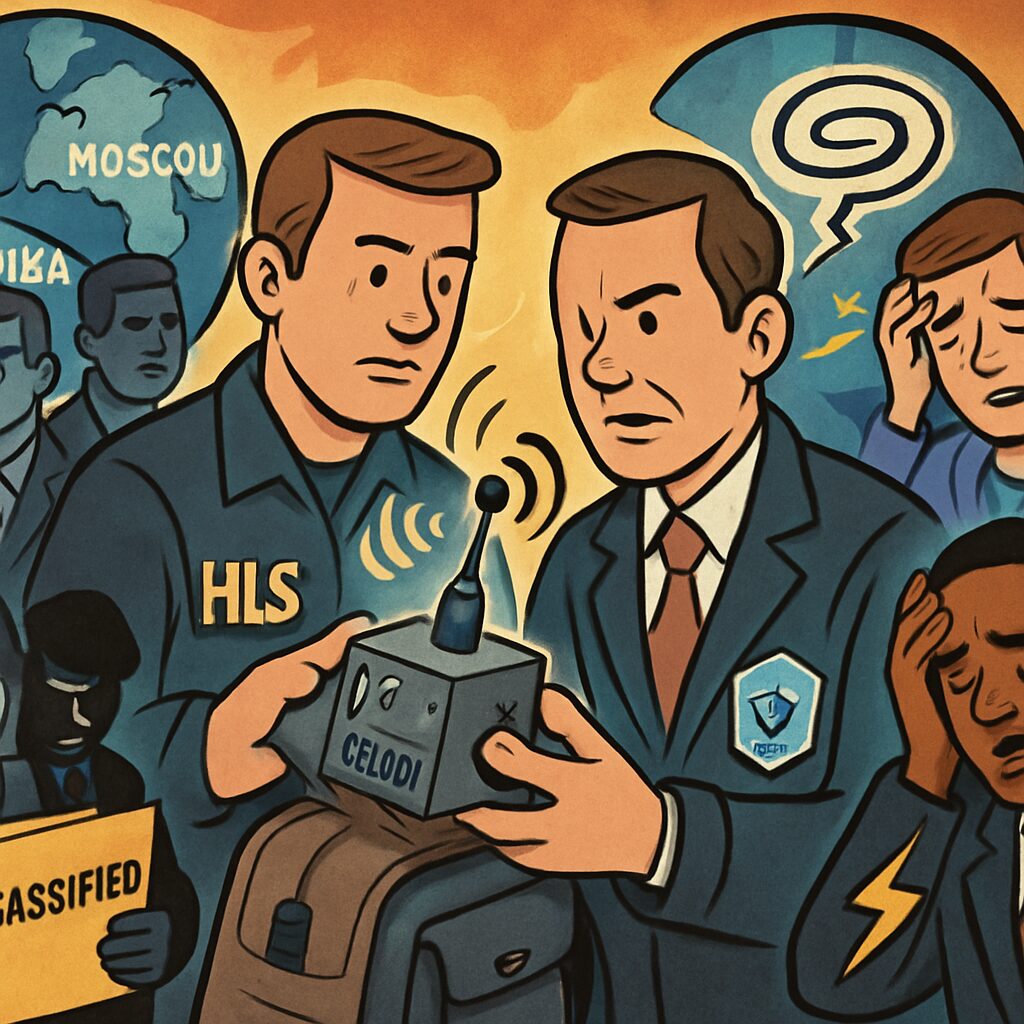
The U.S. Defense Department has spent over a year testing a device purchased in an undercover operation that some investigators believe could be linked to Havana Syndrome, the mysterious health incidents affecting American officials. Acquired by Homeland Security Investigations with Pentagon funding for millions of dollars in the waning days of the Biden administration, the device produces pulsed radio waves and contains Russian components, though its portability—it can fit in a backpack—has long puzzled experts.
This acquisition has reignited contentious debates within the U.S. government about the origins of Havana Syndrome, known officially as anomalous health episodes. First reported in late 2016 among diplomats in Cuba, the syndrome has since affected spies, diplomats, and troops worldwide, with symptoms including vertigo and extreme headaches. Despite investigations, senior intelligence officials have publicly stated there is insufficient evidence to confirm directed energy attacks by foreign governments, leading victims to accuse the government of ignoring evidence pointing to Russia.
Defense officials considered the findings serious enough to brief the House and Senate Intelligence Committees late last year, referencing the device and its testing. A key concern is that if the technology proves viable, it may have proliferated, meaning multiple countries could have access to a device capable of causing career-ending injuries. The device’s exact origin and how the U.S. learned of it remain unclear, but HSI, which investigates customs violations and technology proliferation, played a central role in the operation.
HSI’s collaboration with the Pentagon is described as the ‘single biggest collaboration point’ with the U.S. military, often involving global operations to track U.S. technology overseas. For instance, in Afghanistan or Iraq, the military would turn to HSI when encountering suspicious U.S. components. This underscores the interagency effort behind the acquisition, though many details are still classified or under investigation.
The medical and intelligence communities continue to face challenges in understanding Havana Syndrome. There is no clear definition of anomalous health incidents, and tests were often conducted long after symptoms appeared, complicating analysis. In 2022, an intelligence panel suggested pulsed electromagnetic energy could plausibly cause some episodes, but by 2023, the community ruled it unlikely that a foreign adversary was behind a targeted campaign. As recently as January 2025, the assessment remained that foreign involvement was very unlikely, though not entirely ruled out.
Victims have expressed deep frustration with the government’s response, with some current and former CIA officers alleging that the agency soft-pedaled its investigation. The device’s acquisition has been seen by some as potential vindication. Marc Polymeropoulos, a former CIA officer injured in Moscow in 2017, stated that if such devices are uncovered, the CIA owes victims a major public apology for how they have been treated.
Looking ahead, the ongoing testing of the device and the broader investigation into Havana Syndrome highlight persistent national security threats and the need for transparency. The debate is likely to continue as more information emerges, with implications for U.S. foreign policy and the safety of its personnel abroad.

