

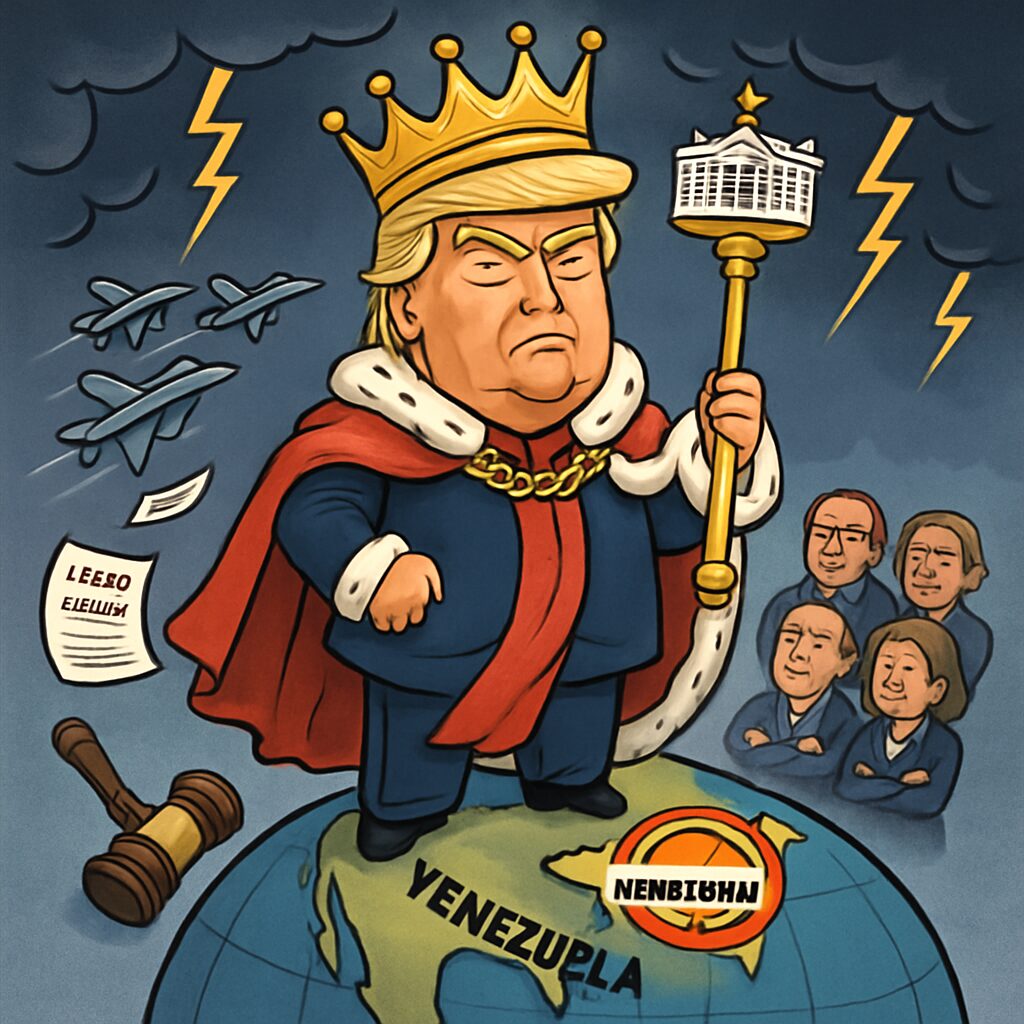
In a stark shift, President Donald Trump’s foreign policy approach is being characterized as “king-like” due to his assertions of nearly unlimited power and recent military actions in Venezuela. This analysis, highlighted in a CNN report, underscores Trump’s willingness to bypass traditional legal and diplomatic constraints in pursuing U.S. interests.
Just months after dismissing opponents’ “No Kings” rallies as melodramatic, Trump and his administration have embraced rhetoric that echoes monarchial authority. The catalyst for this change is Trump’s brazen effort to dominate the Western Hemisphere, including authorizing a strike on Venezuela to remove its leader, Nicolás Maduro, an action justified through a controversial legal memo from the 1980s.
In a revealing New York Times interview this week, Trump stated that nothing could impede his global power except his own morality and mind, suggesting he alone determines the applicability of international law. This blunt acknowledgment of his worldview has drawn parallels to autocratic rule, with the Times calling it his most explicit yet.
Supporting this narrative, key administration figures have articulated a vision where strength and force govern international relations. White House press secretary Karoline Leavitt asserted that U.S. leverage over Venezuela means its decisions are dictated by America, while adviser Stephen Miller described a “real world” governed by power, not apology.
The administration’s legal justifications further illustrate this king-like posture. Trump claimed he didn’t need congressional approval for the Venezuela strike, relying on a Justice Department opinion that grants the president extraordinary powers in pursuing indicted individuals abroad. Miller has also invoked “plenary authority” for domestic deployments, indicating a pattern of circumventing checks and balances.
Congressional pushback has been met with defiance from the White House. After the Senate advanced a war powers resolution to restrict further strikes on Venezuela, Vice President JD Vance labeled it “fake” and “unconstitutional,” vowing it wouldn’t alter foreign policy conduct. This dismissal highlights the administration’s resistance to legislative oversight.
This is not an isolated incident but part of a broader trend. During his first term, Trump claimed Article II of the Constitution gave him the right to do whatever he wanted as president, and he has repeatedly tested legal boundaries. Now, he is extending this sensibility to the global stage, raising alarms about the erosion of democratic norms and international law.
The implications are profound, as Trump’s actions challenge the foundations of U.S. foreign policy and the rule of law. With the administration asserting authority to act unilaterally and treat orders from Trump as inherently legal, the stage is set for continued conflicts with Congress, the judiciary, and international partners, potentially reshaping America’s role in the world.

